
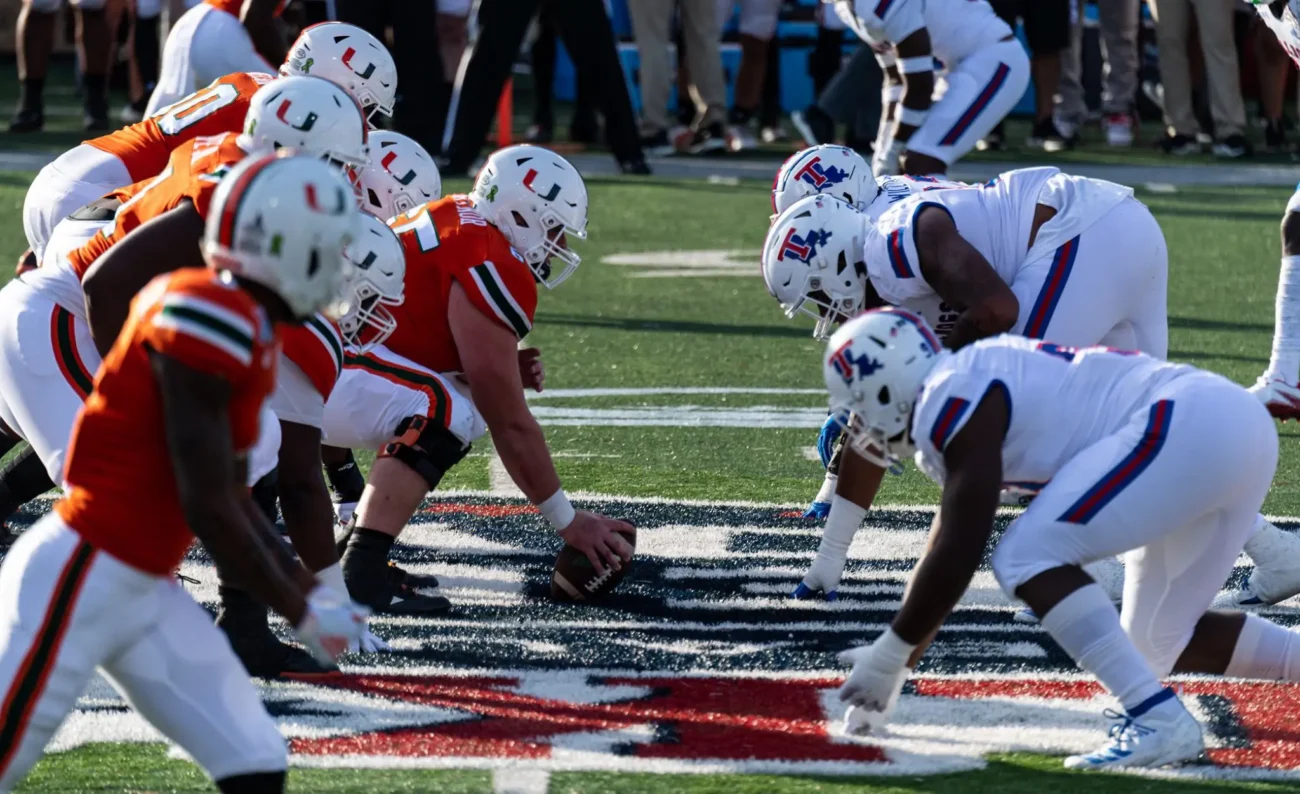
Under the scorching July sun, there are no cheering crowds or 300-pound linemen. It is just a quarterback and receivers playing a high-stakes game of catch. Yet, this quiet, non-contact summer environment—initiating the 7v7 football transition—is exactly where the road to a roaring 100,000-seat stadium begins. In many ways, it’s the first step in the journey From 7v7 to Saturdays: Players Who Made the Leap.
Before Justin Fields was carving up Saturday defenses, he was dissecting coverages in a neon compression shirt. Notable college stars who played 7v7 used these tournaments to systematically perfect their timing. Stripped of the physical trenches, the sport boils down to its pure passing DNA: speed, open space, and aerial precision.
According to major scouting networks, casual fans often dismiss this format as mere touch football, missing its vital underlying purpose. Industry data reveals the massive 7v7 circuit impact on high school player exposure, allowing evaluators to test raw athletic ceilings before a pass rush ever enters the equation.
Making the leap from pristine summer grass to a bruising autumn gridiron remains a massive mental hurdle. Athletes must suddenly execute those same flawless routes while defenders actively try to hit them. Adapting to full-contact stadiums requires overcoming massive mental and physical obstacles, ultimately reshaping how the game is played on Saturdays.
Summary
7v7 functions as a laboratory that isolates and sharpens the passing game—quarterback timing and processing, receiver route polish, and defensive back eye discipline—while giving scouts a clean view of mechanics and decision-making. The true challenge is translating those summer skills to the physical, full-contact reality of college football by mastering pad level, leverage, and speed under pressure. Evaluators prioritize functional athleticism over highlight-reel plays, with examples like C.J. Stroud showing how refined timing scales to Saturdays. The piece closes with practical indicators that reveal who is genuinely “Saturday Ready.”
Stripping Football Down to its DNA: Why the Absence of Linemen Sharpens Skill
Standard football team dynamics rely on a chaotic wall of colliding 300-pound linemen. By completely removing this physical chaos—often called “the trash” by coaches—evaluating skill position players in non-contact drills becomes an exercise in mastering space versus speed. Without a pass rush blocking the view, the field transforms into a wide-open canvas.
Free from the threat of a blindside hit, quarterbacks can hyper-focus entirely on ball flight and trajectory. This environment drives intense skill position specialization, forcing wideouts to learn exactly how to uncover in open grass. Athletes must master the field’s geometry, making pure spatial awareness their sharpest weapon before they ever reach a college weight room.
Defenders face their own ruthless reality in this format. Because they cannot rely on a teammate’s sudden sack to disrupt the play, defensive backs must develop elite eye discipline. Stripping the game down isolates these crucial visual mechanics, perfectly setting up the quarterback’s laboratory and refining their internal clock.
The Quarterback’s Laboratory: How 7v7 Refines the ‘Internal Clock’
Even without 300-pound linemen chasing them, summer quarterbacks face a different relentless pressure: the buzzer. Most tournaments enforce a strict four-second passing limit, a rule that installs a lightning-fast “internal clock” in a player’s head. Here, elite processing speed beats raw arm strength, allowing undersized, quick-thinking passers to thrive against top-tier competition.
Treating the open grass like a laboratory, passers experiment with “tight-window” throws—zipping the football into tiny gaps between defenders they wouldn’t normally risk in padded games. When analyzing how scouts use 7v7 film, experts look past the final score to focus heavily on the underlying benefits of 7v7 for quarterback development. They specifically isolate three mechanical traits:
- Release speed against the artificial countdown
- Shoulder level while scanning the field
- Footwork consistency without a messy pocket
Mastering these split-second reads makes later football transition drills significantly easier when the pads finally return. This accelerated mental processing prepares quarterbacks for Saturday’s chaos, perfectly setting up their targets to shine on precise routes.
Master of the Slot Fade: Why WR Route Running Peaks in the Summer
On Saturdays, you’ve likely watched a receiver effortlessly glide past a defensive back. That separation rarely comes from raw speed alone; it stems from “route polish”—the precise footwork and body control perfected during wide receiver route running in 7v7 circuits.
Because summer tournaments lack run blocking, pass catchers must rely entirely on technique to get open. When evaluating how 7v7 football vs tackle football recruiting differs, coaches focus on hand fighting—the quick, strategic swipes used to escape tight coverage without the brute force of shoulder pads.
This mastery shines brightest on the “slot fade,” where an inside receiver fakes an inward sprint before curving toward the back pylon. Coaches love to watch 7v7 performance translate directly to Saturday turf through this highly effective weapon. Defending this precise aerial assault forces defensive backs to adapt and survive entirely without a pass rush.
The ‘No-Fly Zone’ Challenge: How Defensive Backs Learn to Survive Without a Pass Rush
Playing defense in 7-on-7 football is intentionally unfair. Without linemen rushing the quarterback, defensive backs are stranded on “The Island”—a high-pressure matchup against a receiver with infinite time. College defenders usually cover for three seconds before a pass rush hits; summer circuit athletes must survive double that, forging essential mental toughness.
To survive this disadvantage, athletes master specific defensive back press coverage techniques in 7v7. “Press Man” is their primary weapon: lining up inches away to aggressively jam the receiver and disrupt route timing. Because summer play removes the safety nets found in traditional defensive schemes, scouts heavily evaluate “eye discipline”—verifying if defenders stay locked on a receiver’s hips instead of peeking at the quarterback.
Translating these elite coverage instincts to autumn isn’t guaranteed. Blanketing a receiver in July proves agility, but it cannot simulate tackling a 220-pound tight end. This missing violence exposes the “pad level” trap, where high-flying summer stars suddenly face the harsh reality of physical contact.
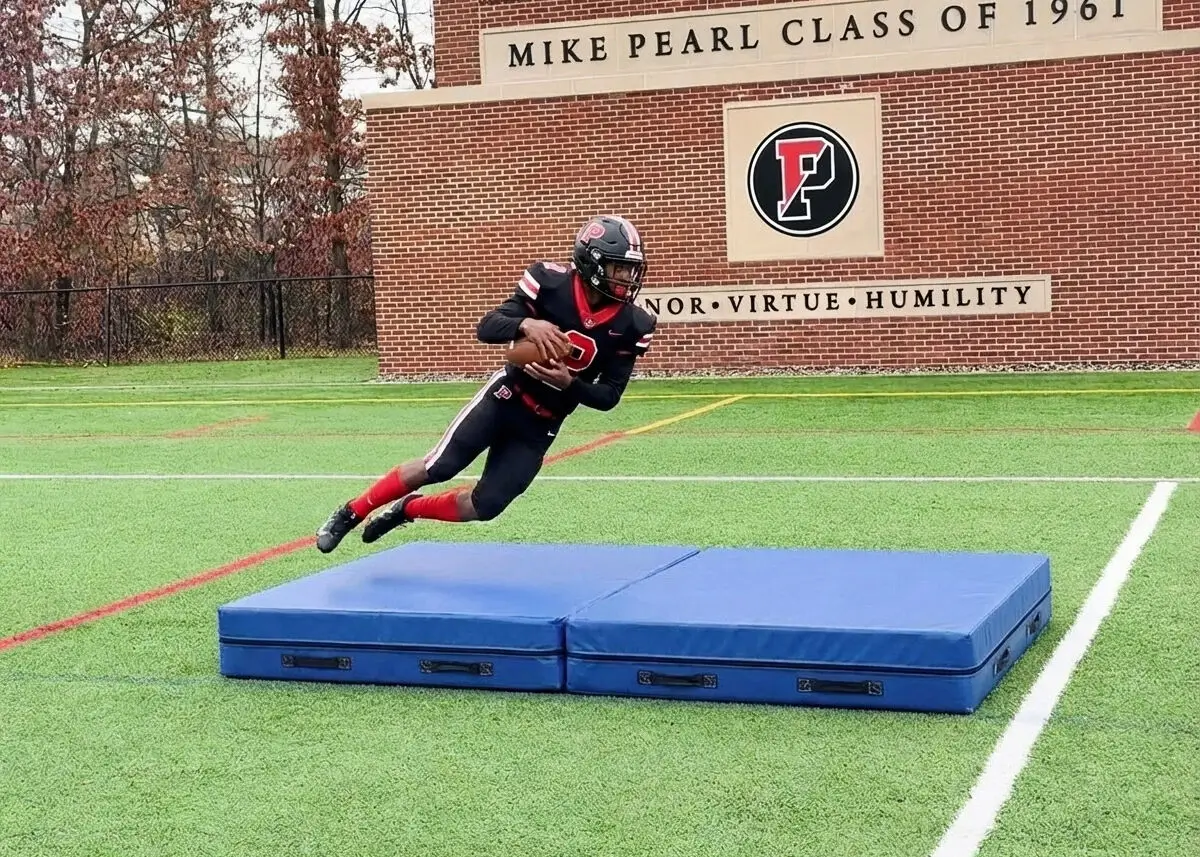
The ‘Pad Level’ Trap: Why Some 7v7 Stars Struggle with Physicality
Viral summer highlight reels feature spectacular catches in lightweight shirts, but those moments mask a harsh reality. When August brings 300-pound linemen back into the mix, the field’s geometry suddenly shrinks. This initial physical shock proves that dodging defenders in empty space is vastly different from securing a pass while a linebacker hunts you.
Surviving this chaos requires mastering “pad level,” a fundamental concept completely absent from summer play. Without the threat of tackling, athletes unconsciously run tall—a dangerous habit when leverage dictates survival. Coaches constantly preach that the “low man wins,” meaning the player who drops their hips will deliver the blow instead of absorbing it.
Figuring out how to handle the physical transition to college football ultimately dictates a recruit’s early success. Adjusting to full-contact speed for freshmen means re-calibrating their internal timing while navigating through massive blocking bodies. College programs heavily rely on specialized football transition drills during camp to teach players how to maintain their summer explosiveness while carrying heavy gear.
Predicting which phenoms will embrace this violence is the ultimate recruiting challenge. Evaluators must look past the gym shorts to separate 7v7 fluff from genuine Saturday talent.
Translating the Tape: How Scouts Separate 7v7 Fluff from Saturday Talent
Evaluators aren’t mesmerized by one-handed catches in empty space. They focus on how scouts use 7v7 film for evaluations to measure “functional athleticism”—a player’s ability to bend, plant, and explode with precision. A flashy five-star prospect might look unstoppable in gym shorts, but if his speed relies on taking long, looping strides without facing defensive pressure, he is likely just a “7v7 specialist.”
Finding players who are truly “Saturday Ready” requires looking past raw hype to find technical foundations. This dynamic heavily drives the impact of offseason 7v7 on recruiting rankings, where fundamentally sound three-star recruits often expose their higher-rated peers. Experts specifically hunt for four glaring red flags in 7v7 performance:
- Catching with the body instead of extending the hands
- Lazy backpedals that ignore the threat of incoming blockers
- Jumping prematurely to make theatrical, unnecessary leaps
- Rounding off routes instead of executing sharp, sudden cuts
College football ultimately demands athletes who seamlessly translate summer agility into autumn reliability. When prospects combine the spatial awareness honed in July with strict technical discipline, they lay the groundwork for a massive college career. Prospects like C.J. Stroud exemplify exactly how this successful transition works.
Case Study: The C.J. Stroud Blueprint for Success
Before he was a household name throwing touchdowns on Sundays, C.J. Stroud was an under-the-radar recruit looking for a spark. That spark ignited at “The Opening,” a premier summer showcase where his pinpoint passing changed his entire career trajectory.
This event established what scouts now call the “Stroud Blueprint.” Instead of just hunting for deep highlights, he used countless summer reps to build an elite sense of timing. When you evaluate notable college stars who played 7v7, the best ones share this trait: their summer accuracy directly mirrors their eventual college completion percentage.
Mastering that rhythm is what makes the transition from 7v7 to college football so incredibly difficult for most quarterbacks. Once the pads come on and linemen crash the pocket, that summer timing often collapses. Predicting who will panic and who will thrive during this transition requires identifying specific readiness indicators.
3 Signs a 7v7 Star is Truly ‘Saturday Ready’
You no longer have to view summer circuits as just offseason touch football. Recognizing the crucial bridge between the limitless space of July and the crushing physicality of the college game reveals how elite athletes translate open-field speed into functional power.
Next time you are evaluating skill position players from your living room, watch the game with a scout’s eye. Instead of just following the ball, look for the subtle mechanics players perfected during those summer tournaments.
Use this “Saturday Readiness” checklist to see who is truly prepared for the next level:
- Hand usage: Watch how quickly receivers shed physical defenders at the line of scrimmage.
- Snap-to-release speed: Notice the quarterback’s internal clock resetting amidst a chaotic pass rush.
- Recovery acceleration: Look for defensive backs exploding immediately after a sudden change of direction.
While football transition drills help bridge this gap, the ultimate truth never changes. The 7v7 circuit is the laboratory, but Saturday is the final exam. When you spot these translated traits on your screen, you will know exactly who did their homework.
Learn More About the NIL Landscape
Name, Image, and Likeness plays an increasing role in college sports, and understanding how it works often requires more than individual articles or news updates.
RallyFuel is a platform focused on NIL-related topics across college athletics. It brings together information about athletes, NIL activity, and the broader structure behind modern college sports, helping readers explore the topic in more depth.
Q&A
Question: What makes 7v7 such a valuable “laboratory” for football development and evaluation?
Short answer: By removing linemen and contact, 7v7 isolates the sport’s passing DNA—space, speed, and precision. Quarterbacks can focus on ball flight and trajectory, receivers refine how to uncover in open grass, and defensive backs sharpen eye discipline without relying on a pass rush. This stripped-down setting gives scouts a clean look at mechanics, decision-making, and spatial awareness, while the national circuit boosts exposure and helps evaluators gauge raw athletic ceilings before full-contact variables enter the picture.
Question: How does the four-second buzzer in 7v7 shape quarterback development, and what do scouts prioritize on QB film?
Short answer: The strict four-second rule installs a fast internal clock, forcing rapid processing where timing and read speed matter more than arm strength. In this “QB lab,” passers test tight-window throws and refine repeatable mechanics. When scouts study 7v7 QB tape, they zero in on three traits: release speed against the countdown, consistent shoulder level while scanning, and disciplined footwork without a messy pocket. Mastering these accelerates the transition to Saturdays, where chaos demands split-second decisions.
Question: Why does wide receiver route running often peak in the summer, and what’s special about the slot fade?
Short answer: With no run game or pads to lean on, summer receivers must separate through pure technique—precise footwork, body control, and efficient hand fighting at the line. The slot fade is a showcase route: an inside stem that bends to the back pylon, demanding perfect timing and ball placement. It highlights how 7v7 polish—leverage, stems, and tracking—translates directly to Saturdays when executed with the same precision under pressure.
Question: What do defensive backs learn in 7v7, and where does the format fall short for them?
Short answer: DBs are marooned on an “island” without a pass rush, so they develop elite eye discipline, patient hips, and Press Man technique to disrupt timing. Surviving longer coverage windows builds mental toughness and refined mechanics. However, 7v7 can’t simulate tackling or leverage battles; that gap creates the “pad level” trap. Players who ran tall in July must relearn low hips and leverage to withstand contact and navigate shrinking spaces once pads return.
Question: How do scouts separate 7v7 highlight fluff from true “Saturday Ready” talent, and what indicators should viewers watch?
Short answer: Evaluators value functional athleticism—clean bends, sudden plants, and efficient bursts—over one-handed grabs in open space. They flag red signs like body-catching, lazy backpedals, premature jump attempts, and rounded routes. Positive markers include strong hand usage at the line, a QB’s rapid snap-to-release under pressure, and a DB’s immediate recovery acceleration after direction changes. The C.J. Stroud “Blueprint” underscores it: summer timing and accuracy that cleanly scale to college are far more predictive than viral highlights.


Leave a Comment