
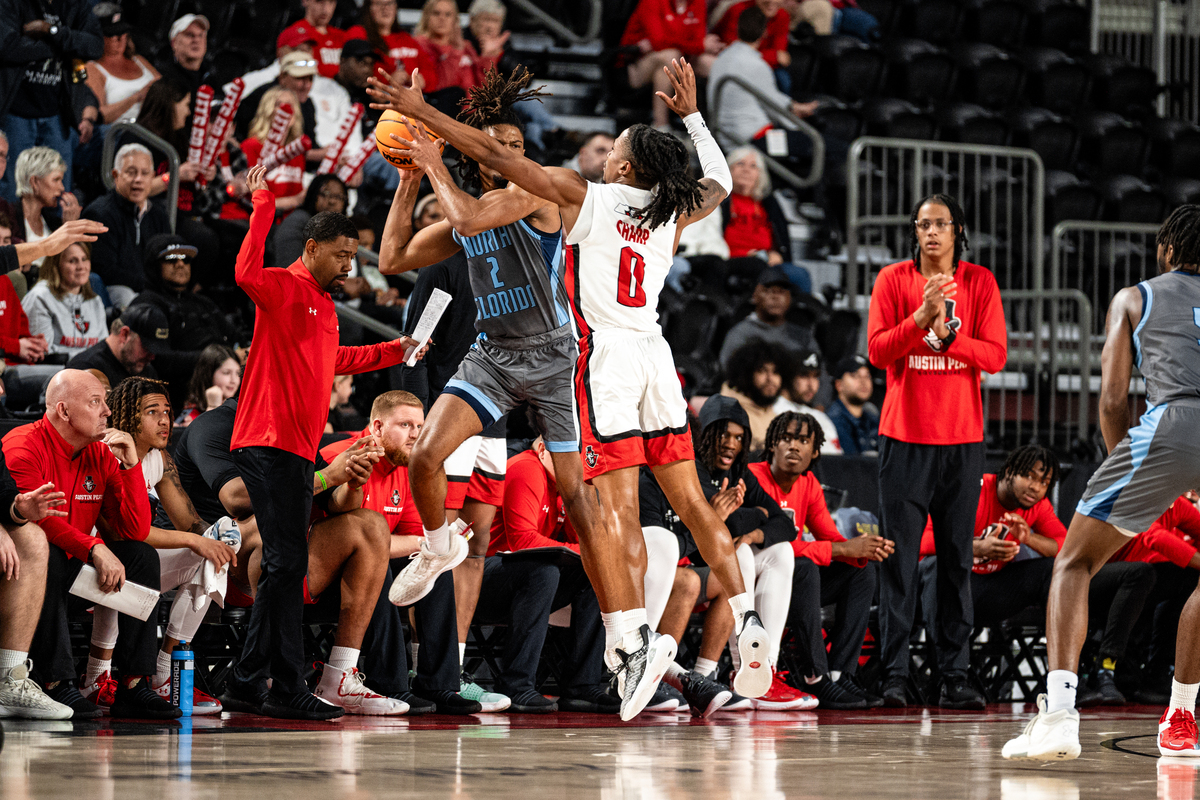
To secure a starting point guard in the Big 12 today, you need more than just a legendary coach or a rich history—you need roughly $400,000 in available capital. This is the new sticker shock of college sports, where the romantic notion of amateur athletics has collided with the hard reality of professional finance. This shift exposes the multi-million dollar budgets now required to compete in the nation’s premier basketball conference.
For decades, the financial exchange was simple: elite talent in return for college basketball scholarships . That fixed equation has been shattered by the concept of “market value,” where a player’s worth is now dictated by aggressive bidding wars rather than tuition costs. While NIL (Name, Image, and Likeness) theoretically pays athletes for their fame, coaching sources admit these nil deals effectively function as annual salaries based on on-court performance.
Since schools generally cannot pay this “salary” directly, a new power broker has emerged: the collective. Think of a collective as a privately funded payroll department that exists outside the university’s official walls. These organizations gather funds from wealthy boosters and everyday fans to ensure their team has the war chest necessary to recruit and retain stars.
Nowhere is this pressure more intense than in the Big 12, the undisputed heavyweight division of the sport. As Big 12 Basketball NIL Budgets swell past the $3 million mark for top contenders, understanding this economy is no longer optional for fans—it is the only way to explain why rosters change so drastically every spring.
Why It Costs $4 Million to Win the

To sit at the high-stakes table of the Big 12—widely regarded as the toughest basketball conference in America—universities must treat player payroll as their primary competitive advantage. The days of winning solely on tradition or coaching charisma are effectively over. Industry insiders suggest that the “Table Stakes,” or the minimum buy-in required just to field a respectable team, now sit between $1.5 million and $2 million annually. To actually cut down the nets in March, coaching staffs are managing recruiting budgets that frequently push past the $4 million mark. This isn’t just about buying talent; it is about buying survival.
However, a massive bank account means nothing if the allocation strategy is flawed. General Managers (a role that practically exists now in college hoops) focus heavily on establishing a “Roster Floor.” This concept ensures that even the 7th and 8th men in the rotation—players who might only see 10 minutes of action—are paid enough to prevent them from transferring to a mid-major school where they could be the star. In the brutal grind of the Big 12, depth is expensive. A program cannot blow its entire budget on two superstars and fill the rest of the bench with walk-ons, or they will be decimated by injuries and fatigue by February.
Perhaps the most overlooked expense in these multi-million dollar spreadsheets is the “Retention Tax.” This is the cost of re-recruiting your own roster every spring. If a sophomore guard has a breakout season, his market value instantly triples. To keep him from entering the transfer portal, the school’s collective must match or exceed what other programs are whispering in his ear. This inflation often forces teams to make hard decisions: do they pay the tax to keep a veteran, or let him walk and gamble on a cheaper freshman?
A competitive $3 million annual budget might be sliced in the current Big 12 basketball NIL collective rankings as follows:
- The Stars ($1.2M): Two elite difference-makers (likely a point guard and a center) commanding $600k+ each.
- The Starting Cast ($1M): Three high-level starters averaging $330k to round out the first five.
- The Bench Floor ($500k): Three to four rotation players paid $100k-$150k to provide reliable depth.
- Emergency Reserves ($300k): A “war chest” held back for mid-season adjustments or unexpected retention costs.
Sustaining this level of spending year over year is creating significant anxiety among athletic departments. We are already seeing signs of “donor fatigue,” where the wealthy boosters funding these payrolls are tiring of the constant requests for more cash. This pressure forces schools to get creative with how they fill the coffers, relying heavily on the engine room of modern college sports: the Collective.
Inside the ‘Collective’: How Big 12 Boosters Build Multi-Million Dollar War Chests

While the university sells the tickets and jerseys, federal laws currently prevent the athletic department from cutting checks directly to athletes. Enter the “collective,” a standalone business entity that functions essentially as an outsourced payroll department. These organizations operate independently from the school but work in lockstep with the coaching staff to ensure the promised funds are actually in the bank when a recruit commits. In the Big 12, the most successful collectives have evolved from loose groups of local business owners into sophisticated agencies employing full-time fundraising staff, marketing directors, and financial planners.
Filling these war chests requires a two-pronged strategy that mimics modern political campaigning. The foundation is usually built on “whale” donors—wealthy alumni capable of dropping six-figure sums annually to secure a star transfer. However, relying solely on millionaires is risky, so savvy collectives have pivoted toward the “subscription model.” By asking thousands of average fans to contribute $25 or $50 a month in exchange for exclusive content or meet-and-greets, programs like those at Kansas or Texas Tech create a steady stream of recurring revenue that stabilizes the budget against the volatility of the transfer portal.
This financial ecosystem faced a significant reality check recently regarding tax status, shifting the pitch made to potential backers. Early in the NIL era, many collectives operated as 501(c)(3) charities, allowing donors to write off their contributions as tax-deductible gifts under the guise of players performing charitable work. The IRS has since signaled deeper scrutiny of this arrangement, arguing that the primary purpose is winning games, not philanthropy. Consequently, the sales pitch has shifted from “help a charity” to a transactional “pay for access,” making fundraising purely about the fan’s desire to see their team win.
Sustaining this momentum is proving difficult as the dreaded “donor fatigue” sets in across the conference. Boosters who happily wrote checks during the excitement of year one are becoming hesitant to treat their bank accounts like an ATM every time a roster spot opens up. This burnout is particularly dangerous for schools with smaller alumni bases; if the team fails to make the NCAA Tournament after a heavy spending spree, convincing those same donors to reinvest the following spring becomes a nearly impossible sell.
Once the money is raised and the fatigue is managed, the collective’s managers face the pragmatic task of valuation. They must look at the pile of cash available and decide exactly how much a specific skill set is worth in the open market. Determining the precise dollar amount for a reliable scorer versus a defensive specialist creates a complex hierarchy of value, which requires examining the specific price tags attached to Big 12 starters compared to the men coming off the bench.
The Price of a Bucket: Market Valuations for Big 12 Starters vs. Bench Players
Fielding a team capable of surviving a Tuesday night road game in Lawrence or Waco now requires a payroll that rivals a small tech startup. Industry insiders suggest that the average cost of a starting college basketball lineup in the Big 12 currently lands between $2 million and $4 million annually. This figure doesn’t just represent the ceiling for a national champion; it is rapidly becoming the floor for relevance. The days of finding a hidden gem for free are effectively over—talent now comes with a clearly defined invoice attached, and sticker shock is common for fans used to the amateur era.
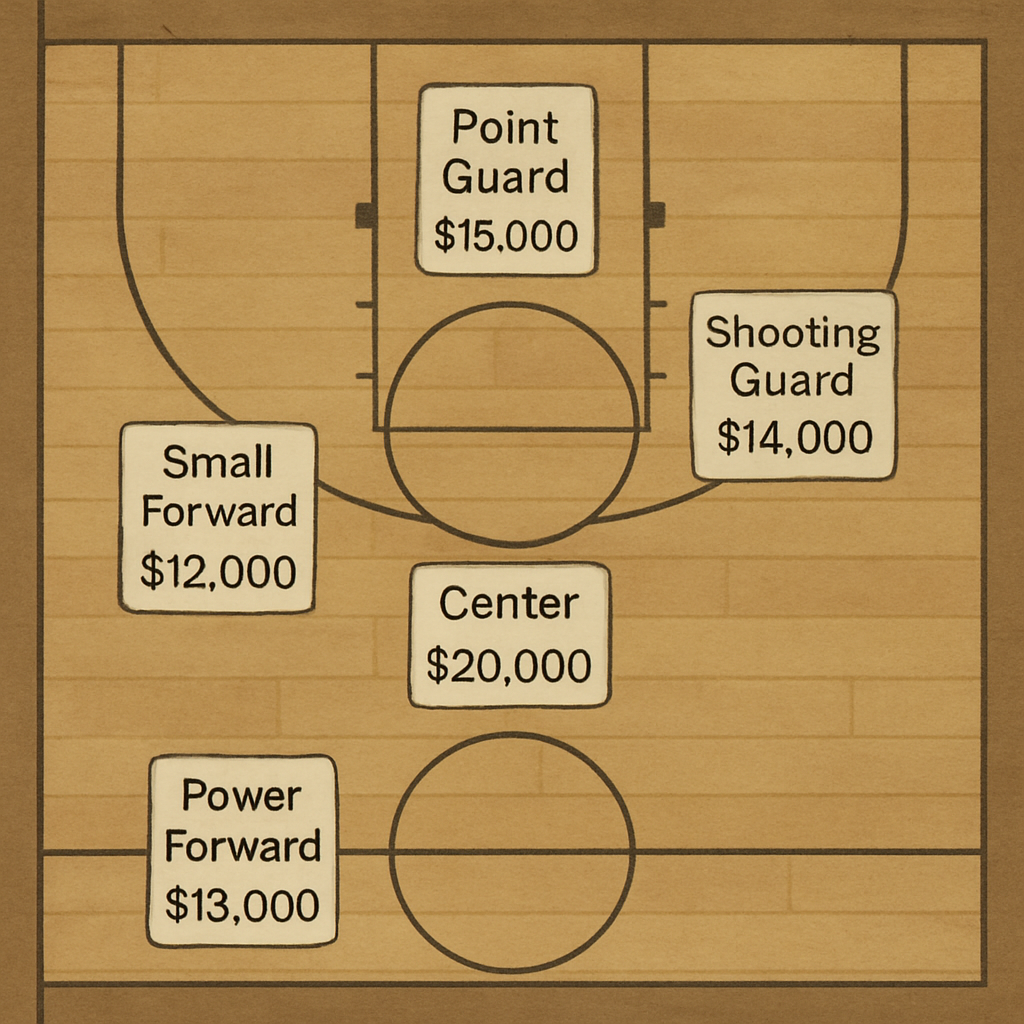
![Image: A high-angle view of a polished basketball court floor. Digital price tags are subtly overlaid on the five traditional positions in a formation. The Center position tag reads “$600k+”, the Point Guard tag reads “$500k”, and the Wing tags read “$350k”. The image visualizes the cost of a starting lineup.]
Market forces dictate that not all positions are created equal, driven largely by the economic concept of “position scarcity.” In the Big 12, elite centers—7-footers who can defend the rim without getting winded—and veteran point guards are the rarest commodities. Because there are fewer human beings on earth with these specific physical and mental skill sets, the bidding wars for them become the most intense. If a coach needs a big man to counter the conference’s physicality, they are buying in a seller’s market where the price is driven up by pure supply and demand.
While exact contracts are guarded like state secrets to prevent bidding wars, agents and collectives have established general market rates. When fans ask how much do elite college basketball players earn , the answer depends heavily on their role. This is the estimated NIL valuation for preseason all-conference players:
- Elite Center: $400,000 — $750,000+
- Starting Point Guard: $300,000 — $600,000
- Scoring Wing: $200,000 — $450,000
- Role Player/Specialist: $100,000 — $250,000
Perhaps the most surprising development in the Big 12 economy is the rising cost of the “sixth man.” In the past, bench players were often developing underclassmen, but the physical brutality of this conference requires veteran depth. To keep a reliable scorer or a defensive stopper who plays 20 minutes a game from transferring to a mid-major where they could be the star, schools must pay a retention premium. A solid rotation player off the bench can now command a six-figure salary, essentially serving as an expensive insurance policy against injury or foul trouble.
Managing these valuations is a constant high-wire act for coaching staffs trying to balance a finite budget. Overpaying for one position often leaves a critical gap elsewhere, creating a financial house of cards that can collapse the moment a player feels undervalued. This volatility sets the stage for the chaotic spring window, where the disparity between a player’s self-valuation and the school’s budget triggers the annual migration known as the transfer portal.
The Transfer Portal ‘Free Agency’: How NIL Budgets Dictate Roster Turnover
If the regular season is a marathon, the spring transfer window is a high-speed auction. The Transfer Portal has effectively evolved into unrestricted free agency, but with a chaotic twist: there is no salary cap and no contracts binding players beyond a single year. When the portal opens, Big 12 basketball NIL budgets become the primary recruiting tool, turning the offseason into a direct extension of the financial valuations discussed earlier. It creates a marketplace where a school’s ability to retain its own stars or poach rivals relies entirely on the liquidity of its collective.
For standout players at mid-major universities, entering the portal often represents a life-changing promotion akin to moving from a local startup to a Fortune 500 company. A guard who averages 20 points per game in a smaller conference has proven they can produce at the college level, and Big 12 collectives view these veterans as significantly safer investments than unproven high schoolers. This dynamic has turned smaller conferences into an unofficial “farm system” for the power leagues, where talent is developed on a budget before being acquired by the highest bidder once the player proves their worth.
Coaches facing pressure to win immediately utilize this market to overhaul their teams overnight. In the past, rebuilding a program meant enduring years of losses while young players matured physically and mentally. Today, a program with sufficient funding can bypass development entirely by purchasing a roster of 22-year-old veterans who are ready to compete instantly. The impact of NIL on transfer portal movement allows struggling teams to “get old and stay old,” trading donor cash for immediate experience and physical maturity that would otherwise take three years to cultivate.
This accelerated movement means that roster stability is now a luxury reserved only for the few programs that can match any external offer. Most teams must now re-recruit their own locker room every April while simultaneously shopping for replacements, creating a cycle of constant turnover. As the dust settles on the transfer window, a clear financial hierarchy emerges, distinguishing the historic powerhouses capable of unlimited spending from the newcomers trying to buy their way to the table.
Comparing the Giants: Kansas vs. The Newcomers in the NIL Arms Race
While conference realignment added fresh energy and new markets to the league, it also exposed a massive financial fault line between the “haves” and the “trying-to-haves.” Traditional powerhouses like Kansas or Baylor operate like established Fortune 500 companies, leaning on multi-generational donor bases—often called “legacy donors”—that have been writing checks for decades. In contrast, newer members like UCF or Cincinnati act as aggressive startups, scrambling to build capital quickly to compete at the highest level. This disparity is glaring when looking at estimated Big 12 basketball NIL collective rankings, where the top-tier programs often outspend the bottom tier by a margin of nearly 2-to-1.
For the historic blue bloods, the strategy is defined by protectionism and premium acquisition. These programs possess the deep pockets necessary to engage in high-stakes bidding wars that rival those found when comparing Big 12 vs SEC basketball recruiting budgets. Their collectives focus heavily on “retention bonuses”—paying six-figure sums to keep their current All-Americans happy—before spending massive amounts to land the single best player available in the portal. It is a luxury model: buy the best, keep the best, and rely on the school’s brand reputation to close the deal.
Conversely, the challengers must be significantly more strategic with their war chests because they cannot yet rely on infinite “old money.” The positive effect of conference realignment on Big 12 NIL revenue is real, but schools like Houston or BYU often adopt a “Moneyball” approach to maximize those new dollars. Instead of blowing their entire budget on one superstar, they frequently spread their resources across multiple high-floor veterans who fit a specific system. They look for undervalued assets—players from mid-major schools who have the stats but lack the national hype—hoping to develop them into stars at a fraction of the cost.
Understanding these two distinct approaches clarifies why roster construction looks so different across the league:
- Established Blue Bloods (e.g., Kansas): Focus on High-Cap Spending , prioritizing star retention and winning bidding wars. Risk Profile: Low.
- Emerging Powers (e.g., UCF/Cincinnati): Focus on Market Efficiency , prioritizing system fit and undervalued transfers to scale quickly. Risk Profile: Moderate to High.
While the men’s game creates headlines with these million-dollar variances, a different market is emerging where a significantly smaller investment yields an even higher return on investment: the rapidly growing world of women’s athletics.
The $100k Opportunity: Why Big 12 Women’s Basketball is a High-Growth NIL Market
If the men’s game is a high-stakes auction house, the women’s game resembles a high-growth tech stock. For the price of a single backup center on a men’s roster, a Big 12 school can often fund a substantial portion of a starting five for the women’s team. This disparity highlights one of the most significant Big 12 women’s basketball NIL market trends: the return on investment is immediate and tangible. Because viewership records are shattering annually—and iconic programs like Baylor and Iowa State consistently sell out arenas—investors see a dollar go much further in terms of visibility and fan engagement compared to the saturated men’s market.
Unlike the men’s landscape, which relies heavily on “donations” that function as salary payments, the women’s market is fueled by genuine marketing value. Female athletes in the Big 12 frequently outperform their male counterparts on social media, making them legitimate targets for corporate sponsors rather than just wealthy alumni. Brands are not just writing checks to help a team win; they are paying for access to a highly engaged demographic. This shift creates sustainable funding strategies for NIL collectives because the revenue is derived from corporate advertising budgets—a renewable resource—rather than the finite pockets of fatigued boosters.
Programs that recognized this market inefficiency early are now reaping the rewards. Schools like Kansas State and West Virginia have utilized this approach to retain top talent without needing the bottomless coffers of a blue blood. By focusing on player marketability and community integration, these programs have turned their women’s rosters into brand ambassadors. The result is roster stability; players are less likely to jump into the transfer portal when they have authentic local partnerships that bind them to the community, creating a competitive advantage that money alone cannot buy.
This specific ecosystem creates a fascinating dynamic as college sports hurtle toward a professionalized future. While corporate brands are happy to pay for women’s basketball influence today, federal courts and massive legal settlements are rewriting the rules for how schools themselves will pay athletes tomorrow. The era of relying solely on third-party deals is closing, giving way to a systemic overhaul that will force athletic directors to budget for salaries directly from the university’s revenue stream.
From Collectives to Revenue Sharing: The Billion-Dollar Shift in Student-Athlete Pay
If the current NIL landscape feels like a high-stakes fundraiser, the next phase will look more like a standard corporate payroll. The driving force behind this transformation is the “House settlement,” a landmark legal agreement that is forcing the NCAA to settle billions in back damages and, more importantly, rewrite the forward-looking rules of amateurism. For Big 12 fans, this means the era of relying solely on third-party donors is ending. Instead, schools are preparing to cut checks directly to athletes, moving the financial burden from the booster club’s discretionary fund to the university’s official ledger.
This transition introduces a concept previously forbidden in college sports: revenue sharing. Under the proposed model, schools will be permitted—and competitively pressured—to share roughly $20 million to $22 million of their annual revenue directly with athletes. The revenue sharing impact on student athlete compensation will be profound, essentially creating a salary cap similar to the NFL or NBA. Athletic directors at programs like Kansas or Arizona will no longer just be administrators; they will effectively become General Managers, tasked with allocating a fixed salary pool across football, basketball, and other sports to build championship rosters.
Collectives will not disappear in this new world, but their function will fundamentally shift from being the primary employer to acting as a strategic advantage. As universities navigate legal compliance for NCAA name image and likeness deals, the direct revenue sharing acts as the base salary, while collectives will likely provide the “signing bonuses” or marketing income that differentiates one offer from another. This hybrid model allows schools to leverage their massive media rights deals to cover baseline talent costs while using donor money to close the deal on elite superstars.
Professionalization is the inevitable endpoint of these financial maneuvers. The days of ambiguous “student-athlete” definitions are being replaced by contractual clarity, where performance, retention, and market value are line items in a budget. As this financial dust settles, the only question remaining for fans and administrators alike is how to adapt strategies to survive in a fully professionalized collegiate ecosystem.
Navigating the New Era of Big 12 Basketball
Viewing your team’s roster through the lens of Big 12 basketball NIL budgets reveals that while money sets the floor, it doesn’t guarantee the ceiling. You can now recognize that the “Wins per Dollar” metric matters just as much as the total spend. The checkbook covers the entry fee to compete, but coaching and chemistry ultimately decide who cuts down the nets. The most expensive team doesn’t always win, but an underfunded one rarely survives.
As the off-season unfolds, look for these three indicators to judge if your school is truly maximizing return on investment for basketball boosters:
- Retention Success: Are current stars re-signing, proving the collective pays on time and keeps promises?
- Portal Speed: Does the team land transfers quickly, signaling that funds were ready to deploy immediately?
- Roster Depth: Is there budget left for a strong bench, or is the payroll dangerously top-heavy?
The rules of the game have evolved, but the goal remains the same; now you simply understand the true cost of a championship season.
Learn More About the NIL Landscape
Name, Image, and Likeness plays an increasing role in college sports, and understanding how it works often requires more than individual articles or news updates.
RallyFuel is a platform focused on NIL-related topics across college athletics. It brings together information about athletes, NIL activity, and the broader structure behind modern college sports, helping readers explore the topic in more depth.
👉 Explore the Athletes on RallyFuel – Discover top college athletes, compare NIL valuations, and dive deeper into the world of NIL.
Q&A
Question: What is a “collective,” and why do Big 12 programs rely on it?
Short answer: A collective is an independent, donor-funded entity that functions like an outsourced payroll department for athletes’ NIL payments. Because schools generally cannot pay athletes directly, collectives raise and manage the money—working closely with coaches to ensure funds are in place when recruits commit. They blend “whale” donations from wealthy alumni with subscription-style contributions from thousands of fans to create steady, recurring revenue. After IRS scrutiny of 501(c)(3) models, the pitch shifted from “charitable gift” to transactional “pay for access,” intensifying the need for reliable, non-deductible funding. The biggest ongoing challenge is donor fatigue, which makes diversified, subscription-based support critical to maintaining competitive budgets.
Question: What do “Table Stakes,” “Roster Floor,” and “Retention Tax” mean—and how do top teams allocate a $3M budget?
Short answer: “Table Stakes” is the minimum spend (about $1.5–$2M) just to be competitive in the Big 12; true title chases often require pushing past $4M. The “Roster Floor” is paying 7th–8th rotation players enough to keep them from transferring, ensuring depth that survives injuries and the league’s physical grind. The “Retention Tax” is the premium required each spring to re-recruit your own breakout players as their market value spikes. A competitive $3M budget often looks like: Stars ($1.2M for two at ~$600k+ each), Starting Cast ($1M for three at ~$330k each), Bench Floor ($500k for 3–4 at $100k–$150k), and Emergency Reserves ($300k) for mid-season needs or retention costs.
Question: How much does a Big 12-quality starting lineup cost, and which positions command the most NIL money?
Short answer: Industry estimates peg a Big 12 starting five at $2–$4M annually, a figure that’s becoming the floor for relevance. Position scarcity drives premiums: elite centers (rim-protecting 7-footers) and veteran point guards are the hottest commodities. Typical valuation bands are: Elite Center $400k–$750k+, Starting Point Guard $300k–$600k, Scoring Wing $200k–$450k, and Role Player/Specialist $100k–$250k. The “sixth man” now also commands a six-figure number due to the need for veteran depth, making bench investment a costly but essential insurance policy.
Question: How does the transfer portal resemble free agency, and how do NIL budgets shape roster turnover?
Short answer: The portal functions like unrestricted free agency without multi-year contracts or a salary cap, so liquidity in a school’s collective becomes the primary recruiting tool. Programs use NIL to retain their own stars and to acquire proven mid-major standouts—treating smaller leagues as a de facto farm system. Well-funded teams can “get old and stay old,” rebuilding overnight with 22-year-old veterans instead of waiting years for development. The flip side is instability: most staffs must re-recruit their roster every spring while shopping the portal, and a clear financial hierarchy emerges between schools that can match any offer and those that can’t.
Question: What will change under revenue sharing, and what role will collectives play then?
Short answer: The House settlement ushers in direct revenue sharing, with schools likely allocating roughly $20–$22M annually to athletes—creating an effective salary-cap dynamic across sports. Athletic directors will operate more like GMs, distributing a fixed pool across football, basketball, and others to build title-ready rosters. Collectives won’t disappear; they’ll shift from being the primary payer to offering differentiators such as “signing bonuses” or marketing income alongside the school-provided base. The result is a hybrid model that formalizes pay from university revenues while preserving collectives as strategic advantages in high-end bidding.




Leave a Comment