
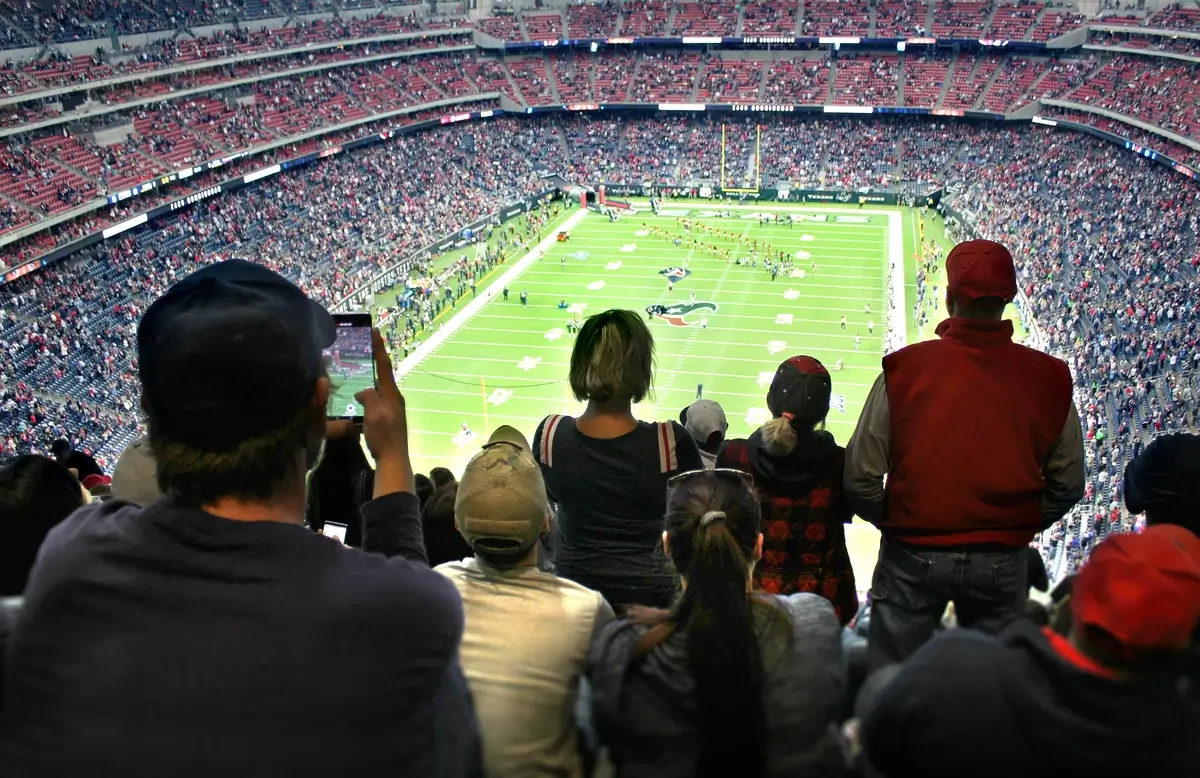
The total Name, Image, and Likeness (NIL) market is projected to reach $2.75 billion during the 2026 academic cycle due to professionalization of the sector, a $2.8 billion retroactive payment structure (House vs. NCAA settlement), a forward-looking revenue-sharing “Pool” for Division I institutions, and the integration of institutional revenue-sharing models.
At the center of all of this are NIL contracts that have morphed into two distinct models: the traditional, brand-protective agreement exceeding 10 pages, and the emergent platform-driven model that prioritizes transparency, brevity, and conditional fan engagement.
Key Market Figures
- $2.75B Total NIL Market (2025-26)
- $20.5M Per-School Revenue Pool Cap
- 4.5x Women’s Sports NIL Growth vs. Men’s
The Demise of Amateurism
For decades, the collegiate model was defined by “amateurism,” which prohibited athletes from receiving even minor benefits.
The 2021 Supreme Court ruling in NCAA v. Alston removed NCAA caps on education-related benefits and weakened its antitrust protections. This allowed states to pass their own NIL laws, beginning with Florida’s Statute 1006.74 on July 1, 2021.
By 2026, the landscape will have matured into a tripartite economy consisting of commercial endorsements, booster-funded collectives, and institutional revenue sharing.
Market Evolution: 2021-2026
The following table illustrates the shift in capital allocation as the market transitioned from a “Gold Rush” phase to a structured institutional model. The drastic reduction in collective spend (down 82% in 12 months), coupled with the surge in collegiate spend, indicates a professionalization in which universities are taking direct control of athlete compensation through the House Settlement mechanism.
| Column 1 | Column 2 | Column 3 | Column 4 | Column 5 |
|---|---|---|---|---|
| Segment | Year 1 | Year 3 | Year 5 | Source |
| Commercial | $596.7M | $234.0M | $994.9M | Brands / Fans |
| Collective | $321.3M | $936.0M | $227.3M | Boosters |
| Collegiate | $0 | $0 | $1.5B | Universities |
| TOTAL | $918M | $1.17B | $2.72B |
The 10 Essential Contract Provisions
The NIL contract has become a critical focal point for risk mitigation. Traditional brand deals often exceed 10 pages and include complex requirements for social media metrics, grade-point averages, and “positive public image” clauses that extend to the athlete’s family members.
For an athlete to maintain eligibility and secure fair market value, their agreements must clearly articulate these ten provisions:
1. Granular Description of Services
Vague language is the primary driver. Phrases such as “promotional services as requested” grant brands unlimited access to an athlete’s time. Expert-level contracts specify exact deliverables: the platform (TikTok, Instagram), format (feed post, story), and duration of physical appearances.
2. Precise Compensation and Payment Triggers
Compensation must be defined by amount and timeline. Many traditional contracts tie payment to “satisfactory completion,” an arbitrary standard brands use to delay or withhold funds. Best practices involve fixed dates: “Payment due within 30 days of deliverable completion.”
3. Duration and Flexibility
The term dictates long-term marketability. Open-ended contracts covering a “collegiate career” are predatory … they lock athletes into rates that may become obsolete as their value grows. Shorter terms (6-12 months) allow for renegotiation based on performance-driven brand equity.
4. Not-for-Athletics Attestation
A core requirement for NCAA compliance is that payment must be explicitly stated as being in exchange for NIL services, not “pay-for-play.” This is critical. Without it, the contract can be interpreted as a violation, resulting in immediate ineligibility.
5. Not-for-Recruitment Attestation
This ensures the deal is not an inducement to attend or remain at a specific school.
6. Reciprocal Termination Rights
Asymmetry in termination clauses is a major red flag. Traditional deals often offer brands eight or more exit routes, while leaving athletes with none. An equitable contract grants the athlete the right to exit if the brand fails to pay or breaches its own obligations.
7. Eligibility and Transfer Termination Rights
Athletes require a specific exit strategy if they lose eligibility, transfer to a different jurisdiction, or turn professional. Without this provision, an athlete could theoretically owe deliverables to a local college brand after moving to the NFL or WNBA, for example.
8. Disclosure and Transparency Permissions
NCAA regulations and state laws mandate NIL contracts be shared with institutional compliance offices. The agreement must explicitly allow the athlete to disclose terms to their school, conference, and the Centralized Settlement Clearinghouse (CSC).
9. Management of School Intellectual Property
A common legal pitfall involves unauthorized use of university logos, colors, or uniforms. Quality templates clarify that obtaining rights to school IP is the responsibility of the brand, not the athlete. This protects athletes from institutional penalties.
10. Narrow Exclusivity Terms
Broad exclusivity (i.e., “all athletic footwear”) can block an athlete from multiple lucrative deals. Narrowing exclusivity to specific categories (i.e., “running shoes” vs. “lifestyle sneakers”) preserves the athlete’s ability to build a diverse portfolio.
Contractual Disruption: Platform Models
The 2026 market has seen the emergence of “frictionless” contracting platforms that seek to eliminate the need for 10-page legal documents and extensive lawyer review.
| Column 1 | Column 2 | Column 3 |
|---|---|---|
| Feature | Traditional NIL Deal | Platform Model |
| Contract Length | 10+ pages | 3 pages |
| Negotiating Parties | Athlete vs. Brand/Agency | Athlete vs. Platform |
| Completion Time | Days to weeks | ~2 minutes |
| Termination | Asymmetrical / Complex | Conditional / Auto-Refund |
| Compliance | Manual filing per deal | Built-in / Automated |
| Payment Trigger | Satisfactory Completion | Condition Fulfillment |
The core innovation of platform models is the “Conditional Deal.” Instead of complex performance triggers (which can be interpreted as pay-for-play), these platforms utilize conditional engagement rights. Fans purchase support contingent on a specific condition, such as the athlete attending or staying at a designated school. If the condition is met, funds are released as a NIL deal. If not, fans receive an automatic refund.
This is an area in which RallyFuel excels.
Predatory Contracting Red Flags
As the financial stakes rise, so do the risks of exploitative agreements. The 2026 regulatory environment includes several warning signs that should trigger immediate negotiation or withdrawal.
Behavioral “Morals” Clauses for Third Parties
Traditional brand contracts often include termination triggers for “unbecoming conduct.” In recent years, these have expanded to include the behavior of the athlete’s family and friends. Because an athlete cannot control third parties, such clauses are considered overreach and should be rejected.
Perpetual Rights and Lifetime Value Extraction
A major concern is the “in perpetuity” clause regarding content rights. If a brand can use an athlete’s image forever for a one-time $5,000 payment, they’re extracting lifetime value from a temporary relationship. Expert negotiation seeks to limit usage rights to 1-2 years with options for renewal at higher rates.
Performance Triggers Linked to Playtime
Contracts requiring an athlete to “maintain starter status” or “play in X% of games” are increasingly viewed as pay-for-play violations by the NCAA. Furthermore, they put the athlete’s income at risk due to factors beyond their control, such as coaching decisions or injuries.
Categorical Exclusivity Overreach
Avoid generics. If a local car dealership demands exclusivity across “all automotive and transportation,” it is blocking the athlete from potentially larger deals with national ride-share apps or airline sponsors. Exclusivity must be narrowly tailored to the specific product being endorsed.
Social Media Growth Speculation
Requiring an athlete to hit a specific follower count (i.e., “Must reach 50K followers by season end”) before payment is triggered is a huge red flag. NIL compensation should reflect the current value of the athlete’s brand, not speculation about future growth.
Women’s Sports: The Growth Engine
One of the most significant trends in the current NIL landscape is the explosive growth of women’s sports. Women’s volleyball, for instance, has seen triple-digit year-over-year growth in NIL value.
| Column 1 | Column 2 | Column 3 |
|---|---|---|
| Period | Growth Rate | Key Driver |
| Year 1 to 2 | +365% | Initial market entry / Collective support |
| Year 2 to 3 | +123% | Commercial brand confidence |
| Year 3 to 4 | +146% | National TV exposure / Star power |
Women’s sports grew 4.5 times faster than men’s sports between 2022 and 2024. This is attributed to the high engagement rates of female athletes who average 15% on platforms like MOGL, compared to the 1.9% average for traditional influencers.
Brands are recognizing that female athletes provide a more authentic connection to Gen Z consumers, leading to a projected total spend of $663.3 million on women’s NIL by 2027-2028.
The House Settlement: Revenue Sharing
The House v. NCAA settlement introduced a direct revenue-sharing model that is the primary driver of NIL income. Division I institutions allocate a portion of their revenue to a “Pool” capped at a percentage of total revenue generated by Power Five conferences.
| Column 1 | Column 2 |
|---|---|
| Academic Year | Estimated Pool Cap (Per School) |
| 2025-26 | $20,500,000 |
| 2026-27 | $21,320,000 |
| 2027-28 | $22,172,800 |
The initial cap for 2025-2026 is estimated at $20.5 million per school, with a mandated annual increase of 4%. This “Collegiate Spend” category is expected to lead the market, with an estimated $1.5 billion in total institutional payments to athletes.
For athletes, this means their NIL portfolio will now include a “salary-like” component from the school, requiring contracts that account for tax withholding, roster caps, and institutional reporting requirements.
The Centralized Settlement Clearinghouse
Under amended NCAA bylaws, the CSC has been granted broad enforcement powers. This body is responsible for monitoring “Fair Market Value” (FMV) in NIL deals to prevent boosters from using NIL as a cover for pay-for-play inducements.
CSC Reporting Obligations
Threshold: All third-party NIL agreements valued at $600 or more must be reported.
Timing: Deals must be disclosed within 14 days of enrollment for new students, or within 5 days of signing for active athletes.
Enforcement: The CSC has launched a confidential tip line for reporting potential violations. Failure to report can result in immediate ineligibility.
This heightened institutional accountability means NIL contracts must be structured for audit readiness.
Strategic Imperatives
The evolution of the NIL marketplace from a fragmented, experimental space into a multi-billion-dollar institutional system has fundamentally changed the requirements for student-athlete contracting. Three overarching themes define the landscape:
1. The Dominance of Institutional Revenue Sharing
The House settlement has effectively turned “amateur” athletes into “professional” contractors. With $1.5 billion in collegiate spend projected for 2025-2026, universities are no longer just regulatory bodies; they are primary financial stakeholders. Contracts must now be designed to navigate this dual status.
2. The End of “Manual” Compliance
The speed of the 2026 NIL market — driven by AI matching and the 5-day reporting window — has made manual contract management obsolete. Platforms that offer “one-signature” solutions or AI-driven generation are becoming the industry standard, protecting athletes by automating red-flag screening and ensuring compliance with state laws and CSC guidelines.
3. The Resilience of the Fan-Powered Model
While collegiate and commercial spend will dominate headlines, the growth of fan-powered platforms indicates a desire for a “no-risk” model of support. By leveraging conditional logic, platforms like RallyFuel enable everyday fans to participate in NIL without the legal complexity of traditional brand deals.
About RallyFuel
RallyFuel is a fan-powered NIL platform that connects supporters directly with college athletes through conditional deals. Founded in 2025, RallyFuel has pioneered a transparent, compliance-first approach to NIL that eliminates the friction of traditional contracts.
How It Works
- Athletes sign once with the platform — not per deal.
- Fans “Fuel” athletes with conditional support
- Automatic outcomes: If conditions are met, athletes get paid. If not, fans get refunded.
Related Articles
- Transfer Portal Leads to Huge Money for College Quarterbacks
- Running backs with the most NIL potential in 2026
- Top Offensive Linemen NIL Earners in 2025: From Pancakes to Paydays
- Edge Rushers NIL 2026
- Top 10 Wide Receivers NIL 2026
- Women’s College Flag Football
Learn More About the NIL Landscape
Name, Image, and Likeness plays an increasing role in college sports, and understanding how it works often requires more than individual articles or news updates.
RallyFuel is a platform focused on NIL-related topics across college athletics. It brings together information about athletes, NIL activity, and the broader structure behind modern college sports, helping readers explore the topic in more depth.



Leave a Comment