
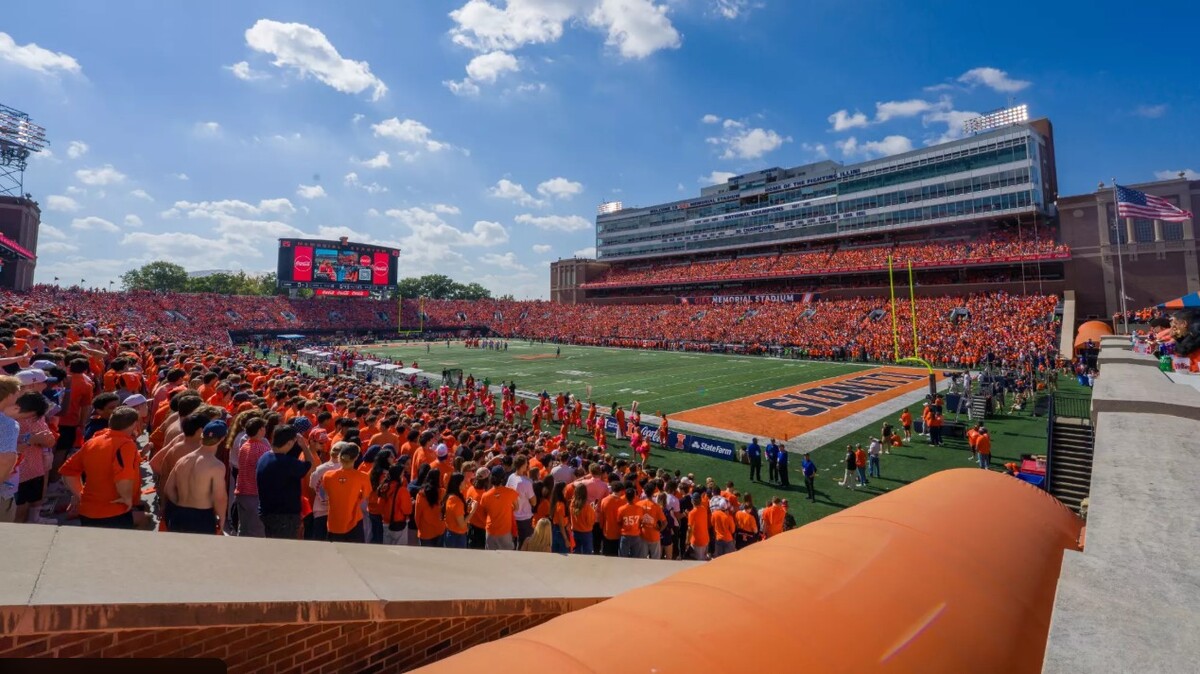
Illinois was a legislative pioneer but now faces competitive pressure from Missouri’s aggressive “Sign and Earn” model. The Student-Athlete Endorsement Rights Act (2021) established the framework; HB 1175 (2022) pivoted from “passive permission” to “active facilitation.” ICON Collective designated as UIUC’s “preferred” collective. TrueNU operates Northwestern’s “charity-first” model. IHSA Bylaw 3.080 permits high school NIL with strict “Intellectual Property Wall.” Libit v. University of Illinois challenges transparency. AD Josh Whitman phased out student fee, proposes “Talent Fee.” Here’s the complete guide.
Illinois’s NIL Evolution
Illinois shifted from a “firewall” philosophy (institutions separate from transactions) to “active facilitation” via the 2022 amendment, enabling the “preferred collective” model.
Student-Athlete Endorsement Rights Act (Public Act 102-0042, July 1, 2021):
- Illinois’s foundational NIL statute
- Codified right to earn NIL compensation without losing eligibility
- Originally PROHIBITED institutions from arranging third-party compensation
- “Firewall” philosophy: Universities separate from deals
- Right to retain professional representation (agents, attorneys)
HB 1175 / Public Act 102-0892 (2022) — The Competitive Pivot:
- REMOVED prohibition on institutional facilitation
- New language: Institutions “not required” but “no longer prohibited” from facilitating
- Green-lit the “preferred collective” model
- ADs can openly endorse specific collectives and direct donor funds
- Updated disclosure: Athletes must provide written notice “in manner prescribed by institution”
- Pay-for-play guardrail maintained: Compensation cannot be conditioned on performance at particular institution
Prohibited Categories (“Vice” Industries):
- Gambling and sports betting
- Controlled substances and cannabis
- Tobacco and e-cigarettes/vaping
- Adult entertainment services
- Firearms
IHSA Bylaw 3.080/3.084 (2023) — High School NIL:
- Permits high school athletes to earn NIL compensation
- “Intellectual Property Wall”: Cannot use school name, logos, mascots, uniforms, trademarks
- No NIL during school hours, travel to IHSA events, or during games/practices
- Same vice prohibitions as college
- Inducement ban: NIL cannot be used for enrollment/transfer incentive
The Missouri Threat — Competitive Disadvantage:
- Missouri HB 417 allows HS athletes to earn NIL upon signing LOI with MO school
- Creates “signing bonus” mechanism Illinois cannot match
- Elite recruits in East St. Louis or Chicago face stark financial choice
- Missouri = immediate monetization; Illinois = wait until enrollment
- Missouri’s “safe harbor” from NCAA investigations not replicated in Illinois
Why Illinois Matters:
Illinois was a legislative pioneer but the 2022 amendment was reactive to competitive pressure. The “preferred collective” model (ICON, TrueNU) is now standard. AD Josh Whitman phased out $3.44M student fee for “moral cap space” to propose “Talent Fee.” Libit v. University of Illinois challenges NIL transparency under FOIA. Elite Eight basketball team reported only $9,100 in NIL—statistically improbable, suggesting “don’t ask, don’t tell” culture. Northwestern’s labor history (2014 CAPA, Dartmouth 2024) creates unique vulnerability.
Illinois College NIL Rules
Illinois college athletes benefit from the 2022 “active facilitation” amendment, with institutions now able to openly endorse preferred collectives and direct donor funds.
What Illinois Law Guarantees:
- Right to earn NIL compensation without losing eligibility
- Institutions can facilitate, negotiate, enable opportunities
- Right to retain professional representation (agents, attorneys)
- Athletes NOT classified as employees, agents, or independent contractors
ICON Collective (University of Illinois):
- Designated “preferred” collective by AD Josh Whitman
- Illini Guardians wound down operations—unified front needed
- Dual-structure model:
• Commercial Arm: Membership tiers for exclusive content, merchandise, access
• Charitable Arm (501(c)(3)): “Purpose-driven” NIL with local charities - Department facilitates introductions—ICON as external payroll extension
TrueNU (Northwestern University):
- “Charity-first” model—”do well while doing good”
- 501(c)(3) tax-exempt status (IRS scrutiny risk per GLAM 2023-004)
- Partners athletes with local civic organizations
- Executive Director: Jacob Schmidt
- Northwestern uniquely vulnerable: 2014 CAPA precedent, 2024 Dartmouth NLRB ruling
Josh Whitman’s Economic Restructuring (UIUC):
- Phased out “Athletic Facilities Student Fee” (~$3.44M/year)
- Creates “moral cap space”—can’t criticize student subsidies
- Proposed “Talent Fee”—surcharge on season tickets for athlete compensation
- Mimics Tennessee’s 10% “talent fee” model
- Anticipates $22-24M annual budget gap from House settlement
Libit v. University of Illinois — Transparency Battle:
- FOIA lawsuit for NIL contracts and communications
- University cites: Privacy exemption (7(1)(c)), FERPA
- Elite Eight basketball team reported only $9,100 in NIL—statistically improbable
- Suggests “don’t ask, don’t tell” culture
- If revenue sharing = public salaries, era of secrecy ends
Illinois High School NIL Rules
IHSA Bylaws 3.080/3.084 (2023) permit high school NIL with a strict “Intellectual Property Wall” separating student commercial activity from school identity.
Key Facts:
- Governing Body: Illinois High School Association (IHSA)
- Status: Permitted with restrictions (Bylaw 3.080/3.084, 2023)
- Aligns with state collegiate law
“Intellectual Property Wall” — Strict Separation:
Cannot use school name, logos, mascots, uniforms, or trademarks in any NIL activity. Cannot wear high school jersey in commercials. Cannot imply school endorsement. NIL restricted to “off-the-clock” influencer marketing.
Operational Restrictions:
No NIL activity during school hours. No NIL while traveling to/from IHSA events. No NIL during practice, games, or tournaments. Effectively restricts NIL to personal time outside school activities.
Inducement Ban:
NIL compensation CANNOT be used as incentive for enrollment or transfer to specific high school. Distinguishing legitimate deals from disguised recruiting inducements = subjective and difficult to enforce.
Missouri Competitive Threat:
Missouri HB 417 allows high schoolers to monetize upon signing LOI with in-state MO school. Elite recruits face stark choice: Commit to Illinois = wait until enrollment; Sign with Missouri = immediate monetization. Missouri’s “safe harbor” from NCAA investigations not replicated in Illinois law. IHSA inducement ban leaves Illinois at structural disadvantage.
College vs. High School: Key Differences
| Feature | College (HB 1175) | High School (IHSA) |
|---|---|---|
| NIL Status | Legal + Active Facilitation | Permitted (Bylaws 3.080/3.084) |
| Institutional Pay | Allowed ($22M cap) | Prohibited |
| University Facilitation | Permitted ("preferred collective") | N/A |
| School Logos/Uniforms | Allowed | Prohibited ("IP Wall") |
| During Activities | Allowed | Prohibited |
| Pre-Enrollment Deals | Post-enrollment only | Prohibited |
| Inducement Use | Grey area | Explicitly banned |
| Pay-for-Play | Prohibited | Prohibited |
The Key Distinction: Illinois shifted from “firewall” to “active facilitation” in 2022—but cannot match Missouri’s “Sign and Earn” model. ICON (UIUC) and TrueNU (Northwestern) designated as “preferred” collectives. IHSA’s “Intellectual Property Wall” = strict school separation. AD Whitman phased out student fee for “moral cap space” to propose “Talent Fee.” Libit litigation may force NIL transparency. Elite Eight team reported $9,100 NIL—suggests “don’t ask, don’t tell” culture.
What Illinois Athletes Can Do
College Athletes:
Receive direct revenue sharing from institution ($22M cap); Work with preferred collectives (ICON at UIUC, TrueNU at Northwestern); Benefit from institutional facilitation, negotiation, and enablement; Sign endorsement deals with brands; Monetize social media accounts; Earn from camps, clinics, and appearances; Sell autographs and merchandise; Hire agents and attorneys for NIL contracts; Receive fan support through platforms like RallyFuel.
High School Athletes:
Sign commercial endorsements (no school affiliation); Monetize social media accounts (no school branding); Earn from autograph signings and appearances; Build personal brand during personal time only.
What Illinois Athletes Cannot Do
College Athletes:
Cannot endorse: gambling, sports betting, cannabis, tobacco/vaping, firearms, adult entertainment; Cannot accept compensation conditioned on performance at particular institution (pay-for-play); International students (F-1 visa): Cannot engage in active NIL on U.S. soil.
High School Athletes:
Cannot use school name, logos, mascots, uniforms, or trademarks; Cannot conduct NIL during school hours; Cannot conduct NIL while traveling to/from IHSA events; Cannot conduct NIL during practice, games, or tournaments; Cannot accept NIL as enrollment/transfer inducement; Cannot endorse vice industries (same as college).
Both:
Must pay taxes on NIL income (Illinois state tax + federal + self-employment); Must maintain academic eligibility; Must disclose contracts to institution (college).
Compliance Requirements
For College Athletes:
Provide written notice and copy of agreement to institution “in manner prescribed”; Work with preferred collectives (ICON at UIUC, TrueNU at Northwestern); Avoid prohibited categories (gambling, cannabis, tobacco, firearms, adult); Ensure deals don’t conflict with institutional sponsorships; File taxes at Illinois state rate + federal + self-employment.
For High School Athletes:
NEVER use school name, logos, mascots, uniforms, or trademarks; NEVER conduct NIL during school hours or IHSA activities; NEVER accept NIL as enrollment/transfer inducement; Avoid vice industries; NIL restricted to “off-the-clock” personal time.
For Parents:
For college: Review all contracts; Understand preferred collective model (ICON, TrueNU); 2022 amendment enables institutional facilitation; “Talent Fee” model likely coming; Transparency litigation ongoing (Libit). For high school: “Intellectual Property Wall” is absolute; NIL restricted to personal time only; Missouri offers “signing bonus” Illinois cannot match; Inducement ban applies—cannot use NIL for enrollment incentive.
How Fans Support Illinois Athletes
Illinois has passionate Illini and Wildcat fans—and now they can directly support athletes through NIL.
College Athletes:
Platforms like RallyFuel enable Illinois fans to support athletes at:
- University of Illinois – Big Ten
- Northwestern University – Big Ten
- All sports—Football, Basketball, and more
Illinois Collectives:
ICON Collective (UIUC): Designated “preferred” collective by AD Josh Whitman. Dual-structure: Commercial arm (memberships) + Charitable arm (501(c)(3)). TrueNU (Northwestern): “Charity-first” model partnering athletes with civic organizations. 501(c)(3) tax-exempt status.
How It Works:
1. Create an account on RallyFuel.com or the mobile app
2. Select your Illinois school affiliation
3. Browse verified athletes currently on your program’s roster
4. Fuel athletes you want to support
5. Track your support through your fan dashboard
How It Works: When you purchase Fan Fuel, you’re purchasing Conditional NIL Engagement Rights (CNERs). If conditions are met, RallyFuel or its affiliate offers an NIL Agreement to the athlete. If conditions aren’t met—for example, if an athlete transfers—you receive an automatic refund.
Conditional Protection: RallyFuel’s conditional model protects Fan Fuel with automatic refunds if athletes transfer or conditions aren’t met. Illinois fans can support players without financial risk.
Important: Fan support through RallyFuel is voluntary and conditional. Fuel purchases are not charitable donations. RallyFuel is not a guarantor that any athlete will accept an NIL Agreement. Purchasing Fan Fuel does not guarantee athletic performance, playing time, or any specific outcome.
High School Athletes:
Illinois high school athletes may pursue NIL opportunities under IHSA Bylaws 3.080/3.084 provided they maintain complete separation from school identity and conduct NIL only during personal time.
Learn More About the NIL Landscape for Schools
Name, Image, and Likeness plays an increasing role in college sports, and understanding how it works often requires more than individual articles or news updates.
RallyFuel is a platform focused on NIL-related topics across college athletics. It brings together information about athletes, NIL activity, school responsibilities, and the broader structure behind modern college sports — helping readers explore the topic in more depth.
👉 Discover NIL Tools for Schools – Learn how your program can stay ahead of the NIL curve.
Frequently Asked Questions
Can Illinois high school athletes do NIL?
Yes. IHSA Bylaws 3.080/3.084 (2023) permit high school NIL with restrictions. “Intellectual Property Wall”: Cannot use school name, logos, uniforms, mascots, or trademarks. No NIL during school hours or IHSA activities. Cannot be used as enrollment/transfer inducement. Same vice prohibitions as college (gambling, cannabis, tobacco, firearms, adult).
What changed in the 2022 amendment (HB 1175)?
The original 2021 law PROHIBITED institutions from arranging third-party compensation (“firewall” philosophy). HB 1175 removed this prohibition. New language: Institutions “not required” but “no longer prohibited” from facilitating deals. This green-lit the “preferred collective” model—ADs like Josh Whitman can now openly endorse ICON and direct donor funds. Shifted from “passive permission” to “active facilitation.”
What is the Libit v. University of Illinois case?
FOIA lawsuit by Daniel Libit for release of NIL contracts and communications. University denies requests citing privacy exemption (Section 7(1)(c)) and FERPA. Context: Elite Eight basketball team reported only $9,100 in total NIL—statistically improbable. Suggests “don’t ask, don’t tell” culture. Implication: If revenue sharing = public salaries, secrecy era ends.
Why is Missouri a competitive threat?
Missouri HB 417 allows high school athletes to monetize NIL upon signing a Letter of Intent with an in-state Missouri school. This creates a “signing bonus” mechanism. Elite recruits in East St. Louis or Chicago face stark choice: Commit to Illinois = wait until enrollment to earn; Sign with Missouri = immediate monetization while still in high school. Missouri’s “safe harbor” from NCAA investigations not replicated in Illinois.
What is Northwestern’s labor vulnerability?
Northwestern was ground zero for the athlete labor movement. In 2014, quarterback Kain Colter and CAPA successfully petitioned regional NLRB to classify football players as employees (national Board declined jurisdiction). 2024 Dartmouth NLRB ruling found basketball players are employees under NLRA. As a private institution, Northwestern falls under NLRA (unlike public UIUC). If revenue sharing establishes direct payments, employee classification becomes harder to refute.
What happens if an athlete I supported transfers?
If an athlete transfers or selects a different school during the conditional period, you receive an automatic refund to your original payment method. No manual request is required.
Illinois: The Pioneer State’s Competitive Challenge
Illinois was a legislative pioneer but now faces competitive pressure from Missouri’s aggressive “Sign and Earn” model. The 2022 amendment (HB 1175) shifted from “firewall” to “active facilitation”—enabling the “preferred collective” model (ICON, TrueNU). IHSA permits high school NIL with strict “Intellectual Property Wall.” AD Josh Whitman phased out $3.44M student fee for “moral cap space” to propose “Talent Fee.” Libit litigation challenges transparency. Elite Eight team reported $9,100 NIL—suggests “don’t ask, don’t tell” culture. Northwestern’s labor history creates unique vulnerability.
For college athletes ready to maximize their NIL potential, RallyFuel provides fan-powered support with conditional protection. Explore verified Illinois athletes and start fueling today.

Leave a Comment