

Ten years ago, a coach could land a top recruit by promising playing time, a degree, and the chance to cut down the nets in March. Today, that conversation often begins with a different question entirely: “What is the number?” In the Mountain West, the recruiting trail has transformed into a financial marketplace where talent comes with a specific price tag. This shift means that building a winning roster is no longer just about scouting the best athletes, but about managing a complex payroll.
This new economy is driven by Name, Image, and Likeness (NIL), a concept that functions like a modern paper route on a massive scale. Instead of just delivering newspapers, athletes are paid for their influence, autographs, and community appearances. While traditional basketball scholarships still cover tuition and rent, NIL in sports allows players to earn real income based on their performance and popularity. It turns student-athletes into small business owners who capitalize on their time in the spotlight.
Most of this money comes from “collectives”—pools of funds gathered by fans and local businesses specifically to pay players for local marketing. Industry insiders estimate that a star player in the Mountain West can now command nearly six figures annually to stay on the roster. It is a simple case of supply and demand, where the “market rate” dictates whether a standout point guard stays in town or transfers to a school with deeper pockets.
For schools like San Diego State or Boise State, this creates a classic David vs. Goliath dynamic against the massive resources of the Big Ten or SEC. Grasping mountain west conference basketball nil budgets is no longer optional for fans who want to know why their team wins or loses. This is the new era of college sports, where financial strategy is just as critical as the game plan on the court.
Summary
NIL has turned Mountain West recruiting into a competitive marketplace funded largely by local collectives, with about $1 million now seen as a baseline budget to contend. Programs prioritize retention over acquisition, using a Moneyball-style approach to stretch dollars, while San Diego State’s robust collective leads the conference and UNLV/New Mexico pursue distinct funding models. Structural disadvantages versus Power 4 schools—TV revenue gaps and donor fatigue—force MWC teams to be financially disciplined and creative. Fans can materially impact outcomes by contributing to collectives and boosting player brands, as financial strategy increasingly shapes seeding and on-court success.
Why Your Favorite Player Needs a Community Chest: Understanding the NIL Collective
Most fans assume that when a star quarterback drives a new truck or a point guard promotes an energy drink, a national corporate brand is footing the bill. While those traditional endorsements exist, the real engine keeping Mountain West rosters intact is something much more local: the NIL Collective. Think of a collective as a dedicated “community chest” for your university. It is an organization independent of the school itself, designed to pool money from alumni, boosters, and local businesses to create a reliable payroll for athletes.
Since universities currently cannot pay players directly from the athletic department budget, these third-party groups act as the financial lifeline for the program. They function like a subscription service for roster talent. Instead of just buying season tickets, fans now contribute to these pools to ensure the coaching staff has the resources to sign a high-scoring transfer or keep a defensive anchor from leaving for the Big Ten.
Here is the simple journey a dollar takes from a fan to a player’s bank account:
- The Contribution: You or a local business donate to the collective (like the Horseshoe Collective for Boise State or the MESA Foundation for San Diego State).
- The Exchange: The collective creates a contract requiring the athlete to perform a specific service, such as signing autographs, attending a charity event, or posting on social media.
- The Payout: Once the work is verified, the collective pays the athlete, providing them with steady monthly income throughout the season.
Without these donor-led organizations, MWC teams would be defenseless when “Power 4” programs come calling with deeper pockets. It is no longer just about school spirit; it is about local economic support. With the payment vehicle defined, the focus shifts to the sticker price: specifically, the seven-figure budget required to genuinely compete for a conference title.
The $1 Million Baseline: Breaking Down Mountain West Budget Realities
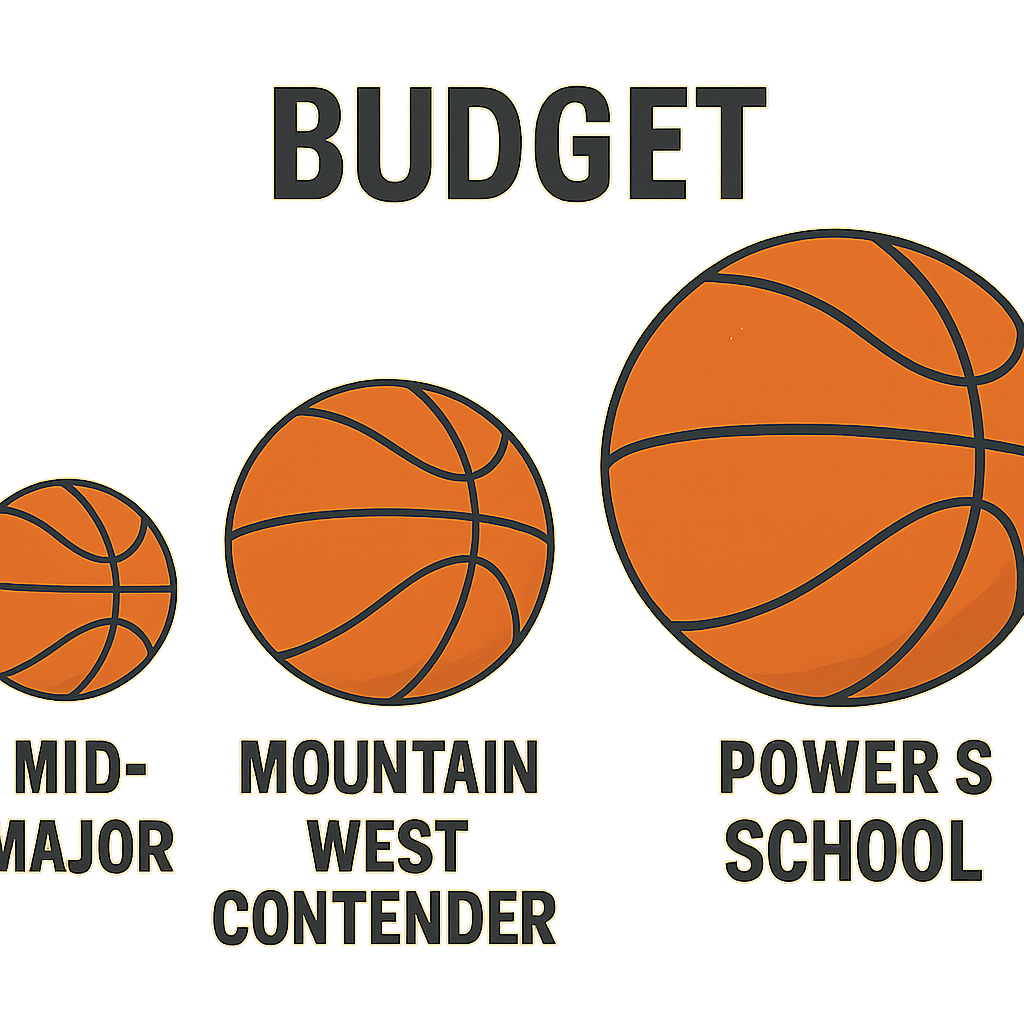
Just a few years ago, predicting a team’s potential meant looking at returning starters and recruit rankings. Today, the math is brutally simple: you get what you pay for. In the current Mountain West landscape, insiders suggest the price tag for a championship-caliber men’s basketball roster starts at a baseline of $1 million annually. This isn’t money for facilities or travel; it is the effective “salary cap” needed to secure talented transfers. If a collective can’t raise that seven-figure sum, the team is fighting an uphill battle before the season even tips off.
While a million dollars sounds massive to the average fan, it is pocket change in the broader world of college athletics. Top-tier programs in the Big Ten or SEC—often referred to as “Power 4” schools—are operating with NIL war chests ranging from $3 million to over $5 million. When a Mountain West school tries to sign a high-impact center, they are often bidding against programs that can offer double the monthly payout without blinking. This financial gap forces MWC teams to be smarter, not richer.
Surviving this imbalance requires a strategy similar to “Moneyball.” Since MWC collectives cannot win a straight bidding war against the deepest pockets in the country, they must focus on budget efficiency. This means identifying undervalued players who fit a specific system rather than chasing the most expensive stars in the transfer portal. A collective might allocate $100,000 to keep a homegrown star happy while filling the rest of the roster with hungry talent that commands a lower market rate.
Even with a smart spending strategy, the hardest part of the equation isn’t acquiring new talent; it is protecting the players you already have. Once a mid-major player performs well on national television, their market value skyrockets overnight, making them a prime target for poaching. This constant threat forces collectives to save a significant portion of their budget strictly for defensive retention.
Keeping the Stars Home: The High Price of Roster Retention
Every offseason, fans hold their breath waiting to see if their team’s leading scorer enters the transfer portal. This anxiety is rooted in a simple financial reality: it is almost always cheaper to keep a player than to replace them. In the business world, retention costs less than acquisition, and the impact of NIL on Mountain West recruiting and retention follows the exact same rule. A Collective might pay a star senior $80,000 to stay, whereas finding an equivalent replacement on the open market could cost double that amount due to bidding wars.
Producing high-level stats unfortunately puts a target on a player’s back. When a Mountain West guard averages 15 points per game, Power 4 schools view them as a “proven commodity.” These wealthy programs are willing to pay a premium to poach established talent rather than gambling on unproven high schoolers. This forces MWC coaches to spend the bulk of their budget on defensive “retention bonuses.” If a team has a $1 million budget, they often must spend over half of it just to keep their current starting five intact before they even look at new recruits.
Since recruiting transfer portal talent with MWC NIL incentives is rarely enough to win a straight cash fight against the SEC, mid-major teams must sell a different value proposition. Coaches and collectives use a specific “Retention Checklist” to convince stars that the grass isn’t always greener on the other side:
- Competitive Cash: Offering a respectable wage that covers living costs, even if it isn’t the highest market bid.
- Guaranteed Minutes: Selling the role of a “featured star” versus being a highly-paid bench warmer at a Power 4 school.
- Pro Potential: Showcasing a clear pathway to the NBA through development and court time rather than just exposure.
This balanced approach creates stability, but one program has turned this retention strategy into a dynasty.
San Diego State vs. The Field: The Blueprint for Mid-Major Success
While most MWC programs scramble to scrape together retention funds, San Diego State acts as the conference’s financial anchor. The Aztecs benefit from a unique form of market leverage: they are the primary basketball attraction in a major city that no longer has an NFL franchise. This allows San Diego State basketball NIL collective fundraising to tap into a deep corporate base, giving them a “big city” budget that smaller college towns simply cannot match. They don’t just rely on alumni; they rely on the entire local economy looking for a team to support.
Nothing generates donor confidence quite like a deep run in March Madness. When the Aztecs marched all the way to the National Championship game in 2023, they triggered a massive “Tournament Bump.” Casual fans turned into active boosters, and existing donors increased their contributions because they saw a tangible return on their investment. This success created a self-sustaining cycle where winning generates the cash needed to secure the talent required to keep winning.
Establishing this gold standard has cemented the Aztecs as having one of the most well-funded NIL collectives in the Mountain West, effectively setting the price of admission for anyone hoping to dethrone them. They have turned their roster into a premium product that demands a premium budget, leaving the rest of the conference playing catch-up. However, two historic rivals in the desert are aggressively mobilizing their own fanbases to challenge this financial dominance.
The Desert Duel: Comparing UNLV and New Mexico’s Financial War Chests
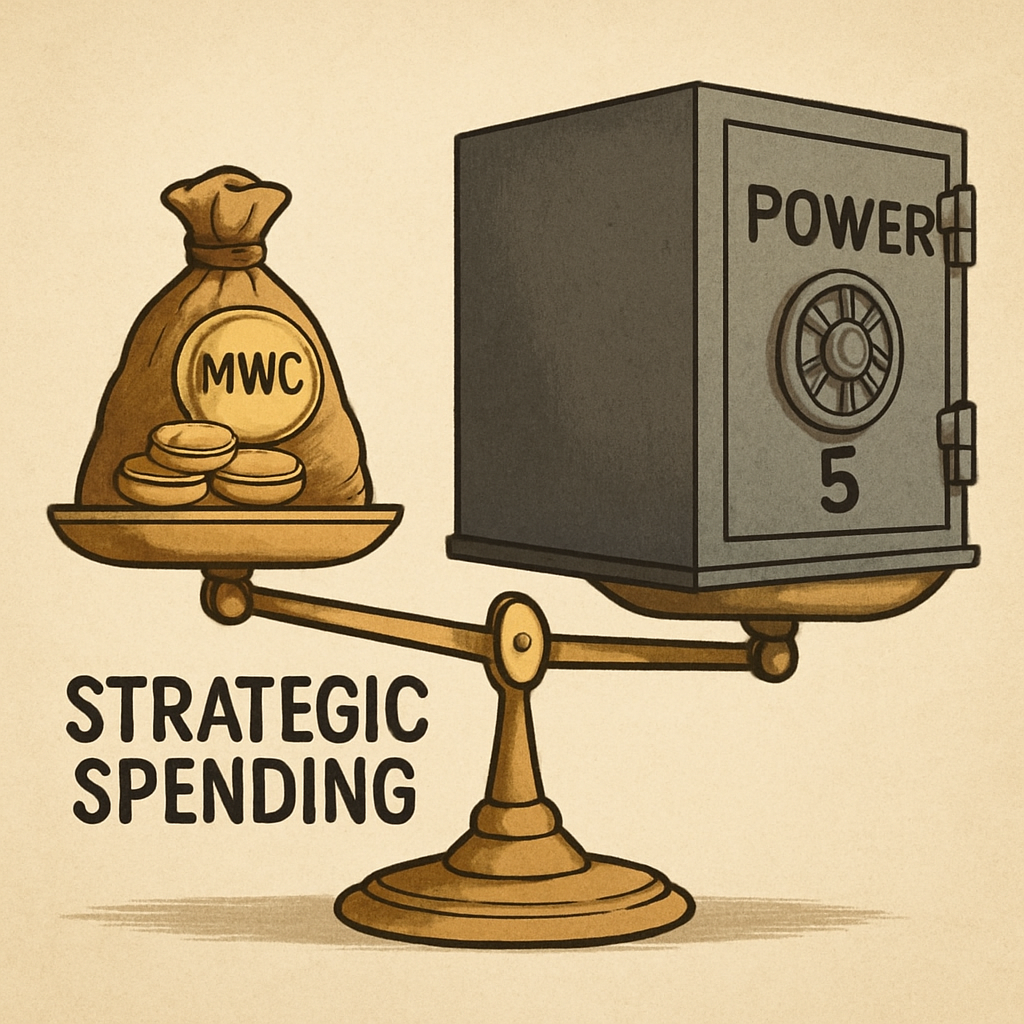
While San Diego State sets the financial pace, the fiercest battle for influence is happening in the desert. UNLV and New Mexico aren’t just fighting for tournament seeding; they are locked in an arms race to secure the UNLV and New Mexico basketball NIL budget comparisons necessary to compete nationally. For the average fan, this means the historic rivalry has expanded from the basketball court to the boardroom, where the strategy is less about pick-and-rolls and more about securing capital.
In Las Vegas, the fundraising strategy often relies on “Whales”—high-net-worth individuals or casino magnates capable of writing massive, single-sum checks. This approach mimics a high-stakes poker game where one big hand can fund a starting five. Conversely, the Lobos rely on a volume approach, mobilizing a passionate statewide fanbase that treats the team like a professional franchise. Recently, discussions around private equity and booster funding for MWC basketball teams have intensified, suggesting that investment firms, rather than just wealthy alumni, could soon play a role in how mid-major rosters are financed.
Understanding the unique leverage each school holds requires looking at their foundational assets:
- Market Size: UNLV operates in a global entertainment hub with infinite corporate distractions, while New Mexico dominates a captive market with zero professional sports competition.
- Booster Density: The Lobos boast a high volume of mid-tier donors driven by community pride, whereas the Rebels often depend on a smaller circle of elite, high-dollar contributors.
- Corporate Ties: Vegas offers players direct access to global hospitality giants; Albuquerque offers unparalleled local visibility where players become instant regional celebrities.
Mobilizing these war chests has allowed both programs to revitalize their rosters, proving that the Mountain West is not a one-team league. Yet, even with heavy spending and enthusiastic fanbases, cash alone cannot solve every problem. As the price of talent rises, mid-major programs are discovering that competing with the “Power 4” conferences involves overcoming structural hurdles that go far beyond the bank account.
The Hidden Challenges: Why Mid-Majors Face a Structural Uphill Battle
While passion fuels the stands, television contracts fuel the athletic department, and this is where the disparity becomes undeniable. In the Power 4 conferences, schools receive massive annual payouts—sometimes upwards of $50 million—that act as a safety net for operations. Mountain West schools operate without this luxury, relying heavily on structural challenges of mid-major NIL fundraising models to fill the gaps. Essentially, while a Big Ten school can treat NIL fundraising as a luxury bonus, an MWC program needs it to simply survive. When the university budget is tight, the burden shifts entirely to the local community to foot the bill for talent, making the financial model much more fragile.
Constant fundraising creates a very real problem known as “donor fatigue,” which hits mid-major markets the hardest. In smaller college towns, the pool of wealthy boosters is finite, and coaches are finding that you can only ask the same local car dealership or restaurant chain for five-figure checks so many times before the well runs dry. Unlike major metropolitan areas with endless corporate sponsors, mid-major collectives often hit a hard ceiling. This limitation forces coaches into the difficult position of balancing team salary caps in mid-major basketball, treating their roster construction like a puzzle where they cannot afford to waste a single dollar on a player who doesn’t contribute immediately.
Managing these limitations creates an informal spending cap that doesn’t exist in the rulebook but definitely exists in the bank account. MWC coaches can’t simply outbid the competition; they have to identify undervalued talent and develop players who might be overlooked by the wealthy giants. It’s a high-wire act of financial discipline and scouting efficiency. These constraints highlight the importance of supporter involvement, which raises a practical question: how can the average fan actually make a difference in this high-stakes environment?
The Fan’s Playbook: Navigating the Future of the Mountain West
Moving past the scoreboard requires understanding the bank account behind it. While the MWC may not have the bottomless pockets of the “Power 4” conferences, this league has proven that grit and smart spending can still punch a ticket to the Big Dance. The secret isn’t just having the most cash; it’s about maximizing every dollar to build a cohesive team.
In this new era, you are no longer just a spectator; you are effectively part of the front office. If you want to help your team secure talent, consider these practical steps:
- Join your school’s NIL collective with a small monthly contribution.
- Patronize local businesses that actively sponsor your favorite athletes.
- Engage with players’ social media content to boost their brand value.
Keeping an eye on Mountain West basketball NIL marketplace trends helps you see the strategy behind the roster. It’s about retention and finding players who outperform their cost—a “Value over Replacement” mindset. This financial efficiency is exactly how NIL deals affect Mountain West tournament seeding and determine who cuts down the nets in Las Vegas.
College basketball will keep changing, but the Mountain West’s identity remains rooted in doing more with less. By understanding the financials, you can appreciate the victories even more. The checkbook matters, but in this conference, heart and hustle still hold the highest market value.
Learn More About the NIL Landscape
Name, Image, and Likeness plays an increasing role in college sports, and understanding how it works often requires more than individual articles or news updates.
RallyFuel is a platform focused on NIL-related topics across college athletics. It brings together information about athletes, NIL activity, and the broader structure behind modern college sports, helping readers explore the topic in more depth.
👉 Explore the Athletes on RallyFuel – Discover top college athletes, compare NIL valuations, and dive deeper into the world of NIL.
Q&A
Question: What exactly is an NIL collective, and how does a dollar get from a fan to a player?
Short answer: An NIL collective is an independent, donor-funded group that pools money to pay athletes for legitimate services, effectively acting as a community payroll for the roster. Because schools can’t pay players directly, collectives handle the flow of funds: a fan or business contributes; the collective contracts the athlete for specific work (autographs, charity events, social posts); once the work is verified, the athlete is paid. In the Mountain West, these local, donor-led “community chests” are the primary engine keeping rosters together, with market rates (often near six figures for stars) influencing whether players stay or transfer.
Question: Why is about $1 million considered the baseline NIL budget to contend in the Mountain West, and how does it compare to Power 4 programs?
Short answer: Insiders peg roughly $1 million per year as the effective “salary cap” needed to build a championship-caliber MWC roster—money aimed at transfers and retention, not facilities. Power 4 programs often deploy $3–$5 million, so MWC teams can’t win pure bidding wars. Instead, they run a Moneyball strategy: allocate enough to keep key players, target undervalued, system-fit transfers, and stretch every dollar. Even then, teams must reserve significant funds to defend against higher offers from richer conferences.
Question: Why do Mountain West programs prioritize retention over acquisition, and how do they convince stars to stay?
Short answer: It’s usually cheaper to keep a proven player than replace them in an open-market bidding war. A senior might be retained for ~$80,000, while finding an equivalent transfer could cost twice that after a breakout season makes them a “proven commodity” to Power 4 buyers. Many MWC teams spend over half of a $1 million budget just to keep their starting five intact. Their “Retention Checklist” blends:
- Competitive cash: respectable pay covering living costs.
- Guaranteed minutes: a featured role versus being a well-paid reserve elsewhere.
- Pro potential: a clear path to development and NBA visibility via heavy court time.
Question: Which programs are setting the NIL pace in the Mountain West, and how do their models differ?
Short answer: San Diego State leads the league with a robust collective fueled by big-city corporate support and a “Tournament Bump” after its 2023 title game run, creating a self-sustaining cycle of winning and giving. UNLV and New Mexico are mounting serious challenges via distinct approaches: UNLV leans on “whales” (fewer, high-dollar donors and strong Vegas corporate ties), while New Mexico harnesses a high-volume, statewide base of mid-tier donors in a captive market with no pro teams. There’s even growing discussion of private equity involvement. Together, these models show the MWC is no one-team race.
Question: What structural hurdles do MWC teams face versus the Power 4, and how can fans make a real impact?
Short answer: Massive TV deals give Power 4 schools safety nets (sometimes $50M+ annually), while MWC programs rely heavily on local NIL fundraising, making them vulnerable to donor fatigue and hard ceilings in smaller markets. This creates an informal cap that forces financial discipline and talent development. Fans can materially move the needle by:
- Joining their school’s collective with a monthly gift.
- Patronizing businesses that sponsor athletes.
- Engaging with players’ social content to boost brand value. Smart, steady support helps retention, improves “value over replacement,” and can ultimately influence tournament seeding and on-court success.




Leave a Comment