
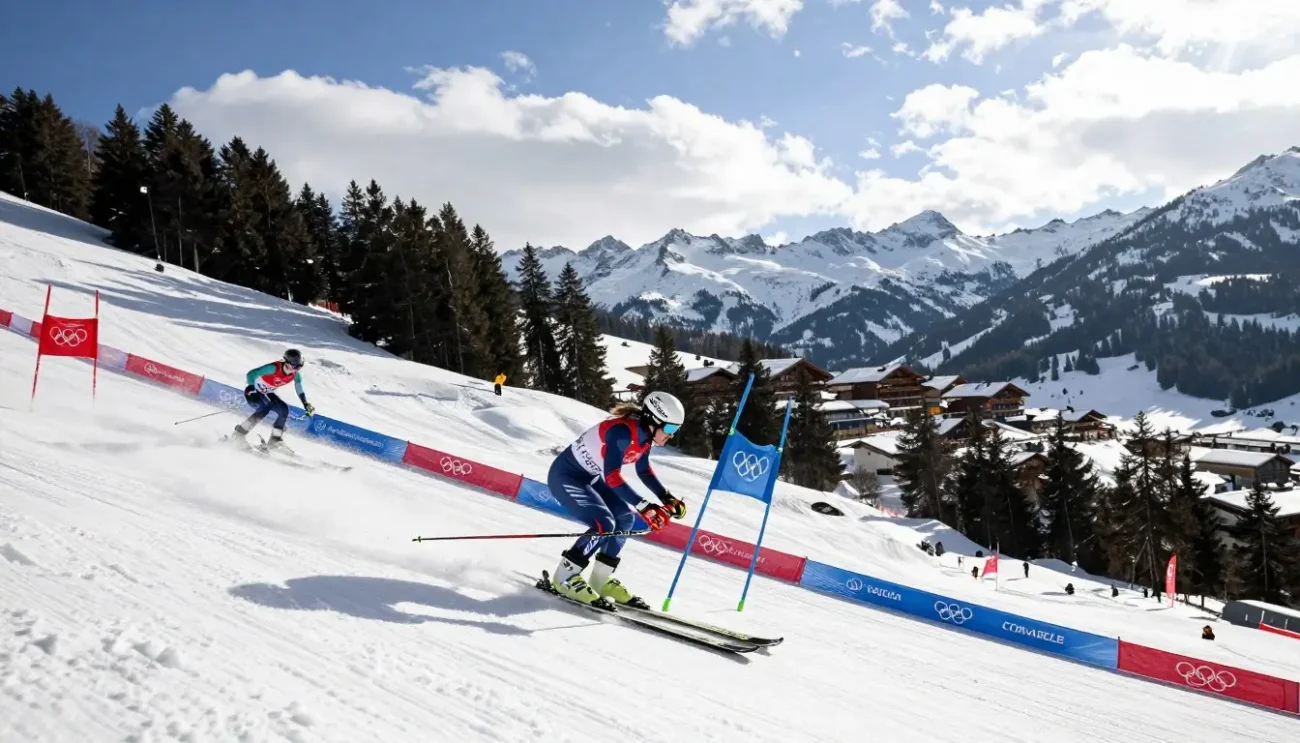
As we approach the Milan Cortina 2026 Olympics, the world of Alpine Skiing is on the cusp of a significant transformation. The Olympic Alpine Skiing format is set to undergo exciting changes that will impact athletes and fans alike.
Historically, Alpine Skiing events have evolved to include a variety of disciplines, captivating audiences worldwide. The current format has been refined over the years, but the upcoming Milan Cortina 2026 Olympics will bring a new era in Olympic Alpine Skiing.
We’re about to witness a new chapter in the sport, with changes that promise to enhance the competition and fan experience. As we explore the evolution of Alpine Skiing formats, it’s clear that these changes will have a lasting impact on the sport.
The Evolution of Olympic Alpine Skiing
The evolution of Olympic Alpine Skiing is a story of adaptation and growth, shaped by technological advancements and athlete needs. As we examine the history of the sport, it becomes clear that numerous format changes have been implemented to enhance competition and athlete performance.
Historical Development of Alpine Events
Alpine Skiing has been a part of the Winter Olympics since 1936, with the initial events including downhill and slalom competitions. Over the years, the sport has expanded to include additional events such as Super-G and giant slalom, reflecting the evolving nature of competitive skiing.
| Year | Event Introduced | Key Features |
|---|---|---|
| 1936 | Downhill, Slalom | Initial Olympic Alpine Skiing events |
| 1988 | Super-G | Faster course with gates |
| 1952 | Giant Slalom | Longer course with wider turns |
Previous Format Changes in Olympic History
Significant changes have been made to the Olympic Alpine Skiing format over the years, including adjustments to course lengths and gate configurations. These changes aim to enhance the competitiveness and spectator appeal of the events.
Current Alpine Skiing Format at the Olympics
As we look forward to the changes coming to Alpine Skiing at Milan Cortina 2026, it’s essential to understand the current Olympic format. The existing events, including Downhill, Slalom, Giant Slalom, Super-G, and Combined events, each have their unique characteristics and challenges.
Overview of Existing Events
The current Olympic Alpine Skiing events are diverse, catering to different skill sets among athletes. For instance, Downhill is known for its high-speed descents, while Slalom requires precision and agility through tight gates.
- Downhill: The fastest event, where skiers reach speeds of over 80 mph.
- Slalom: A technical event requiring quick turns through closely spaced gates.
- Giant Slalom: A combination of speed and technical skill, with gates spaced farther apart than in Slalom.
Scoring and Competition Structure
The Alpine Skiing Scoring System is straightforward: the skier with the fastest time wins. In events like the Combined, times from different disciplines are added together to determine the overall winner.
“The beauty of Alpine Skiing lies in its variety and the challenge it poses to athletes,” says an Olympic official. The current format has been praised for its competitiveness and the excitement it generates among spectators.
Alpine Skiing Formats Will Change at Milan Cortina 2026: Overview
The Milan Cortina 2026 Olympics are on the horizon, and with them comes a significant overhaul of Alpine Skiing formats. These changes aim to enhance the sport’s competitiveness, spectator experience, and overall integrity.
Summary of Major Format Modifications
The new formats introduce several key modifications to Alpine Skiing events. Changes include adjustments to the competition structure, new qualification processes, and modifications to existing events. These changes are designed to make the competitions more engaging for spectators and challenging for athletes.
Timeline for Implementation
The implementation timeline for these new formats is crucial for athletes, coaches, and organizers. The changes are set to be fully implemented by the time the Milan Cortina 2026 Olympics take place. This allows for a transition period where athletes can adapt to the new rules and formats.
The new Alpine Skiing formats at the Milan Cortina 2026 Olympics promise to bring a fresh dynamic to the sport. By understanding these changes, athletes and fans alike can better prepare for the exciting competitions ahead.
Milan Cortina 2026 Alpine Venues and Their Influence on Format Changes
As we approach the Milan Cortina 2026 Olympics, the Alpine Skiing venues of Bormio and Cortina d’Ampezzo are taking center stage. These venues are renowned for their challenging and picturesque courses, which will play a crucial role in shaping the competition format.
Bormio and Cortina d’Ampezzo Courses
The courses in Bormio and Cortina d’Ampezzo offer unique challenges for athletes. Bormio’s demanding terrain requires skiers to have exceptional technical skills, while Cortina d’Ampezzo’s scenic slopes provide a test of speed and agility.
| Venue | Course Characteristics | Event Type |
|---|---|---|
| Bormio | Steep slopes, technical turns | Downhill, Combined |
| Cortina d'Ampezzo | Scenic slopes, high-speed sections | Slalom, Giant Slalom |
How Venue Design Shapes Competition Format
The design of these venues significantly influences the competition format. Factors such as course length, gate placement, and overall difficulty are carefully considered to ensure a challenging yet fair competition for athletes.
By understanding how the venues impact the competition, athletes and coaches can develop strategies to optimize their performance. The unique characteristics of Bormio and Cortina d’Ampezzo will undoubtedly make the Alpine Skiing events at Milan Cortina 2026 unforgettable.
Changes to Downhill Events
Milan Cortina 2026 will bring about a new era for downhill Alpine Skiing with rule changes aimed at enhancing safety and competitiveness. Downhill events, known for their high speeds and demanding courses, are among the most prestigious in Alpine Skiing.
New Rules and Procedures
The new rules for downhill events at Milan Cortina 2026 include stricter safety protocols and modified course designs. “These changes are designed to challenge athletes while ensuring their safety,” says an official from the organizing committee. The new procedures will also affect how athletes prepare for the competition.
Key changes include:
- Revised course gates to improve athlete safety
- Enhanced weather condition protocols
- Stricter equipment regulations
Impact on Competition Strategy
The changes will significantly impact competition strategy, as athletes will need to adapt their techniques and training regimens. Coaches and athletes will need to rethink their approaches to the downhill event, focusing on the new rules and course designs.
As downhill Alpine Skiing continues to evolve, the ability to adapt to new rules and procedures will be crucial for success at Milan Cortina 2026. Athletes who can adjust their strategies effectively will have a competitive edge.
Slalom and Giant Slalom Modifications
The Alpine Skiing world is bracing for impact as Slalom and Giant Slalom formats are revised for Milan Cortina 2026. These technical events, demanding high agility and precision, are set to challenge athletes in new ways.
Technical Adjustments to Course Design
The course design for Slalom and Giant Slalom events will undergo significant technical adjustments. The changes aim to enhance the competitive balance and spectator experience. Key modifications include:
- Increased gate spacing in Giant Slalom to favor speed and technique
- More complex course layouts in Slalom to emphasize agility
Qualification Process Changes
The qualification process for these events will also see updates. The new format will include:
| Event | Old Qualification Format | New Qualification Format |
|---|---|---|
| Slalom | Single run qualification | Dual-run qualification with combined timing |
| Giant Slalom | Single run qualification | Dual-run qualification with adjusted course gates |
These changes are designed to test athletes’ skills more comprehensively and provide a more engaging experience for spectators. As we move towards Milan Cortina 2026, athletes will need to adapt their strategies to succeed in the revised Slalom and Giant Slalom formats.
Super-G and Combined Event Transformations
As we approach the Milan Cortina 2026 Olympics, the Super-G and Combined events are poised for a dramatic overhaul. These disciplines, which demand a broad range of skills from athletes, are set to become even more competitive and thrilling.
Format Restructuring
The format restructuring in Super-G and Combined events aims to increase competitiveness and fairness. Key changes include:
- Modified course designs to challenge athletes’ technical and speed skills
- Revised competition schedules to optimize viewing times and athlete recovery
Scoring Adjustments
Scoring adjustments will be implemented to ensure a more equitable competition. The updates include:
- Refined scoring systems to better reflect athletes’ performances
- Enhanced penalty structures to promote clean racing
These changes will not only enhance the competitive balance but also improve the overall viewer experience. By understanding these transformations, we can better appreciate the athletes’ skills and the strategic nuances of the events.
Introduction of New Team Events
The Milan Cortina 2026 Olympics are set to revolutionize Alpine Skiing with the introduction of new team events. This significant development aims to enhance the sport’s global appeal by emphasizing teamwork and strategy.
Mixed Team Competitions
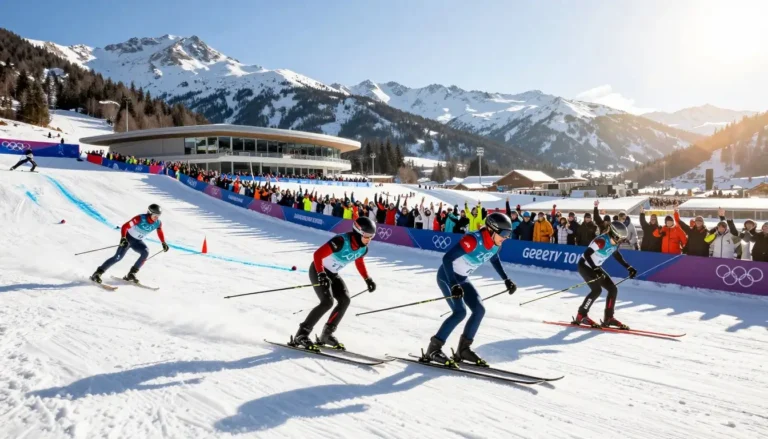
Mixed team competitions will make their Olympic debut at Milan Cortina 2026, bringing a fresh dynamic to Alpine Skiing. This format will feature teams comprising both male and female skiers, competing together in a relay-style format. The mixed team event is expected to be highly competitive, with teams needing to strategize effectively to succeed.
Relay Format Details
The relay format for the new team events will involve a series of skiers from each team navigating challenging courses. The specifics of the relay format are as follows:
| Team Composition | Relay Legs | Course Type |
|---|---|---|
| 2 Male, 2 Female Skiers | 4 legs (alternating gender) | Slalom/Giant Slalom |
As quoted by the International Ski Federation, “The introduction of mixed team events will bring a new level of excitement and unpredictability to Alpine Skiing competitions.” This new format is expected to attract a broader audience and increase fan engagement.
The new team events at Milan Cortina 2026 represent a significant evolution in Alpine Skiing, emphasizing teamwork and strategy. As the competition approaches, athletes and teams will need to adapt quickly to the new formats to gain a competitive edge.
Impact on American Alpine Skiers
The Milan Cortina 2026 Alpine Skiing format changes present both opportunities and challenges for American Alpine Skiers. As the competition landscape evolves, the US Alpine Skiing Team must adapt their strategies to remain competitive.
Preparing for the New Formats
American Alpine Skiers are intensifying their training to meet the demands of the new formats. This includes:
- Enhanced technical training to adapt to new course designs
- Increased focus on physical conditioning to meet the demands of revised competition schedules
- Tactical adjustments to capitalize on the new formats
Potential Advantages for Team USA
The changes could potentially benefit American Alpine Skiers, particularly in team events where the US has shown strong performance. A detailed analysis of the potential advantages is presented in the table below:
| Event | Potential Advantage | Reason |
|---|---|---|
| Mixed Team Competitions | Strong Team Dynamics | Diverse talent pool and successful pairing strategies |
| Revised Downhill Events | Technical Adaptability | Experience with varied course conditions |
| New Relay Formats | Relay Experience | History of success in relay events |
By leveraging these advantages and preparing comprehensively for the new formats, American Alpine Skiers can position themselves for success at Milan Cortina 2026.
Broadcast and Viewer Experience Enhancements
As we approach the Milan Cortina 2026 Olympics, innovations in broadcast technology are poised to enhance viewer experience. The integration of new television presentation formats and digital media will provide fans with a more immersive experience.
New Television Presentation Formats
The broadcast of Alpine Skiing events will feature state-of-the-art graphics and real-time data analysis, allowing viewers to gain deeper insights into the competitions. These enhancements will make the viewing experience more engaging and informative.
Digital and Social Media Integration
Digital platforms will play a crucial role in the broadcast strategy, with live streaming and social media updates providing fans with multiple ways to follow the events. This integration will ensure that the global audience remains connected to the action.
Sustainability Considerations in Format Design
Sustainability is becoming a core focus in the evolution of Alpine Skiing formats for the Milan Cortina 2026 Olympics. As part of the broader Olympic Agenda 2020+5, the International Olympic Committee (IOC) is committed to reducing the environmental footprint of the Games.
Environmental Impact Reduction Measures
The new Alpine Skiing formats at Milan Cortina 2026 are designed with several environmental impact reduction measures in mind. These include:
- Optimizing venue design to minimize land use and preserve natural habitats.
- Implementing energy-efficient technologies in venue construction and operation.
- Reducing waste through sustainable practices during the Games.
By adopting these measures, the IOC aims to not only reduce the environmental impact of the Olympics but also to promote sustainable practices among athletes, spectators, and local communities.
Alignment with Olympic Agenda 2020+5
The sustainability initiatives in Alpine Skiing formats for Milan Cortina 2026 are closely aligned with the IOC’s Olympic Agenda 2020+5. This agenda emphasizes the importance of sustainability, credibility, and youth engagement in the Olympic Movement.
| Sustainability Measure | Description | Alignment with Olympic Agenda 2020+5 |
|---|---|---|
| Venue Optimization | Minimizing land use and preserving natural habitats. | Reducing environmental footprint. |
| Energy Efficiency | Implementing energy-efficient technologies. | Promoting sustainable practices. |
| Waste Reduction | Reducing waste through sustainable practices. | Enhancing sustainability. |
As we move towards the Milan Cortina 2026 Olympics, it’s clear that sustainability will play a crucial role in shaping the future of Alpine Skiing. By integrating sustainable practices into the design of new formats, the IOC is setting a positive example for future sporting events.
Conclusion: The Future of Olympic Alpine Skiing
As we look to the future of Olympic Alpine Skiing, it’s clear that the sport is on the threshold of an exciting new era. The changes coming to Alpine Skiing formats at Milan Cortina 2026 will enhance competitiveness, spectator experience, and overall integrity of the sport.
The Future of Alpine Skiing is being shaped by innovative format changes, including modifications to Downhill events, Slalom, Giant Slalom, Super-G, and Combined events, as well as the introduction of new Team events. These changes will not only impact competition strategy but also elevate the overall Olympic Alpine Skiing Evolution.
As the sport continues to evolve, athletes, fans, and organizers must adapt to the new formats. The United States, with its rich Alpine Skiing heritage, is poised to benefit from these changes, with American athletes well-positioned to excel in the new competition formats.
Ultimately, the Future of Alpine Skiing will be defined by a delicate balance between tradition, innovation, and sustainability. As the sport moves forward, we can expect a more engaging, competitive, and environmentally conscious Olympic Alpine Skiing experience.
Learn More About the NIL Landscape
Name, Image, and Likeness plays an increasing role in college sports, and understanding how it works often requires more than individual articles or news updates.
RallyFuel is a platform focused on NIL-related topics across college athletics. It brings together information about athletes, NIL activity, and the broader structure behind modern college sports, helping readers explore the topic in more depth.
FAQ
What are the main changes to Alpine Skiing formats at Milan Cortina 2026?
The main changes include the introduction of new team events, modifications to Downhill, Slalom, Giant Slalom, Super-G, and Combined events, and adjustments to the qualification processes and scoring systems.
How will the new team events work at Milan Cortina 2026?
The new team events will feature mixed team competitions and a relay format, emphasizing teamwork and strategy. The exact format details will be designed to enhance the spectator experience and competitiveness.
What impact will the changes have on American Alpine Skiers?
American Alpine Skiers are preparing for the new formats by adapting their training regimens and strategies. The changes may provide potential advantages for Team USA, depending on how well they adapt to the new rules and procedures.
How will the broadcast and viewer experience be enhanced at Milan Cortina 2026?
The broadcast and viewer experience will be enhanced through new television presentation formats and the integration of digital and social media, aiming to engage fans more deeply and improve the overall viewing experience.
What sustainability considerations are being made in the design of new Alpine Skiing formats?
The design of new Alpine Skiing formats includes measures to reduce environmental impact and promote sustainability, aligning with the Olympic Agenda 2020+5 and the Olympic movement’s commitment to sustainability.
When will the new Alpine Skiing formats be implemented?
The new Alpine Skiing formats will be implemented at the Milan Cortina 2026 Olympics, with a detailed timeline for implementation provided to ensure athletes, fans, and officials are prepared.
How will the changes to Downhill events affect competition strategy?
The changes to Downhill events will introduce new rules and procedures aimed at enhancing safety and competitiveness, requiring athletes to adapt their techniques and training regimens to remain competitive.
What are the technical adjustments being made to Slalom and Giant Slalom courses?
Technical adjustments to Slalom and Giant Slalom courses include changes to course design, which will challenge athletes and enhance the spectator experience.
How will the Super-G and Combined events be transformed?
Super-G and Combined events will undergo format restructuring and scoring adjustments to increase competitiveness and fairness, analyzing the implications for athletes and the overall competition.



Leave a Comment