

Back in 2021, securing an NIL deal meant scrambling for autograph signings in a chaotic “Wild West” market. By 2026, that landscape has matured into a regulated professional ecosystem where players are treated less like amateurs and more like business partners.
This shift occurred because the House v. NCAA settlement introduced a formal NCAA revenue sharing model for college athletes. Instead of relying solely on outside sponsors, players now receive direct payments from their universities, functioning much like a corporate base salary.
Confusion often arises about where the paycheck actually originates in this hybrid system. Distinguishing direct school pay from external brand endorsements clarifies the impact of House settlement on student-athlete compensation within the nil deals guide 2026 framework.
Summary
By 2026, NIL has transitioned into a regulated system centered on the House v. NCAA revenue-sharing model, creating two distinct income streams: university payments and external brand deals. Winning in this environment requires grasping school payroll caps, Title IX constraints, and fair market value, while safeguarding IP through non-exclusive licenses and prioritizing engagement over follower counts. Athletes must also manage eligibility and visa rules, leverage the transfer portal smartly, and handle taxes like independent contractors with strong financial literacy and tracking tools. The guide concludes with a concrete action plan for building durable brands and income that outlast playing careers.
Why Your Scholarship Now Includes a Paycheck: The 2026 Revenue Sharing Model
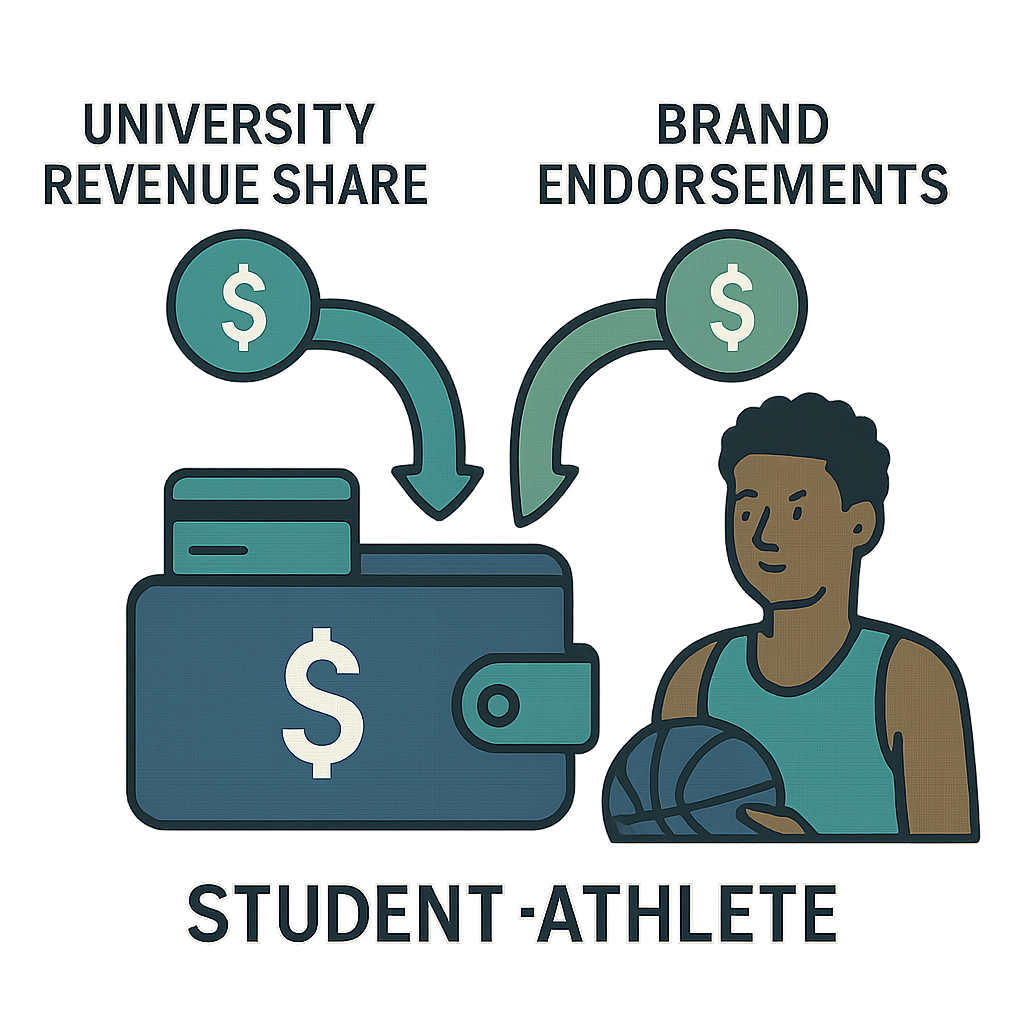
Scholarships used to simply cover tuition and board, but the landscape has shifted dramatically. Today, major universities operate under a new NCAA revenue sharing model for college athletes that functions much like a professional salary cap. Following the landmark House settlement, schools are permitted to share over $20 million annually directly with players. This creates a hard limit on the total payroll a university can distribute, a distinct bucket of money separate from any third-party endorsement deals an athlete might sign.
Managing this multimillion-dollar budget requires a specialized administrator. The role of the general manager in college athletic departments has emerged specifically to handle these complex negotiations. Unlike coaches who focus on game strategy, the GM analyzes performance data to determine how much of the cap a specific quarterback or shortstop deserves. They act as the front office, treating roster construction like a business merger to maximize the school’s return on investment.
This cash infusion involves more than just the football team. The impact of House settlement on student-athlete compensation must comply with Title IX gender equity laws, ensuring women’s programs receive their fair share of the revenue pool. Universities generally weigh three factors when distributing these funds:
- Revenue Generation: The amount of money a specific sport brings in through ticket sales and TV contracts.
- Market Competition: The “going rate” required to recruit top talent away from rival schools.
- Title IX Compliance: The legal necessity to balance financial benefits proportionally between male and female athletes.
While the school sets the budget, the GM’s initial offer is rarely the final number. To ensure an athlete isn’t leaving money on the table, negotiators must analyze exactly how these valuation numbers are calculated in the open market.
Don’t Get Lowballed: Calculating Fair Market Value (FMV) in a Regulated Market
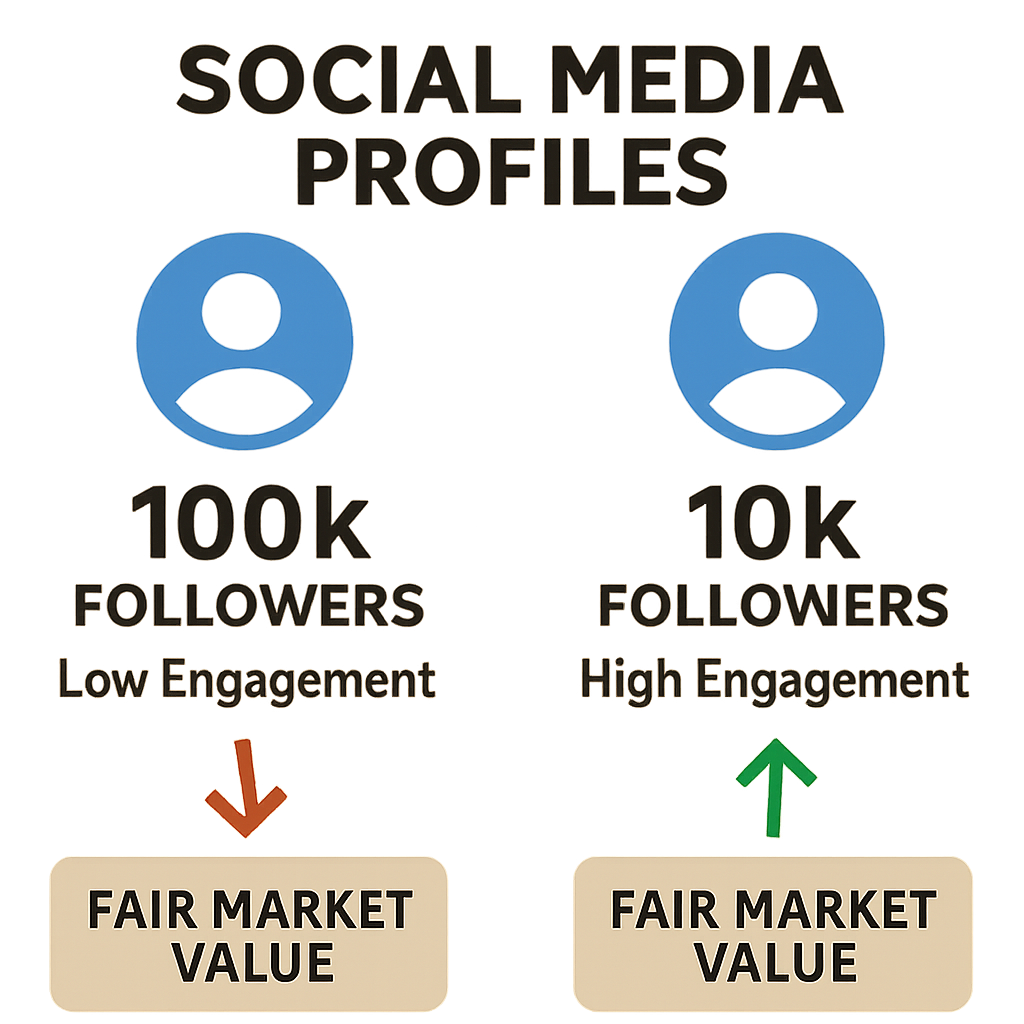
Just because the school offers a set salary doesn’t mean the endorsement market agrees. Think of Fair Market Value (FMV) as the “Kelly Blue Book” for an athlete’s brand; it creates an objective price tag based on data rather than hype. While early deals were often wild guesses, 2026 regulations require contracts to reflect actual marketing potential to avoid disguised “pay-for-play” schemes. Establishing this baseline ensures a player gets paid what they are actually worth outside of the stadium.
Brands now look beyond raw follower counts to prioritize the “Engagement Rate.” A gymnast with 10,000 active fans often commands a higher price than a quarterback with 100,000 silent followers. Maximizing social media engagement for sports sponsorships relies on reach, sentiment, and conversion rather than just popularity. This allows athletes in niche sports to monetize tight-knit communities rather than chasing viral fame.
Protecting athlete intellectual property from predatory agents requires careful scrutiny of “exclusive rights” clauses. Bad actors often try to own a player’s image for all future deals, locking them into bad terms. Smart negotiators insist on non-exclusive licensing agreements for players, effectively renting out their likeness rather than selling the deed so they can partner with multiple brands simultaneously.
Knowing how to calculate fair market value for athlete endorsements creates financial security, but offers little protection if the contract violates eligibility rules. As money flows across borders, the challenge shifts to navigating specific regulations for younger prospects and global talent.
From High School to International Pros: Navigating Eligibility and Legal Compliance
While the NCAA sets broad rules for colleges, high school athletes face a patchwork of regulations that change entirely when crossing state lines. In 2021, a Texas high school quarterback generally couldn’t earn a dime without losing eligibility, while his counterpart in California was potentially filming commercials. By 2026, most states allow legal compliance for high school athlete endorsement contracts, but families must still verify specific restrictions—like bans on wearing school logos in ads—to ensure a scholarship isn’t voided before kickoff.
Global stars face an even steeper hurdle because standard student visas strictly prohibit “active work” on U.S. soil. This regulation initially left international players unable to sign autographs for cash while their American teammates cashed checks. To bypass this, savvy representatives now help elite talent secure O-1 (“Extraordinary Ability”) visas. If you are an international prospect asking, “can international college athletes earn money from sponsorships,” follow this checklist to monetize safely:
- Confirm your home country’s tax treaty status with the U.S.
- Limit deals to “passive” income (licensing your photo) rather than “active” work (commercial shoots) on a standard student visa.
- Execute active work contracts only when physically outside U.S. borders.
- Apply for an O-1 or P visa if your athletic résumé proves “extraordinary” status.
Once an athlete arrives on campus, the Transfer Portal acts as a real-time stock exchange for their personal brand. Entering the portal triggers an immediate “Market Re-evaluation,” where previous stats and potential fit determine a new price tag. The transfer portal influence on student-athlete valuation is significant; a backup running back might see his value skyrocket by transferring to a team desperate for depth, while a star moving to a crowded roster could see offers shrink. However, maximizing this income brings a new opponent that remains undefeated: the IRS.
The $10,000 Tax Trap: Managing Your Business and Financial Literacy
Imagine driving a brand-new truck off the lot, gifted by a local dealership for a few social media posts. It feels like a free perk until the IRS demands cash taxes on that $50,000 vehicle. This is the “Tax Trap.” Since athletes are classified as independent contractors receiving Form 1099-NECs, accurately estimating the tax implications of name image and likeness income is mandatory. The safest play is the “30% Rule”: set aside thirty cents of every dollar—or fair market value of every gift—to cover the inevitable tax bill.
Where the paycheck originates creates another layer of complexity. In the early 2020s, money flowed primarily through third-party “Collectives”—essentially booster clubs pooling cash. By 2026, the landscape has shifted to distinguish NIL collectives vs university-led marketing programs , where schools increasingly manage commercial rights directly to ensure fair market value. Consequently, mandatory financial literacy programs for scholarship players have become as essential as weight training to prevent financial fumbles.
Staying solvent means treating your roster spot like a small business. To manage overhead without an accounting degree, athletes should utilize these essential tracking tools:
- QuickBooks Self-Employed: To separate business expenses from personal spending.
- MileIQ: To track deductible travel to autograph signings.
- Opendorse or Inflcr: To auto-report transactions for compliance.
With finances secured, the final challenge is longevity.
Your 2026 Action Plan: Building a Brand That Outlasts Your Playing Days
You have moved past the headlines and now see the 2026 landscape for what it is: a legitimate business ecosystem where preparation beats hype. Whether guiding a future star or charting your own path, success no longer relies on luck, but on strategy. You possess the tools to navigate nil deals 2026 safely, turning athletic potential into sustainable income without jeopardizing eligibility.
Start your journey with this roadmap:
- Scrub social media to ensure building a digital personal brand for recruiting remains brand-safe.
- Register with your university’s official NIL exchange.
- Leverage financial literacy programs for scholarship players to automate tax savings.
- Document every offer in a centralized spreadsheet.
- Sign a small, low-risk deal to master the contract workflow.
Treat this era not as a lottery ticket, but as an early career launchpad. The goal isn’t just a quick payout; it is building a reputation and financial foundation that outlasts your playing days. You are now ready to play to win—both on and off the field.
Learn More About the NIL Landscape
Name, Image, and Likeness plays an increasing role in college sports, and understanding how it works often requires more than individual articles or news updates.
RallyFuel is a platform focused on NIL-related topics across college athletics. It brings together information about athletes, NIL activity, and the broader structure behind modern college sports, helping readers explore the topic in more depth.
👉 Explore the Athletes on RallyFuel – Discover top college athletes, compare NIL valuations, and dive deeper into the world of NIL.
Q&A
Question: What exactly are the two income streams for college athletes in 2026, and who negotiates them?
Short answer: In 2026, athletes earn from two distinct buckets: (1) university revenue sharing created by the House v. NCAA settlement, where schools can pay over $20 million annually under a hard payroll cap, and (2) external brand endorsements negotiated at fair market value. The school-side compensation is managed like a salary cap by a department “GM” who allocates the budget across the roster while complying with Title IX. Brand deals sit outside the school cap and are negotiated separately with companies, based on the athlete’s marketing value.
Question: How does the transfer portal affect my value and offers?
Short answer: Entering the portal triggers a market re-evaluation of your brand and on-field fit—much like a live stock repricing. Your previous stats, projected role, and a new team’s needs can spike or compress both your school-side compensation and your endorsement appeal. A backup moving to a roster with immediate opportunity can see value surge, while a star joining a crowded depth chart may face smaller offers.
Question: How do I calculate fair market value (FMV) and avoid bad contract terms?
Short answer: FMV in 2026 is data-driven to prevent disguised pay-for-play. Brands weigh engagement rate, reach, sentiment, and conversion more than raw follower counts—so a tightly engaged 10k audience can out-earn a quiet 100k. To protect your rights, reject broad “exclusive rights” clauses; instead, use non-exclusive licenses so you “rent” your name, image, and likeness rather than giving away ownership, preserving the ability to work with multiple partners.
Question: I’m a high school or international athlete—what eligibility and visa rules should I know before signing deals?
Short answer: By 2026, most states allow high school NIL, but rules vary—verify state restrictions (for example, bans on using school logos) to avoid jeopardizing eligibility or scholarships. International students on standard visas generally cannot do “active work” in the U.S.; to monetize safely: check your country’s U.S. tax treaty status, limit deals on a student visa to passive licensing, perform active work only when abroad, and consider an O-1 or P visa if your résumé meets “extraordinary ability” standards.
Question: How are NIL taxes handled, and what systems should I use to run my business?
Short answer: You’re taxed as an independent contractor (1099-NEC), and in-kind gifts (like a “free” truck) are taxable at fair market value—hence the “Tax Trap.” Use the 30% Rule: set aside roughly 30% of every cash payment or gift value for taxes. The market has shifted from booster collectives toward university-led marketing programs that emphasize fair market value, and financial literacy programs are now essential. To stay organized, use tools like QuickBooks Self-Employed (expense separation), MileIQ (mileage tracking), and Opendorse or Inflcr (compliance and deal reporting).




Leave a Comment