

In the age of NIL (Name, Image and Likeness), college athletic programs now fall into two broad categories: big schools and small schools.
Or, more accurately — the haves and the have-nots.
Much of the national NIL conversation focuses on the powerhouse Division I programs such as Alabama, Florida, Texas, Ohio State, Michigan, USC, Washington, and Oregon. Some of those schools are now paying their athletes a collective $20.5 million per year, reshaping how they recruit and retain top talent.
But what about the smaller Division I institutions? Or the Division II, Division III, and NAIA programs with far fewer resources?
On a smaller scale, NIL is still creating real opportunities — and many smaller schools are learning how to compete creatively.
Georgia Southern: A Case Study in Creativity
Take Georgia Southern University. The Eagles sit in the “Group of Five” — a level that lacks large media-rights deals or deep-pocketed donor bases. Yet Georgia Southern is on track to pay its student-athletes $1.5 million this year.
Compared to the giants of college football, $1.5 million is modest. But it’s also $1.5 million more than the school could offer before NIL. And at this level, every dollar matters.
Outside Division I, Division II, Division III, and NAIA programs pay far less. But those numbers are projected to grow as NIL continues to mature and athletic departments adapt.
Creativity: The Small-School Advantage
“At our level especially, you have to be creative,” said E.J. Brophy, athletic director at Division II powerhouse University of Tampa. “You can’t win or even compete without funding. We have to think outside the box.”
That mindset is exactly how smaller schools are staying competitive. They’re tapping into local communities, alumni networks, and niche opportunities to build sustainable NIL ecosystems.
One of the best examples: Georgia Southern’s unique connection to the world of country music.
Country Music, Concerts, and NIL
For reasons no one can fully explain, Georgia Southern has a disproportionately large group of successful country-music alumni. And the school has turned that into a strategic NIL asset.
In Statesboro, the school hosts GATA Jam, an annual country-music festival that doubles as a fundraising engine. The outdoor event, held on the football practice fields, has drawn crowds of up to 14,000 people. In 2024, Georgia Southern alum Cole Swindell headlined the festival, bringing several major performers with him.
The school also runs a second initiative — “In The Round,” a more intimate indoor concert series hosted by the Eagle Nation Fund. Together, these events have significantly boosted the athletic department’s fundraising and increased NIL payouts. Officials say they hope to grow their NIL pool by another $1 million annually in the coming years.
Why Small Schools Still Have a Shot
Even with these creative efforts, small schools will never match the financial might of national powerhouses.
But they do have some subtle but meaningful advantages:
- Big fish, small pond effect: Athletes can become campus stars rather than just another roster spot.
- Local business impact: Small communities often rally harder behind their athletes.
- Alumni affinity: Schools can leverage deeply loyal — even if smaller — donor bases.
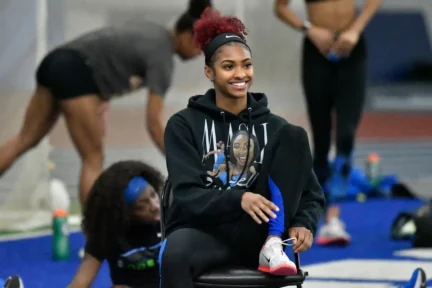
- Niche sport value: Gymnastics, swimming, volleyball, track, and other sports thrive in smaller, tight-knit markets.
- Personalized branding: Athletes at smaller schools may have stronger personal engagement, better social-media traction, and closer ties to fans.
The playing field isn’t level — and won’t be. But the smartest small schools are proving they don’t need $20 million collectives to stay competitive.
They just need creativity, community, and the willingness to think differently.
Learn More About the NIL Landscape
Name, Image, and Likeness plays an increasing role in college sports, and understanding how it works often requires more than individual articles or news updates.
RallyFuel is a platform focused on NIL-related topics across college athletics. It brings together information about athletes, NIL activity, and the broader structure behind modern college sports, helping readers explore the topic in more depth.


Leave a Comment