
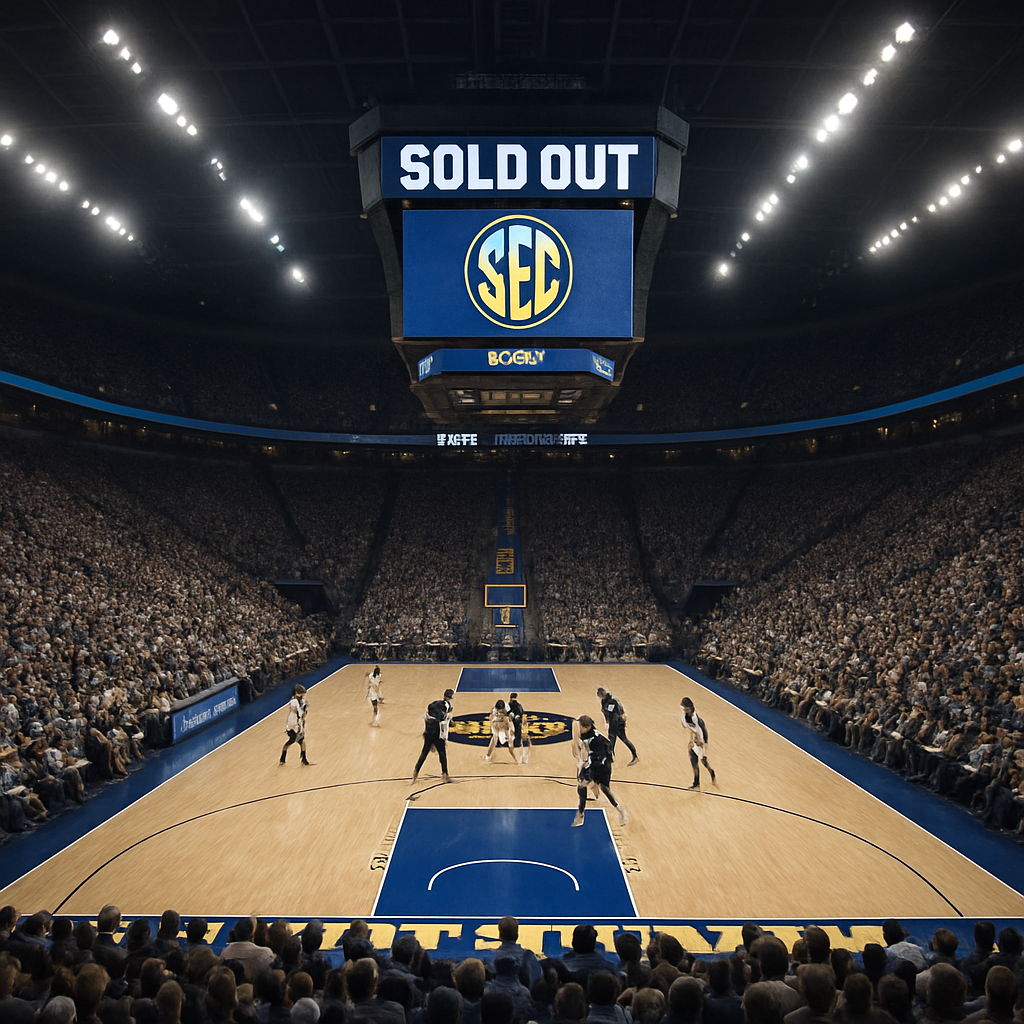
Last year, a starting point guard in the SEC likely earned more than a local bank president. Welcome to the new economy of college sports, where “recruiting” has been largely replaced by high-stakes budgeting. While fans cheer for the logo on the jersey, the machinery operating behind the scenes has shifted from handshake deals to complex financial negotiations that rival professional free agency.
Think of your favorite SEC program less like a traditional university team and more like a pro franchise, only without a salary cap to keep spending in check. In this environment, a coach’s ability to draw up plays matters less than their ability to manage “roster value.” Just as a house in Nashville costs more than one in a rural town, a 7-foot center costs more in the SEC than in a smaller conference because the demand—and the available cash—is significantly higher.
The source of this cash, however, is often misunderstood. University athletic departments aren’t the ones writing these massive checks; that role belongs to “NIL Collectives.” These are independent pools of money gathered by wealthy alumni and boosters, specifically designed to pay players for their “Name, Image, and Likeness.” It is a financial arms race where a school’s buying power is determined not by ticket sales, but by how much capital their collective can raise from donors to secure top talent.
With high-profile moves like John Calipari’s shift to Arkansas shaking up the landscape, the price of poker has gone up. Everyone knows money is moving, but few understand exactly how much is required to build a Final Four contender. We are now peeling back the curtain on the multi-million dollar war chests currently fueling the nation’s most dominant conference.
Summary
SEC basketball has entered a donor-driven, NIL-collective era where buying power—not ticket sales—sets roster value, with competitive budgets often reaching $3–5 million and premiums paid for scarce positions and proven transfer-portal veterans. Wealth flows through independent collectives (legacy vs catalyst models), supercharged by SEC football culture, pushing spending beyond Big Ten peers and reshaping recruiting, retention, and mid-major poaching into a de facto farm system. Legal pressures (Title IX and impending revenue sharing) are poised to formalize pay and reposition collectives from full payrolls to luxury add-ons. For smaller programs, sustainable success hinges on efficient “Moneyball” strategies and community-backed funding, since smart allocation—not just the biggest checkbook—wins in March.
The Backyard: How Donor-Led Collectives Became the SEC’s Unofficial Front Office
While the University Athletic Director still handles scholarships and travel logistics, a new power player has emerged to handle the paycheck. Think of an NIL Collective as an unofficial, shadow front office operating without a salary cap. These organizations are legally separate from the university, designed specifically to gather funds from supporters and funnel them to players. In the high-stakes world of SEC basketball, having a wealthy, organized collective is now just as critical as hiring a legendary head coach.
You might imagine players earning their millions by starring in national TV commercials, but that is rarely the reality for college athletes. Most NIL budgets in the Southeastern Conference are actually funded by donor-led collectives rather than corporate brands like Nike or Gatorade. This creates a de facto payroll where boosters effectively pay a salary to ensure the team retains its talent. To keep this war chest full, collectives rely on four primary revenue streams:
- High-net-worth boosters: The “whales” writing six-figure checks.
- Subscription-based fan memberships: Monthly dues paid by average fans for exclusive content.
- Local business partnerships: Corporate sponsorship deals within the college town.
- Event-based fundraising: Galas, golf tournaments, and meet-and-greets.
This financial model shifts influence away from the university administration and toward the people writing the checks. “New money” donors—those funding the collective—often have more sway in program decisions than traditional season ticket holders. Once that money is secured, however, the challenge shifts immediately from fundraising to allocation.
Building a $5 Million Roster: A Deep Dive Into Player Pricing and Position-Based Salaries

Managing a payroll where a single star employee demands half a million dollars is the high-stakes reality for coaches managing SEC basketball NIL collective funding levels . While the NCAA enforces no official salary cap, every program is bound by a “soft cap”—the exact amount of cash their donors can raise. For a competitive roster aiming for a deep tournament run, the average NIL budget for SEC basketball teams now sits between $3 million and $5 million annually.
Determining exactly how to distribute that cash requires knowing how to calculate NIL market value for SEC players. Much like real estate, a player’s price tag is determined strictly by supply and demand rather than a fixed corporate pay scale. An elite scoring guard who averaged 15 points per game isn’t just a recruit; he is a premium asset commanding anywhere from $400,000 to $800,000 for a season.
Scarcity drives these prices even higher when looking at the frontcourt. Because human beings over seven feet tall with athletic agility are incredibly rare, centers often command the highest salaries on the team. This “big man tax” means a defensive anchor might earn significantly more than the starting point guard simply because there are fewer viable replacements available in the talent pool.
Coaches must ultimately decide whether to exhaust their funds on two superstars or spread the wealth across a balanced starting five. This constant trade-off forces difficult decisions, often leaving high school recruits with smaller offers while the bulk of the funding is reserved for proven commodities.
The High Price of Experience: Why Transfer Portal Veterans Outearn High School Five-Stars

Investing in potential used to be the gold standard, but the economics of winning have shifted the priority toward reliability. When comparing high school recruits vs transfer portal NIL value, coaches are overwhelmingly choosing to pay a premium for “proven commodities”—veteran players who have already physically matured and succeeded against college competition. Just as a corporation would pay more for a manager with five years of experience than a promising intern, Collectives are hesitant to drop six figures on an 18-year-old who has never played a minute of televised basketball.
For SEC programs, the most efficient way to acquire this experience is by targeting dominant players from smaller conferences. The impact of NIL on SEC basketball mid-major transfers has been profound, effectively turning lower-level leagues into farm systems for the powerhouses. Securing a 20-point-per-game scorer from a mid-major requires paying a “Portal Tax”—a surcharge for the certainty that the player can handle the bright lights immediately.
Retention creates the final, and perhaps most expensive, layer of this economy. Coaches must now engage in SEC basketball roster retention through NIL incentives, essentially re-recruiting their current best players every spring to keep them from entering the portal. This defensive spending forces teams to match the market rate for their own stars, a financial burden that escalates tension between traditional “Blue Blood” programs and aggressive new spenders.
The Blue-Blood Premium: Comparing Kentucky’s Legacy with Arkansas’s New Money
When John Calipari traded Kentucky blue for Arkansas red, he did not just switch sidelines; he completely upended the financial hierarchy of the conference. Questions about which SEC basketball program has the largest NIL budget often assume the answer is always a historical giant like Kentucky. However, the modern market is driven by “Catalyst Coaching”—where a splashy hire instantly unlocks millions in dormant donor capital, effectively giving a program like Arkansas the immediate purchasing power of an NBA front office.
This shift illustrates the two distinct financial models currently battling for dominance in the league:
- Legacy Funding: Programs like Kentucky rely on multi-generational donor bases. The money is consistent and vast, operating like a stable trust fund that demands long-term results and tradition.
- Catalyst Funding: Schools utilizing the Arkansas model rely on “surge spending.” This is high-risk, high-reward cash raised rapidly to support a specific leader, functioning like venture capital designed to disrupt the market immediately.
Ultimately, how NIL impacts SEC basketball recruiting comes down to inflation; when “new money” enters the market, the price for top talent rises for everyone. SEC basketball budgets are no longer static numbers based on arena size but fluid war chests that fluctuate wildly with coaching changes. This aggressive internal competition has honed the conference’s financial machinery, preparing it for an even larger battle against external rivals.
Winning the Spending War: Why SEC Basketball Is Outpacing the Big Ten in NIL Investment
While internal rivalries drive prices up, the broader battle for national supremacy reveals why SEC vs Big Ten basketball NIL spending is heavily skewed toward the South. The secret weapon isn’t actually on the court; it is the massive financial shadow cast by SEC football. Because the conference’s football programs are such potent revenue generators, they create a massive pool of engaged boosters who are conditioned to spend aggressively. Think of this like a corporate subsidy: the massive profits from the football “division” allow donors to free up their checkbooks specifically for basketball, giving these schools a luxury budget that Big Ten programs, which often spread resources more conservatively, struggle to match.
Regional culture further widens this gap, as donor-led NIL collectives in the SEC treat fundraising like a competitive sport. In the Midwest, alumni giving is often structured around long-term endowments or facilities, but SEC boosters view their contributions as immediate ammunition for recruiting wars. This “win now” mentality ensures that cash is available instantly when a recruit demands a counter-offer, creating a fluid market that slower, bureaucratic collectives cannot keep pace with.
Consequently, the spending floor has risen dramatically, creating SEC basketball budgets capable of stockpiling talent that other leagues simply cannot afford. This financial depth allows coaches to do more than just recruit new stars; it gives them the capital necessary to re-recruit their current roster and prevent players from entering the transfer portal.
Roster Retention Secrets: Using NIL Incentives to Stop the Transfer Portal Exodus
In professional sports, contracts lock players in for years, but college basketball creates a scenario where every athlete becomes a free agent annually. To combat this volatility, SEC basketball roster retention through NIL incentives has shifted from a recruiting pitch to a defensive strategy. Collectives now use “retention bonuses”—payments specifically designed to reward loyalty—ensuring a star player doesn’t jump to a rival simply for a slightly larger paycheck.
Smart general managers know that retaining a current star is usually more cost-effective than bidding on an unknown replacement. When a program tries to replace a starter via the transfer portal, they often face inflated market rates driven by desperate bidding wars. By negotiating multi-year nil deals basketball programs can stabilize their payroll, paying a premium for known chemistry rather than gambling their budget on a high-priced transfer who might not fit the system.
This approach effectively mimics the guaranteed contracts seen in the NBA, allowing wealthy teams to lock down core talent for multiple seasons. While top-tier programs are closing the NIL gap in SEC basketball by securing their own rosters, the money required to execute this strategy creates a predatory environment. This financial dominance naturally turns smaller leagues into hunting grounds for the wealthy, effectively creating a farm system for the power conferences.
The Mid-Major Tax: How SEC Budgets Are Turning Smaller Schools Into Pro-Style Farm Systems
Just as Major League Baseball teams rely on minor leagues to develop prospects, the SEC is now effectively using the rest of college basketball as a training ground. Smaller schools invest significant resources into coaching raw recruits, only to see them poached once they prove they can handle the spotlight. This dynamic is driven almost entirely by the vast disparity in SEC basketball NIL collective funding levels, which allows powerhouses to treat mid-major rosters like a shopping catalog for proven talent.
From a business perspective, buying a transfer is safer than betting on a high schooler, creating a predictable lifecycle for breakout stars:
- Discovery/Development: A smaller school recruits an under-the-radar player and develops their skills over two years.
- Breakout Performance: The player dominates their conference or shines in a March Madness upset.
- SEC Call-up via NIL: An SEC collective offers a salary the original school cannot match, securing a “veteran rookie” for their lineup.
The reality is that mid-major programs are paying a “development tax”—doing the hard work of coaching up talent without reaping the long-term rewards. While some smaller schools attempt creative fundraising, closing the NIL gap in SEC basketball is mathematically impossible for institutions without massive TV revenue sharing. This unchecked spending has solidified a hierarchy of “Haves” and “Have-Nots,” but as budgets balloon, universities are increasingly worried about how federal regulations might complicate these financial flows.
Navigating the Legal Gray Zone: Title IX Compliance and the Future of University Oversight
With millions changing hands in the transfer portal, fans often ask: why doesn’t the university just cut the checks? The answer lies in federal law, specifically Title IX, which mandates equal opportunity for male and female athletes. If an athletic department officially paid its men’s team a $4 million salary cap, Title IX compliance in SEC basketball NIL would likely require a proportional investment in women’s sports, instantly doubling the price tag. This financial reality forces schools to keep these massive budgets technically off their books.
To bypass these restrictions, programs rely on the “legal fiction” that the money is entirely independent of the university. Think of a collective as a wealthy neighbor paying your mortgage; you benefit, but you didn’t technically earn the money. Because these groups are private entities, they currently operate without the strict gender equity requirements binding the universities, allowing boosters to pour millions specifically into men’s basketball without triggering a federal violation.
Courts are rapidly dismantling this convenient arrangement, creating significant legal challenges facing SEC basketball NIL collectives. Upcoming revenue-sharing models suggest schools will eventually pay athletes directly, bringing those payments back under federal oversight and forcing athletic directors to legally balance the ledger between men’s and women’s teams.
Until those rulings finalize, there is no reliable guide to SEC basketball NIL collective transparency, leaving fans guessing about true payrolls. As the legal dust settles, the focus shifts from simply gathering cash to distinguishing between wealthy donors and corporate partners.
From Boosters to Brands: The Evolution of Local Endorsements vs. Collective Checks
Most fans imagine the nil deals basketball stars sign involve filming commercials or signing autographs at local car dealerships. While those traditional marketing gigs—known as “Active NIL”—still exist, they represent a shrinking slice of the pie compared to “Passive NIL.” In the SEC, collectives now act as unofficial payroll departments, paying players substantial monthly fees simply for being on the roster rather than for selling a specific product or service.
Genuine endorsements function differently, relying heavily on a player’s digital footprint to generate a return on investment. Agencies analyzing how to calculate NIL market value for SEC players look past points per game, focusing instead on social engagement and follower counts. A star point guard might command $500,000 from a collective purely for his on-court talent, but his ability to earn an extra check from a national shoe brand depends entirely on his personal audience, not his jump shot.
This distinction creates a unique economy where SEC basketball budgets are driven by donor “salaries” rather than true market value. Because the collective creates an artificial floor for earnings, players can demand six-figure sums without ever posting a sponsored tweet. However, this donor-funded model is rapidly reaching a breaking point, paving the way for a future where schools may finally be allowed to share revenue directly.
The Revenue Sharing Shift: How New NCAA Rules Will Change the ‘Wild West’ Spending Model

While the current system relies on passing the hat among wealthy fans, a massive structural change is on the horizon. The recent legal settlements will soon allow schools to pay players directly from media revenue, effectively creating a salary cap similar to professional leagues. This shift transforms compensation from a donation-based gamble into a fixed line item on the university’s expense sheet, replacing the need to beg boosters for basic payroll with a standardized athletic department budget.
This transition creates confusion about the future of external fundraising groups, but they are unlikely to vanish. A practical guide to SEC basketball NIL collective transparency suggests these organizations will evolve into “luxury tax” vehicles, shifting their focus from funding the entire roster to securing specific high-end talent. The NCAA revenue sharing impact on SEC basketball budgets raises the financial floor for everyone, yet the ceiling will still be determined by how much extra cash a fanbase can raise to top off the school’s direct payments.
Introducing direct revenue sharing creates a funding baseline that might appear to level the playing field, but competitive disparity will likely persist. Wealthier programs will maximize both the school-funded cap and their external collective power, while smaller programs may struggle to match that combined firepower. Ultimately, closing the NIL gap in SEC basketball won’t be solved solely by sharing revenue if external spending remains unchecked, forcing us to ask if smaller programs can truly compete with the conference’s financial juggernauts.
Closing the NIL Gap: Can Smaller SEC Programs Keep Up with the Powerhouses?
While the headlines often obsess over the multi-million dollar rosters at powerhouse schools like Kentucky or Arkansas, raw spending power is rarely the sole predictor of March success. Massive SEC basketball budgets certainly provide a margin for error—allowing coaches to overpay for talent or absorb a recruiting mistake—but money cannot force team chemistry. History is full of expensive “super teams” that failed to mesh, proving that while cash buys talented individuals, strategic roster construction wins championships.
For programs without bottomless bank accounts, the strategy shifts from outbidding rivals to outsmarting them. Closing the NIL gap in SEC basketball requires a “Moneyball” approach where coaches find specific value that the blue bloods might overlook. Successful mid-tier programs maximize their limited resources through three key tactics:
- Niche Recruiting: Targeting undervalued assets, such as international players or high-performing transfers from smaller conferences, who prioritize playing time over the highest immediate bidder.
- Hyper-Local Fundraising: Mobilizing local businesses for consistent, moderate deals rather than relying solely on a few wealthy donors to fund the whole operation.
- Efficiency Spending: Allocating the budget across three solid starters who fit a specific system rather than blowing 50% of the funds on one superstar.
This smarter approach relies heavily on community engagement rather than just deep pockets. Even if SEC basketball NIL collective funding levels at a mid-tier school don’t match the top of the league, a unified fanbase can create a sustainable ecosystem that keeps players happy and on campus. Ultimately, whether a team spends $2 million or $5 million, the only number that truly matters to the fans is the one in the win column.
The Fan’s Final Score: How to Measure the ROI of Your School’s NIL Strategy
You used to look at a roster and wonder how a coach convinced a five-star recruit to sign on the dotted line, but now you understand the financial machinery operating behind the scenes. The mystery of sudden transfers or shocking commitments isn’t just about locker room culture anymore; you now recognize the mechanics of this high-stakes economy, exposed as a marketplace with clear buyers and sellers. You can finally distinguish between a roster built on a sustainable war chest and one scraping by on erratic booster donations.
Use this new perspective to evaluate your favorite program with a critical eye. Instead of just following recruiting rumors on message boards, look for signs of transparency within your team’s ecosystem. Is the collective constantly fundraising for emergencies, or are they announcing steady corporate partnerships? When a coach complains about the transfer portal, listen closely; they are often signaling a budget shortfall to the fanbase. If your team is landing transfers who command high market value, it is a clear indicator that the donors have mobilized effectively to secure that talent.
Remember that while a massive budget is the prerequisite for contention, it does not strictly guarantee a trophy. We have seen that SEC basketball NIL collective funding levels provide the floor, but coaching provides the ceiling. The teams that will dominate March are the ones that spend their millions efficiently, balancing expensive star power with necessary roster depth. You now possess the insight to distinguish between a team that is simply spending money and a program that is strategically investing in a championship architecture.
The era of the “Wild West” is rapidly shifting toward a sophisticated business model where the SEC intends to lead. As revenue sharing and potential employment models loom on the horizon, the financial muscle you see today will only solidify the conference’s dominance. Enjoy the games, but keep one eye on the bottom line. You aren’t just watching amateur athletics anymore; you are witnessing the evolution of a professional league in real-time, and you finally have the blueprint to understand who is built to last.
Learn More About the NIL Landscape
Name, Image, and Likeness plays an increasing role in college sports, and understanding how it works often requires more than individual articles or news updates.
RallyFuel is a platform focused on NIL-related topics across college athletics. It brings together information about athletes, NIL activity, and the broader structure behind modern college sports, helping readers explore the topic in more depth.
👉 Explore the Athletes on RallyFuel – Discover top college athletes, compare NIL valuations, and dive deeper into the world of NIL.
Frequently Asked Questions
Question: What is an NIL collective, and who’s really paying SEC basketball players?
Short answer: NIL collectives are independent, donor-run organizations that raise and distribute money to athletes for their name, image, and likeness—functioning like a shadow front office with no formal salary cap. They are separate from the university and draw funds from high-net-worth boosters, subscription memberships, local business partnerships, and events. Because the money flows through collectives (not athletic departments), donors gain outsized influence over roster decisions. In the SEC, football-fueled donor culture and a “win-now” mindset supercharge these war chests, helping the league outspend peers that fundraise more conservatively.
Question: How big is a competitive SEC basketball NIL budget, and what drives player pricing?
Short answer: A deep-run SEC roster typically requires $3–5 million annually, bound by a “soft cap” equal to whatever donors can raise. Prices are set by supply and demand: proven, high-usage guards can command $400,000–$800,000 per season, and rare 7-footers often carry a “big man tax,” making them the priciest pieces. Coaches must choose between concentrating funds on one or two stars or spreading dollars across a balanced five. Programs also differ in how they mobilize money—steady “Legacy Funding” (e.g., Kentucky) versus “Catalyst Funding” that surges after a splashy hire (e.g., Arkansas with Calipari).
Question: Why do transfer-portal veterans out-earn five-star high school recruits, and what does that mean for mid-majors?
Short answer: Experience reduces risk. Collectives pay premiums for players who’ve already proved they can produce against college competition, leading to a “Portal Tax” on high-impact transfers. Mid-majors effectively serve as farm systems: they develop talent, watch a breakout, then lose the player to an SEC “call-up” offering salaries they can’t match. Smaller programs can still compete by going “Moneyball”—prioritizing niche recruiting (international or overlooked fits), hyper-local fundraising for steady support, and efficiency spending across system-fit starters rather than one budget-busting star.
Question: How are SEC programs using NIL to retain their own players and blunt the transfer portal?
Short answer: Retention has become a defensive strategy. Collectives deploy retention bonuses and, where possible, multi-year NIL agreements to reward loyalty and stabilize core lineups. Keeping a known star is usually cheaper and safer than entering portal bidding wars for a replacement. This approach mirrors pro-style guaranteed deals, allowing well-funded teams to lock in chemistry while raising the price of poaching for rivals.
Question: What legal changes are coming, and how will they reshape collectives and budgets?
Short answer: Title IX makes direct, men’s-basketball-only payrolls difficult for universities, pushing compensation to outside collectives—for now. Court-driven shifts toward revenue sharing will let schools pay athletes directly from media money, creating a standardized payroll “floor.” When that happens, collectives won’t vanish; they’ll transition from full-roster payrolls to luxury top-offs used to win elite bidding wars. The new baseline won’t erase disparities, though—wealthy programs will maximize both school-funded caps and donor add-ons, keeping the competitive gap alive even as transparency improves.




Leave a Comment