
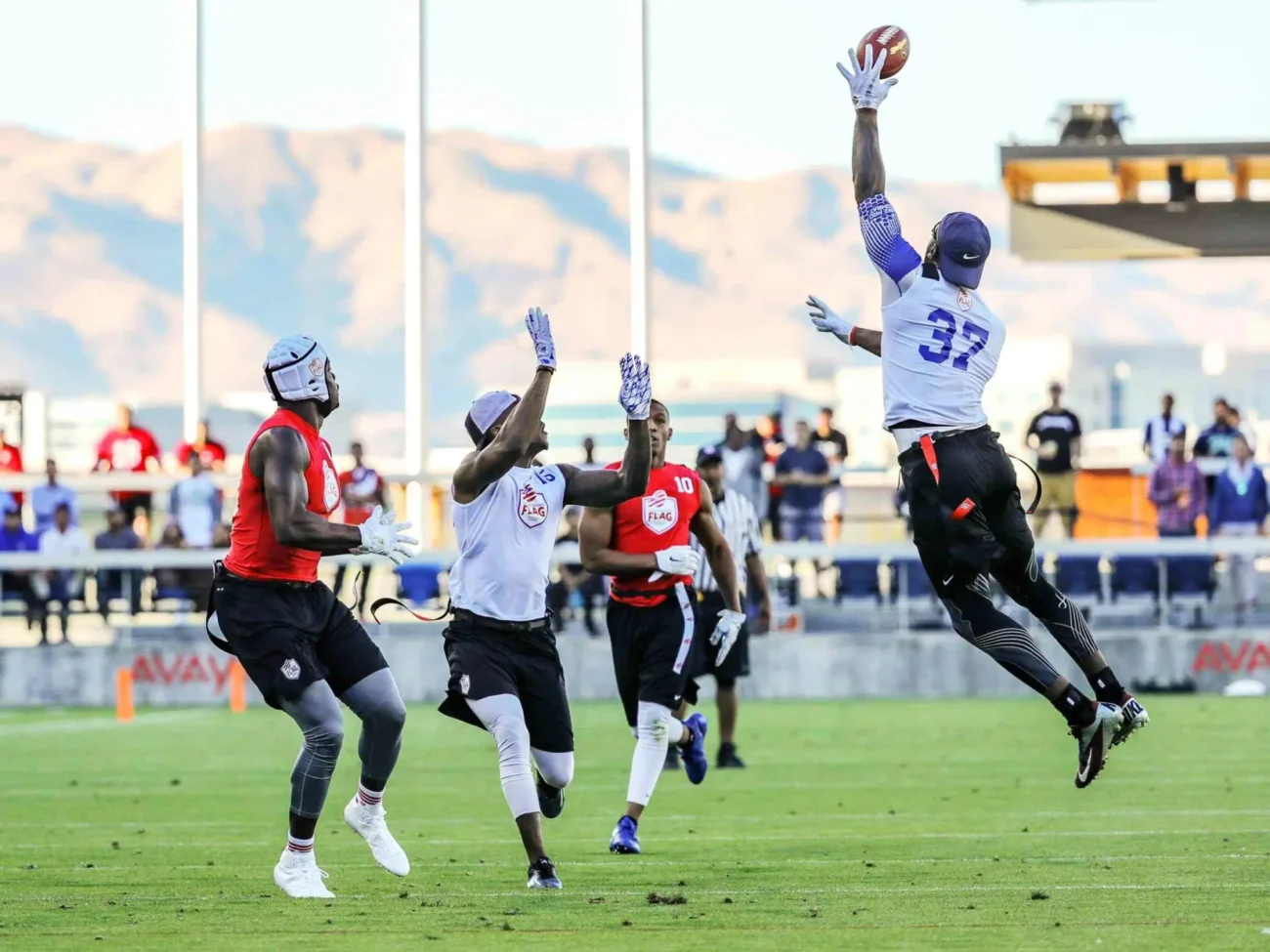
Imagine seeing the next Justin Jefferson or Patrick Mahomes before they ever step onto a college campus. Many casual fans hear the phrase “youth flag football” and immediately picture recreational weekend leagues played for plastic trophies in a local park. However, this non-contact format has rapidly transformed from a backyard pastime into a multi-million dollar talent pipeline. That evolution means the modern 7v7 circuit operates as a high-stakes arena where future college stars prove their worth under intense national scrutiny.
Picture this style of play as gridiron’s equivalent of a basketball 3-point contest. By removing the massive linemen and heavy hitting of traditional 11-on-11 games, 7v7 strips the sport down to pure passing, catching, and defensive coverage mechanics. According to major college scouting directors, evaluating talent without the distraction of tackling provides the clearest view of a player’s raw athletic ability. Quarterbacks showcase their arm accuracy under pressure, while wide receivers and defensive backs engage in lightning-fast, one-on-one battles for the ball. Within core flag football positions—quarterback, wideout/slot, and defensive back—the format spotlights space, timing, and leverage.
Industry data reveals that the Class of 2026 currently occupies the absolute “sweet spot” for high school scouting. These rising juniors sit perfectly inside a “Goldilocks” recruiting window right now. They possess enough varsity experience to display polished fundamentals, yet remain early enough in their athletic journeys to be the ultimate priority for top-tier university programs building their future rosters. Tracking the recruiting profiles for these specific athletes gives scouts a reliable crystal ball for predicting which colleges will dominate the sport three years from now.
Finding the true game-changers requires looking past the flashy tournament highlights to identify the physical traits that actually translate to the next level. We have analyzed the circuit film, tracked the rising scholarship offers, and separated the elite from the merely good. Here is our definitive guide to the Top 25 7v7 Flag Football Players to Watch in 2026, featuring the dynamic athletes who are currently turning this high-speed passing game into an absolute art form.
Summary
7v7 flag football has evolved into a high-stakes, non-contact showcase that isolates passing, receiving, and coverage skills, offering scouts a clear view of translatable talent. The Class of 2026 sits in a prime recruiting window, with quarterbacks, receivers, and defensive backs evaluated on processing speed, separation, ball skills, and recovery ability. The article details how rules and premier circuits (OT7, Pylon, NFA, Battle) reveal who thrives under pressure and how those performances drive rankings and scholarship offers. It concludes with a practical checklist for tracking these rising stars as they shape the next era of college football.
Deciphering the 7v7 Game: How Non-Contact Play Predicts Saturday Success
Understanding how to evaluate competitive flag football talent starts with realizing it’s like a basketball 3-point contest—all the high-flying passing and catching, without the bruising hits. To predict which 7v7 flag football players will shine on college Saturdays, you first need to grasp how the rules shift the traditional game:
- No offensive or defensive linemen on the field.
- Play ends via a one-hand touch (or sometimes flags).
- Quarterbacks face a strict 4-second pass clock to throw.
- Games feature fast-paced, 20-minute running clocks.
- Traditional running plays are completely eliminated.
Stripping away the physical tackling forces college recruiters to rely on three distinct non-contact metrics. First, they look for rapid processing; because of that ruthless pass clock, quarterbacks must diagnose defensive coverages in the blink of an eye. Second, scouts prioritize “speed on grass” over straight-line track speed, knowing that a lightning-fast sprint time means nothing if a receiver can’t make sharp, sudden cuts in cleats. Finally, elite ball tracking—the ability to calculate exactly where a deep pass will drop while sprinting at full speed—separates raw athletes from future stars.
These unique constraints create a pressure cooker for the most critical position on the gridiron. Without the safety net of handing the ball to a running back to kill the clock, the entire offense rests squarely on the shoulders of the passer. This intense, pass-only spotlight places the ultimate burden on the orchestrators of the offense, demanding exceptional processing speed and precision.
The Elite Signal Callers: Why These QBs Are Dominating National Circuits
Imagine turning on the television on a Sunday and seeing five different franchise quarterbacks in their prime; that is exactly the caliber of talent the Class of 2026 brings to the modern passing circuit. As the undisputed leaders of the offense, these rising high school juniors are carrying immense pressure, tasked with reading defensive coverages before the four-second clock expires. Some of the most highly sought-after 7v7 flag football players are rewriting the rules of the position. They aren’t just surviving the intense, pass-only spotlight; they are treating the field like a chessboard to rack up college scholarship offers.
Controlling the defense without the threat of a running game requires a specialized skill known as eye manipulation. In a standard football game, a linebacker might freeze because he thinks a running back is getting the ball, but in 7v7, a quarterback must use his helmet and gaze to literally look a defensive back out of position. Jared Curtis (Nashville, TN) has mastered this art, possessing the same fiery, gunslinger mentality as Josh Allen, using his eyes to pull safeties away from his intended target. Similarly, Dia Bell (Fort Lauderdale, FL) operates with the cool, twitchy efficiency of a young Patrick Mahomes, routinely looking left to open up a massive throwing lane on the right side of the field.
Beyond simply knowing where to look, timing is what truly separates good high school players from future Saturday superstars. Because 7v7 features a crowded secondary with no linebackers rushing the passer, passing lanes vanish in a fraction of a second, demanding elite tight window anticipation. This means throwing the football to a spot before the receiver even makes their final cut. Ryder Lyons (Folsom, CA) utilizes advanced quarterback mechanics for 7v7 play to deliver passes with the surgical timing of Joe Burrow. Meanwhile, Faizon Brandon (Greensboro, NC) plays with the undeniable smooth rhythm of C.J. Stroud, effortlessly anticipating breaks to defeat tight coverage.
The ultimate proving ground for these mechanical advantages occurs when the athletes face off at elite national showcases against evenly matched talent. At recent high-profile tournaments featuring Under Armour Next football camp standout athletes, scouts look for quarterbacks who elevate the players around them. Will Griffin (Tampa, FL) firmly cemented himself in this top-five tier during these high-stakes competitions. Playing with the sturdy, pocket-commanding presence of a Matthew Stafford, Griffin demonstrated that hitting a moving target in a sea of defenders requires both exceptional arm strength and flawless timing.
College recruiters flock to these five signal-callers because their processing speed is already operating at a collegiate level. When a quarterback can mentally map out the defensive rotation, freeze a safety with his eyes, and deliver a perfectly anticipated strike through a closing window, those skills translate universally. Scouts know that if these elite traits shine in a fast-paced, non-contact environment, these young athletes have the mental foundation required to survive the chaos of an SEC or Big Ten pass rush.
Even the most magnificent, no-look pass will fall incomplete if the offensive weapon cannot create breathing room against aggressive coverage. Delivering a perfect ball ultimately relies on having a target who can break away from the defensive back at the exact right moment, making the wide receiver’s ability to create separation just as critical.
Speed and Separation: The Top 2026 Wide Receivers Reimagining the Passing Game
Catching a perfectly placed football is only half the battle; getting open in a crowded secondary is an art form. In the pass-heavy ecosystem of 7v7 football, receivers operate without the threat of running plays to keep the defense guessing. Every snap is an aerial dogfight, making this the perfect stage to identify the names that will likely headline college football in 2027. These rising high school juniors are turning the field into a track meet, combining elite athleticism with precise route running to command national scholarship offers.
Elite NFL stars like Justin Jefferson consistently create five yards of space before the ball is even thrown by mastering their release techniques, which dictate how a receiver escapes the defender right at the line of scrimmage. Because 7v7 relies entirely on passing, a receiver’s first three steps are the most critical element of their game. They use quick, stutter-step footwork to freeze the defensive back, creating instant separation that gives their quarterback a clean throwing window.
Even with a flawless release, passes aren’t always completely accurate, which is where a player’s “catch radius” becomes incredibly valuable. Think of a catch radius as the imaginary bubble around a receiver where they can successfully grab the football. A wider bubble means the quarterback has a massive target area to aim for. The best 7v7 wide receivers to watch possess incredible arm length and flexibility, allowing them to stretch and snag errant throws that would normally sail out of bounds or fall incomplete.
College scouts are currently obsessed with this specific blend of size and speed in the 2026 recruiting cycle. Here are the top seven playmakers transforming the passing game, along with the defining traits that make them nearly unguardable:
- Chris Henry Jr. (Cincinnati, OH) — Elite Wingspan
- Devin Carter (Douglasville, GA) — Explosive Burst
- Jabari Brady (Hollywood, FL) — Sub-4.4 Speed
- Naeem Burroughs (Jacksonville, FL) — Unmatched Catch Radius
- Aaron Gregory (Douglasville, GA) — Physical Dominance
- Travis Johnson (Chesapeake, VA) — Fluid Agility
- Caleb Smith (Dallas, TX) — Acrobatic Body Control
When a deep pass hangs in the air, the physical traits of these athletes truly take center stage through a crucial skill known as high-pointing. This means timing a jump perfectly to catch the ball at the absolute peak of their reach, effectively snatching it away before the defensive back can react. Mastering this mid-air dominance requires intense preparation, leading many athletes to incorporate explosive speed training for youth flag football to build their leaping ability. Seeing a receiver vault over a defender instantly proves their athleticism will translate to Saturday nights in the SEC.
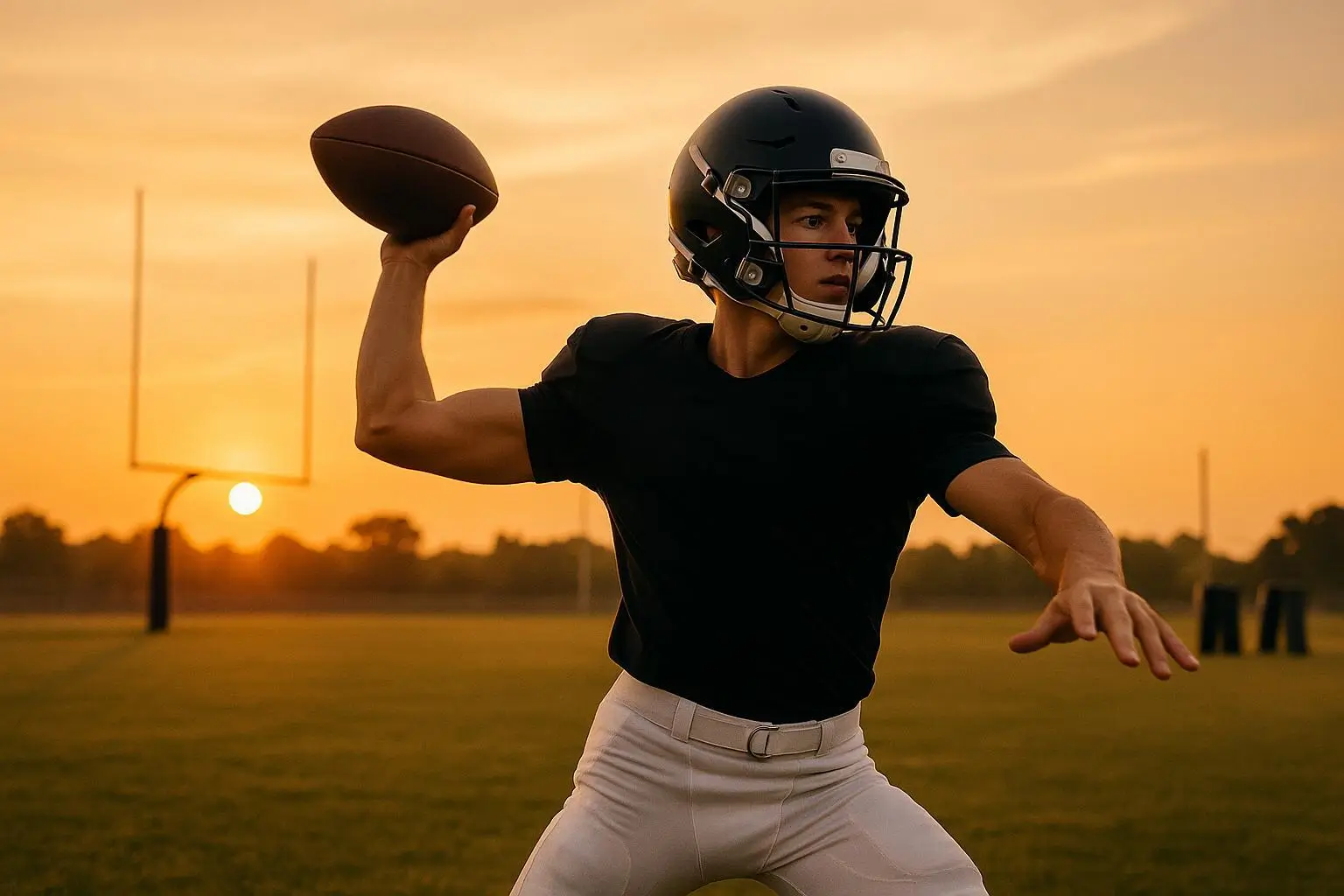
Ultimately, these dynamic pass-catchers are forcing defensive coordinators to completely rethink their tournament strategies. A receiver who can effortlessly beat coverage off the line, catch anything in their zip code, and jump out of the gym is a walking mismatch. However, football is a game of equal and opposite reactions, and defenses are rapidly evolving to counter this incredible speed with elite secondary talent.
Shutting Down the Sky: The Defensive Backs Neutralizing Elite Offenses
Playing cornerback in standard football is already famously difficult, but the 7v7 format turns that pressure up to a boiling point. During a normal Friday night game, a ferocious pass rush forces the quarterback to throw the ball in under three seconds, effectively rescuing the secondary. Without those massive linemen hunting the quarterback, defensive backs are left stranded “on an island” against elite playmakers for what feels like an eternity. This dynamic transforms 7v7 into the ultimate stress test for defensive talent, exposing exactly who can survive without a safety net.
When evaluating flag football players, scouts rarely rely on a stopwatch. While everyone loves a blazing 40-yard dash, straight-line speed only matters if a defender is running directly down the field. Instead, evaluators obsess over lateral agility, which is the physical ability to shuffle side-to-side and change directions instantly. Because they are playing strict man-to-man coverage, a cornerback must mirror a receiver’s every stutter and twitch, making flexible hips far more valuable than Olympic track speed. For 7v7 flag football players in the secondary, this agility becomes the differentiator that wins tight-window throws at the catch point.
Even with perfect footwork, the offensive player knows the route, meaning defensive backs will inevitably fall a step behind. That is precisely where “recovery speed” becomes the great equalizer for elite recruits. This crucial trait describes a defender’s sudden burst of acceleration to close the distance while the football is still airborne. Athletes with explosive recovery speed consistently lead the nation in pass breakups, or PBUs, because they can violently swat the ball away at the last possible fraction of a second.
Compiling a comprehensive scouting report on top high school defensive backs requires watching these exact traits translate into live tournament dominance. Standouts in the Class of 2026 like Elbert Hill and Bralan Womack are currently writing the textbook on modern pass defense. They consistently flash across Pylon 7v7 tournament circuit highlights, using their incredible lateral quickness to suffocate passing lanes and frustrate highly recruited quarterbacks. These young stars look less like high school juniors and more like future NFL shut-down corners.
Ultimately, a defense that can neutralize five-star receivers forces opposing teams to completely scrap their offensive game plans. Watching these defensive backs erase half the field with their athleticism is just as thrilling as watching a deep touchdown pass. As these defensive titans continue to battle the nation’s best offensive weapons, the intense competition naturally demands bigger stages and brighter lights to showcase their talents.
From Pylon to OT7: Where the 2026 Class Proves Their Worth
College coaches no longer rely solely on Friday night game tape. Today, instead of quietly preparing for national 7v7 scouting combines, elite athletes are competing on highly publicized weekend stages where a spectacular catch can generate millions of social media views. This viral factor is incredibly powerful for the Class of 2026, as blowing up online can instantly transform an unknown prospect into a heavily targeted national recruit. In youth flag football and high school showcases alike, these stages reward poise, precision, and consistency.
Just like professional golf or tennis, the modern flag football landscape features “Majors” that definitively prove who belongs at the top of the rankings. If you want to watch tomorrow’s stars breaking the internet today, these are the four primary circuits to follow:
- OT7: The flashiest, camera-heavy league where OT7 national championship top performers become instant internet celebrities.
- Pylon: The historic pioneer known for producing the most traditional Pylon 7v7 tournament circuit highlights.
- NFA (National Football Academies): A rigorous environment focused on strict rules and fundamental scouting.
- Battle: A high-energy tour that tests a player’s physical endurance and mental toughness against elite rivals.
Thriving in these intense environments proves to scouts that a teenager can handle elite competition and massive media pressure simultaneously. When a high school junior consistently dominates these premier circuits, those viral moments quickly turn into life-changing phone calls from major universities, driving their scholarship hunt forward.
Navigating the Scholarship Hunt: How 7v7 Performances Drive College Offers
Stepping off the plane from a weekend tournament, top 2026 athletes often find their phones flooded with scholarship offers from powerhouse programs. Navigating college football recruiting through 7v7 leagues has become a high-speed numbers game, where these official collegiate “offers” act as a real-time leaderboard for talent. College scouts use these fast-paced passing leagues to isolate pure athleticism, testing whether a receiver possesses the explosive speed to separate from elite defenders when everyone on the field is fast.
Translating those viral highlights into national prestige falls to recruiting networks like 247Sports and Rivals, the organizations that assign coveted “star rankings” to players. When evaluating Class of 2026 flag football prospect rankings, analysts demand consistency against top-tier competition. A spectacular tournament run can trigger a sudden “ranking bump,” instantly elevating an under-the-radar three-star prospect into a heavily targeted four or five-star national recruit. This evolving star system essentially dictates which hometowns become mandatory stops for college head coaches during the offseason.
Ultimately, evaluators face the challenge of separating “camp stars”—athletes who look incredibly brilliant playing in shorts and t-shirts—from true “game-day players.” The impact of 7v7 circuit on high school recruiting is undeniable, but scouts must eventually verify that a prospect dominating without tackling can still perform when the heavy hitting of standard 11-on-11 football begins. Identifying the rare teenagers who successfully combine graceful 7v7 finesse with physical gridiron toughness is the ultimate key to projecting future success.
Your 2026 Scouting Checklist: How to Track These Athletes This Season
You no longer have to wait for Saturday afternoons to discover college football’s next superstars. Equipped with a true “Scout’s Eye,” you can now look past the flash of high school highlight reels and identify the raw athleticism, elite ball-tracking, and clutch playmaking that define tomorrow’s gridiron legends. These athletes represent the next generation of collegiate talent.
To track these prospects toward their college commitments, start your scouting journey here:
- Build your personal watchlist: Pick three athletes from this guide whose playstyles remind you of your favorite pro stars.
- Follow the circuit: Search hashtags like #OT7 and #Pylon7v7 on social media for weekend tournament highlights.
- Track the recruiting war: Check platforms like Rivals or 247Sports monthly to see which college powerhouses are offering them scholarships.
- Verify the metrics: Review the essential performance data for flag football players—like verified 40-yard dash times—to separate internet hype from on-field reality. If you’re new to youth flag football, study basic flag football positions to better understand each athlete’s role in this format.
The Top 25 7v7 Flag Football Players to Watch in 2026 aren’t just names on a recruiting board; they are the architects of the game’s next era. By monitoring these athletes now, you gain a clear preview of the playmakers who will shape the college football landscape in the coming years.
Learn More About the NIL Landscape
Name, Image, and Likeness plays an increasing role in college sports, and understanding how it works often requires more than individual articles or news updates.
RallyFuel is a platform focused on NIL-related topics across college athletics. It brings together information about athletes, NIL activity, and the broader structure behind modern college sports, helping readers explore the topic in more depth.
Q&A
Question: Why is 7v7 flag football considered a strong predictor of college success?
Short answer: Because 7v7 strips the game down to passing, catching, and coverage, it spotlights traits that translate to Saturdays. With no linemen, one-hand touch, a strict 4-second pass clock, 20-minute running clocks, and no runs, the format forces quarterbacks to process instantly, receivers to separate on “speed on grass,” and defenders to win in space. The pass-only pressure puts QBs under a microscope, revealing decision-making, timing, and accuracy that college coaches can trust.
Question: What makes the Class of 2026 the “sweet spot” for recruiting?
Short answer: Rising juniors in the 2026 class have enough varsity experience to show polished fundamentals yet are early enough to be top priorities for elite programs. This “Goldilocks” window lets scouts project growth while securing commitments, making their recruiting profiles a reliable preview of which colleges could dominate in a few years.
Question: Which position-specific traits are scouts prioritizing on the 7v7 circuit, and who exemplifies them?
Short answer:
- Quarterbacks: Eye manipulation, rapid processing, and tight-window anticipation. Jared Curtis uses his gaze to move safeties; Dia Bell shows Mahomes-like poise; Ryder Lyons delivers Burrow-level timing; Faizon Brandon throws with Stroud-like rhythm; Will Griffin pairs timing with Stafford-esque arm strength and command.
- Wide receivers: Elite releases, separation, catch radius, and high-pointing. Standouts include Chris Henry Jr. (wingspan), Devin Carter (burst), Jabari Brady (sub-4.4 speed), Naeem Burroughs (catch radius), Aaron Gregory (physicality), Travis Johnson (fluidity), and Caleb Smith (body control).
- Defensive backs: Lateral agility, flexible hips, and recovery speed to close late and rack up PBUs. Elbert Hill and Bralan Womack showcase these traits across premier tournaments.
Question: How do the major 7v7 circuits differ, and why should I follow them?
Short answer: The four “Majors” each test a different edge of a prospect’s game and media readiness. OT7 is the flashiest, camera-first stage where champions become viral names; Pylon is the historic pioneer with classic highlight pedigree; NFA emphasizes strict rules and fundamentals; Battle stresses endurance and toughness. Consistent dominance across these events proves prospects can handle elite competition and massive exposure—often converting viral moments into scholarship offers.
Question: How do 7v7 performances impact scholarship offers and rankings, and how can I track real progress?
Short answer: Strong tournament showings often trigger immediate offers, which function like a live leaderboard. Recruiting services (247Sports, Rivals) translate consistency versus top competition into star ratings and “ranking bumps.” To monitor real progress: build a personal watchlist, follow #OT7 and #Pylon7v7 for weekend highlights, check 247Sports/Rivals monthly for new offers and ratings, and verify metrics (e.g., confirmed 40-yard dash times). Balance the hype by distinguishing “camp stars” from true “game-day players” who can carry 7v7 skills into full-contact 11-on-11.



Leave a Comment