

For decades, purchasing a jersey with the number 11 on the back at Memorial Stadium profited the university exclusively, leaving the star quarterback wearing it with nothing but a scholarship. Today, that same merchandise represents a legitimate business partnership that helps keep top talent in Champaign. This fundamental shift marks the end of the strict amateur model and the beginning of an era where student-athletes operate as independent brands.
Summary
Illinois student-athletes now monetize their name, image, and likeness under Illinois law and NCAA guidance, with the university allowed to facilitate connections but not pay directly. Funding flows primarily through ICON Collective (commercial, roster-focused) and Illini Guardians (501(c)(3), charitable work), plus corporate sponsorships, supporting deals that stabilize rosters across all sports. Businesses must craft fair-market-value, quid pro quo contracts and athletes must disclose for compliance, while navigating taxes and boosting financial literacy. NIL strength drives recruiting and retention, international athletes face visa limits, and long-term success hinges on broad, sustainable community support.
The catalyst for this transformation was the 2021 overhaul of college sports NIL regulations. While the acronym stands for Name, Image, and Likeness, the concept is best understood simply as “work for pay.” Just as a music major can teach piano lessons for extra cash, a linebacker can now sign autographs or appear in commercials without forfeiting their eligibility. It is not a salary paid by the school, but rather compensation for the value their fame brings to the marketplace.
The University of Illinois moved quickly to adapt, ensuring they did not fall behind in this competitive new environment. Seeing familiar players endorsing Champaign businesses or hosting youth camps witnesses the practical application of university of Illinois nil deals. These agreements allow local companies to leverage the popularity of Illini sports while putting money directly into the pockets of the students representing the university.
Navigating this landscape requires distinguishing between direct payments and third-party facilitation. How Fighting Illini athletes monetize personal brands often involves “collectives”—donor-funded organizations that pool resources to create opportunities for players. According to industry experts, these collectives bridge the gap between traditional fandom and modern athlete compensation, ensuring that athletes across both revenue and Olympic sports can benefit from their hard work.
Whether you are a longtime season ticket holder or a local business owner on Green Street, understanding these mechanics is essential for grasping the current state of collegiate athletics. The Illini are utilizing these new financial tools to compete, relying on specific rules and strategies to define the future of Illinois sports.
Decoding the Rules: How Illinois State Law Empowers Fighting Illini Athletes
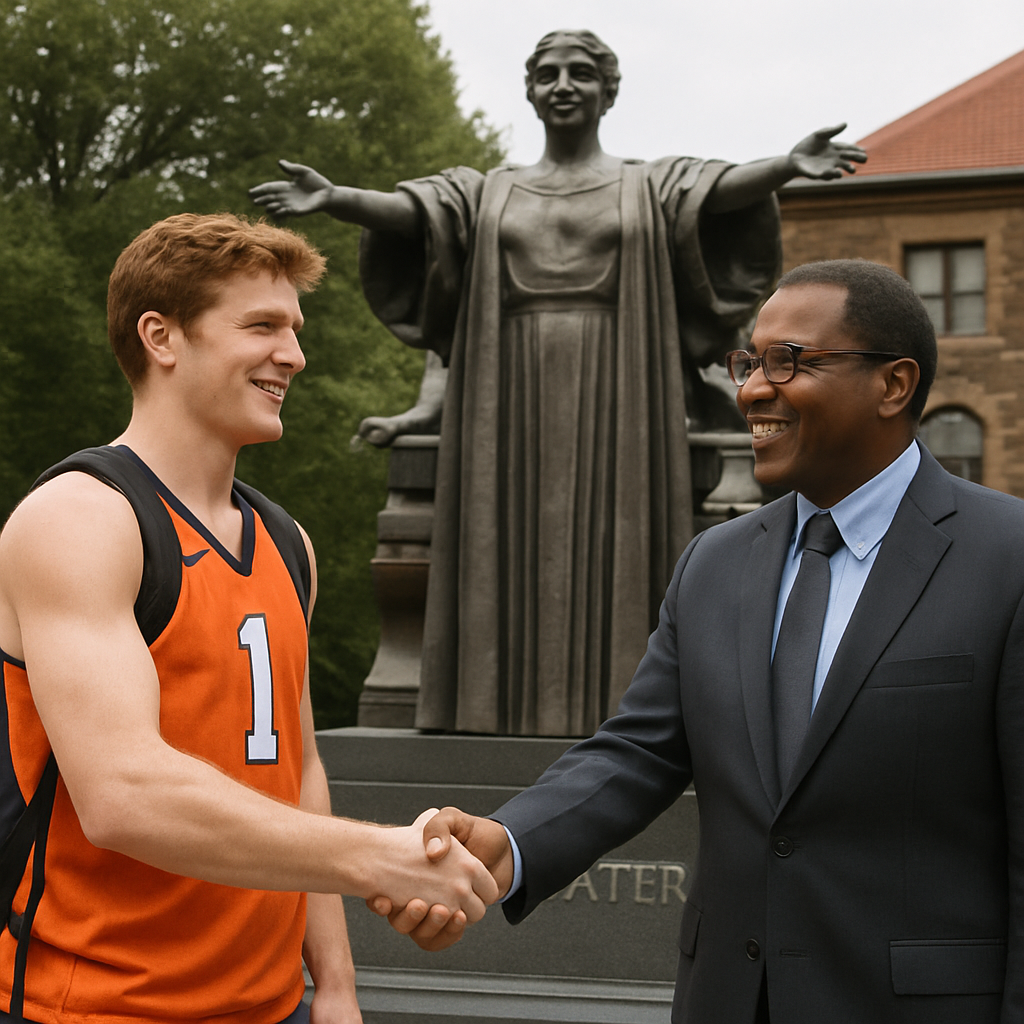
While the NCAA sets the broad strokes for college sports, the real referee for the Fighting Illini is often the state legislature in Springfield. This distinction is crucial because when national guidelines conflict with local statutes, the state mandate typically takes precedence, acting as a protective shield for local programs. Understanding that Illinois state law regarding athlete compensation drives the process explains why our teams might operate differently than rivals in other conferences.
The centerpiece of this local protection is the Illinois Fairness in College Athletics Act, legislation designed to ensure student-athletes can earn market value without risking their scholarships. Before this law was refined, the fear of violating obscure NCAA eligibility rules for name, image, and likeness kept many players and administrators on edge. Now, the state law explicitly prevents athletic associations from punishing the university or an athlete simply for participating in these business deals, effectively giving the Illini a green light to pursue opportunities without constantly looking over their shoulder.
Perhaps the most significant recent shift is the removal of the firewall between the athletic department and these business arrangements. Originally, coaches and administrators had to keep a strict distance, but legislative updates now allow the university to actively facilitate connections between athletes and third parties. While the University of Illinois still cannot cut the check directly, the athletic department acts as a matchmaker, introducing a star linebacker to a Champaign car dealership or a volleyball player to a tech startup.
Even with the university helping to open doors, the actual funding must come from external sources rather than the school budget. This creates a reliance on organized groups of donors and businesses to fulfill the financial side of the equation. To understand how these funds are gathered and distributed, we look at the specific organizations pooling resources for the Illini, specifically the ICON Collective and the Illini Guardians.
ICON Collective vs. Illini Guardians: Choosing the Right Path for Fan Support
Navigating the landscape of Illini Guardians vs ICON Collective requires understanding that not all dollars work the same way. While both organizations share the ultimate goal of supporting student-athletes, they function under distinct business models that dictate how your money is used and whether you receive a tax break. Fans asking how to donate to Illini NIL collectives must first decide if they view their contribution as a competitive investment in the roster or a charitable donation to the community.
The two primary engines of Illinois NIL differ in structure and impact:
- ICON Collective: This is the commercial powerhouse focused on roster retention and recruitment. Contributions here generally go toward direct marketing deals and talent fees, functioning as the primary war chest for keeping top talent in Champaign. It is not tax-deductible, but it directly impacts the competitive baseline of revenue sports.
- Illini Guardians: This organization operates with 501(c)(3) status. Contributions are tax-deductible because athletes earn their payments by performing work for local charities, such as youth camps or food drives. This model blends roster support with civic service.
The distinction between collective funding vs. corporate sponsorships for athletes is critical for roster stability. While corporate sponsorships usually target the biggest stars, collective funds ensure that the foundational players—the linemen and defensive specialists—are compensated well enough to ignore the transfer portal.
From Court to Commercial: Real-World Examples of Illinois Basketball and Football Deals

When you see a star linebacker posting about a local car dealership on Instagram, it is not just a favor; it is a structured business transaction. In the high-stakes environment of the Big Ten, these agreements function essentially as talent fees. The athlete leverages their fame—their “Name, Image, and Likeness”—in exchange for compensation, much like a professional influencer promotes a brand. For university of illinois nil deals, this often translates to scheduled social media posts, autograph sessions at local businesses, or appearances at corporate events where the player’s presence drives customer traffic.
Local Champaign-Urbana businesses have been quick to capitalize on this new market to connect with the community. You might spot members of the basketball team promoting a favorite Campustown pizza spot online or football players driving leased vehicles from area dealerships in exchange for promotional appearances. These partnerships transform the players from solely campus heroes into regional brand ambassadors, allowing businesses to tap into the deep loyalty of the Illini fanbase while putting money directly into the pockets of the students.
The strategic importance of these contracts extends far beyond extra spending money; they are now the primary tool for roster stability. When the transfer portal opens, the Market value of Big Ten basketball endorsements often dictates whether a star guard stays in Champaign or looks for a “raise” at another school. By securing lucrative illinois nil deals for key starters, the collective ensures that the program remains competitive against rivals who are aggressively bidding for the same talent.
While the headline-grabbing numbers usually surround the gridiron and the hardwood, the ecosystem is rapidly evolving to include everyone wearing the Orange and Blue. Football and basketball capture the bulk of media attention, but they are not the only ones benefiting from this legislative shift. The opportunity to monetize a personal brand is equally potent for volleyball stars and gymnasts, who often command massive social media followings independent of broadcast TV ratings.
Beyond the Big Two: How Olympic Sport Athletes Build Personal Brands in Champaign-Urbana
Success in the digital age isn’t measured strictly by stadium capacity, meaning the NIL marketplace is surprisingly fertile ground for athletes outside of football and basketball. How Fighting Illini athletes monetize personal brands in sports like volleyball, gymnastics, and golf often relies on the “micro-influencer” model. While a quarterback might reach a massive, general audience, a star gymnast often commands a smaller, deeply dedicated following that trusts their specific recommendations on health, fitness, or lifestyle products. This high level of engagement is exactly what modern brands crave, allowing Olympic sport athletes to secure meaningful partnerships without needing a primetime television slot.
Skill instruction offers a reliable income stream that rivals social media promotion for these student-athletes. Parents in Champaign-Urbana are eager to pay for private lessons or youth camps run by Big Ten competitors, creating a direct “work for pay” economy. By building a personal brand as an Illinois athlete centered on expertise and mentorship, a volleyball player can generate significant revenue simply by teaching the next generation of local players. To succeed in this competitive space, non-revenue athletes generally follow a specific blueprint to catch the eye of potential sponsors:
- Clean Up the Feed: Audit social media history to ensure content aligns with family-friendly brand values.
- Define the Niche: Focus content on specific passions, such as nutrition, mental health, or training routines, rather than general lifestyle posts.
- Engage the Community: Respond to comments and attend local events to build a reputation as an accessible local celebrity.
- Showcase Consistency: Post regularly to prove reliability to potential business partners.
Smart local advertisers recognize the high return on investment offered by these niche stars. A partnership with a golfer or swimmer often comes at a lower entry cost than a football deal, yet it delivers a message to a highly specific, attentive audience. As businesses look to diversify their marketing, understanding how to execute these contracts becomes crucial for anyone looking to sign an athlete for their own storefront.
The Business Playbook: How to Partner with Student-Athletes at Green Street Shops
For shop owners on Green Street or Neil Street, hiring a student-athlete is a modern twist on local advertising that connects brands directly to the community. Instead of buying static newspaper ads, Champaign-Urbana business marketing with student athletes utilizes authentic endorsements from the campus heroes who walk past your storefront every day. The process often begins simply with a direct message or email to the athlete proposing a specific campaign, such as a social media shout-out or an in-store appearance.
The golden rule of these negotiations is “quid pro quo,” meaning a business must receive specific services in exchange for payment. You cannot simply hand an athlete cash for being on the team; a written “Scope of Work” must outline exact tasks, such as signing posters at your restaurant for two hours. This contract protects both parties by treating the transaction as a legitimate job, ensuring the student earns income through actual labor rather than just their roster spot.
Setting the price tag requires adhering to “Fair Market Value,” ensuring the rate matches the athlete’s actual influence rather than serving as an inflated recruiting bribe. How Fighting Illini athletes monetize personal brands varies wildly; a backup lineman might command a modest hourly rate for a youth camp, while a star point guard justifies a significantly higher fee. Businesses should compare rates with comparable local influencers to ensure the payment passes the regulatory “smell test.”
Finalizing the partnership involves signing an agreement, but the administrative work continues well after the handshake. While the business receives its promotion, the athlete must report the transaction to the university to ensure it does not violate state rules. This disclosure step prevents accidental infractions that could sideline a player.
Staying Eligible: Navigating UIUC Compliance and Disclosure
Keeping the Fighting Illini on the field requires more than just physical health; it demands rigorous adherence to paperwork. Once a deal is struck, the clock starts ticking for the athlete to notify the university, usually requiring submission through a designated app or portal seven days prior to the activity. The Division of Intercollegiate Athletics compliance reporting process exists to protect the player, not to control their business. The university reviews these submissions to verify that the contract does not conflict with team schedules, violate university sponsorship exclusives, or jeopardize the visa status of international students.
Transparency serves as the engine that keeps this system running safely. When athletes submit student-athlete disclosure forms for UIUC athletics, the compliance office isn’t looking for trade secrets, but they must see specific data points to prove the transaction is a legitimate job. A standard disclosure must clearly outline:
- Counterparty Details: The name and contact information of the business or individual paying the fee.
- Compensation Terms: The exact dollar amount being paid or the fair market value of any free goods exchanged.
- Scope of Work: A definitive list of duties, such as “two Instagram posts” or “one hour of autograph signing.”
The primary goal of this vetting process is to filter out “illegal inducements,” which remain the biggest red flag in NCAA eligibility rules for name image likeness. An inducement occurs when money is offered specifically to recruit a high schooler to enroll at Illinois or to prevent a current player from transferring, rather than for actual work performed. Compliance officers ensure the deal is a genuine business transaction based on market value rather than a disguised salary for playing sports. However, clearing the eligibility hurdle brings a new challenge: once that income hits the bank account, the athlete faces the complex reality of managing taxes.
The Hidden Costs: Managing NIL Tax Implications and Financial Literacy

Signing a lucrative deal feels like a victory lap for a hardworking athlete, but it introduces a complex opponent that never loses: the IRS. While the headline numbers of a sponsorship agreement often look impressive, the actual take-home pay can be significantly lower once federal and state obligations are met. For many 19-year-olds receiving five-figure checks for the first time, the sudden shift from earning pocket money to managing a taxable income stream creates a steep learning curve that requires immediate attention.
Unlike a standard summer job where an employer withholds taxes automatically, most NIL tax implications for college students stem from their classification as independent contractors. Companies generally report these payments on a Form 1099-NEC rather than a W-2, meaning the athlete receives the gross amount and is personally responsible for sending a portion to the government later. This status effectively turns the student into a small business owner, triggering the need to pay self-employment taxes that cover Social Security and Medicare, expenses that often catch families by surprise.
To avoid a financial penalty flag in April, experts typically advise athletes to set aside roughly 25 to 30 percent of every earnings check immediately upon receipt. High-earning players may even need to file quarterly estimated tax payments to avoid underpayment penalties at the end of the year. This discipline ensures that when tax season arrives, the funds are already available, preventing a scenario where a student has spent their earnings and lacks the cash to settle their debt with the state or federal government.
Fortunately, financial literacy for student-athletes in Illinois is becoming a priority on campus, with the athletic department leveraging resources from the Gies College of Business to educate players on wealth management. By equipping athletes with the tools to handle their finances responsibly, the university protects its players from future liability and enhances its reputation as a holistic development center.
Winning the Recruiting War: How NIL Strength Affects Big Ten Rankings
For generations, Big Ten coaches battled for talent by showing off shiny new locker rooms or promising early playing time, but the battlefield has expanded to include the wallet. Today, the conversation has shifted dramatically toward earning potential, where a program’s robust college sports NIL ecosystem acts as a primary magnet for top-tier talent. Recruits looking at the University of Illinois now weigh the strength of the community’s financial support just as heavily as the coaching staff’s tactical schemes. It is no longer enough to just offer a scholarship; the modern recruiting pitch must demonstrate a tangible path for athletes to build their personal brands and secure financial partnerships immediately upon arrival.
This financial leverage becomes even more critical when navigating the Transfer Portal, a system that allows current college players to switch schools almost as freely as professional free agents. In this volatile environment, NIL functions as a stabilizer, helping the Illini retain star players who might otherwise be tempted by lucrative offers from rival programs. When a breakout basketball star or a starting quarterback decides to stay in Champaign rather than test the market, it is often because local partners have successfully demonstrated that the opportunity to earn income locally rivals what they could find elsewhere.
While traditional powerhouses like Ohio State and Michigan have massive alumni bases, Illinois has remained competitive by consolidating efforts under the ICON Collective, ensuring the impact of NIL on Big Ten recruiting rankings remains positive for the Orange and Blue. This centralized approach allows fans and businesses to pool resources effectively, creating competitive opportunities that keep the Illini in the running for elite prospects. However, even with a well-funded collective, the university faces a unique hurdle when recruiting global talent, as complex visa regulations create a confusing barrier for international athletes seeking the same opportunities.
International Challenges: Can Non-US UIUC Athletes Earn Endorsement Income?
While the ICON Collective works to secure deals for the roster, a significant portion of the team faces a roadblock unrelated to athletic ability. International student-athletes usually study on F-1 visas, which strictly prohibit “active employment” off-campus. This means that while an American teammate can get paid to appear at a pizza shop on Green Street, an international player doing the same thing could face deportation for violating federal immigration laws.
The legal nuance lies in the distinction between active work and passive income. Under current regulations, posing for photos, signing autographs, or posting sponsored content while on American soil constitutes “labor.” Consequently, the answer to “can international UIUC athletes earn endorsement income?” is usually “no” if the activity happens in the US. However, they can sometimes earn passive income—money generated from assets like their name on a jersey, provided they aren’t actively marketing the merchandise themselves.
To ensure these athletes aren’t left out entirely, agents have developed creative strategies to legally navigate illinois nil deals without risking visa status. Current “safe” methods often include:
- Home Country Work: Recording commercials or signing contracts while physically back home during school breaks.
- Passive Licensing: Receiving royalties for group licensing (like video games) where no active service is performed.
- Foreign Marketing: Partnering with international brands that target fans exclusively overseas.
The Future of the Orange and Blue: Building a Sustainable NIL Ecosystem
The era of the “Wild West” in college sports nil is slowly transitioning into a structured, professional business model. For the Fighting Illini to remain a powerhouse in the Big Ten, the strategy has moved beyond simply reacting to new rules and toward building a financial engine that lasts for decades. This shift ensures that recruiting success is not just a one-year spike, but a consistent standard maintained season after season.
Creating this stability requires a fundamental change in how the fanbase views its role in the team’s success. It is no longer feasible to rely solely on a handful of wealthy donors to fund the entire roster; true sustainability comes from a broad ecosystem where thousands of supporters contribute to the collective, much like a membership base supports public radio. This approach insulates the program from volatility, ensuring that funds are always available to retain top talent when the transfer portal window opens.
Legislative support plays a crucial role in cementing this foundation for the future. Recent updates to Illinois state law regarding athlete compensation have removed many restrictions that previously handcuffed university involvement, allowing the athletic department to facilitate connections between athletes and third parties more effectively. This legal framework provides the security necessary for long-term planning, giving Illinois a distinct advantage over schools in states with more restrictive regulations.
Local businesses are also discovering that university of Illinois nil deals offer a tangible return on investment rather than just a charitable write-off. When a star linebacker promotes a family-owned car dealership in Urbana or a gymnast hosts a clinic for local youth, the transaction strengthens the Champaign-Urbana economy while simultaneously ensuring the athlete has the financial resources to complete their degree. This circular economy creates a symbiotic relationship where the town supports the team, and the team supports the town.
Ultimately, the goal is to modernize the program without losing the spirit of the institution. By embracing this new ecosystem, the Illini community ensures that the cherished traditions of Memorial Stadium and the State Farm Center survive, supported by a business model built for the modern age.
Your Action Plan: Supporting the Next Generation of Illinois Legends
Now that you understand the machinery powering Champaign’s athletic success, you can navigate the ecosystem effectively. Whether you are a fan looking to support a favorite player or a business owner seeking a brand ambassador, the mystery of illinois nil deals has been replaced by a clear roadmap. You are no longer just a spectator; you are now equipped to be an active participant in the program’s future.
To translate this knowledge into support, follow this checklist to get started safely and effectively:
- Visit the ICON Collective website to explore fan membership tiers or business partnerships.
- Review the “Illini Way” compliance summary to understand exactly what you can and cannot offer.
- Follow specific student-athletes on social media to identify who aligns with your brand values.
- Research How to donate to Illini NIL collectives to ensure your contribution goes to the specific sport you want to support.
- Contact the UIUC NIL compliance office directly if you have a complex business proposal.
Taking these steps builds the ecosystem necessary for Illinois to compete nationally. By engaging correctly, you ensure that every contribution—whether a monthly subscription to a collective or a one-time autograph fee—adheres to state laws. This diligence protects the eligibility of the athletes and the integrity of the season. The next time you see the Fighting Illini take the field, you will recognize the community effort required to keep that team together.
Learn More About the NIL Landscape
Name, Image, and Likeness plays an increasing role in college sports, and understanding how it works often requires more than individual articles or news updates.
RallyFuel is a platform focused on NIL-related topics across college athletics. It brings together information about athletes, NIL activity, and the broader structure behind modern college sports, helping readers explore the topic in more depth.
👉 Explore the Athletes on RallyFuel – Discover top college athletes, compare NIL valuations, and dive deeper into the world of NIL.
Q&A
Question: Can the University of Illinois pay athletes directly for NIL, and what role can coaches and staff play?
Short answer: No—UIUC cannot pay athletes directly, but Illinois law now allows the athletic department to facilitate deals. State law (the Illinois Fairness in College Athletics Act) takes precedence over conflicting NCAA guidance and protects athletes and the university from penalties for participating in NIL. Recent updates removed the old “firewall,” so coaches and administrators can actively connect athletes with third parties. Funding must still come from outside sources—collectives like ICON Collective and Illini Guardians, or businesses—not from the university budget.
Question: What’s the difference between ICON Collective and Illini Guardians, and how should I choose where to contribute?
Short answer: ICON Collective is a commercial, roster-focused fund that channels contributions into direct marketing deals and talent fees; it’s not tax-deductible but has immediate impact on recruiting and retention. Illini Guardians is a 501(c)(3); donations are tax-deductible because athletes earn compensation by doing charitable work (e.g., clinics, food drives). If you want your dollars to function like a competitive investment in the roster, ICON fits; if you want a charitable deduction and community impact, choose Illini Guardians. Both complement corporate sponsorships, with collectives helping stabilize compensation beyond just the biggest stars.
Question: I run a Green Street shop—how do I structure a compliant NIL deal with an Illini athlete?
Short answer: Treat it like a real job with clear quid pro quo and fair market value. Start with a concrete proposal (e.g., two Instagram posts and a two-hour in-store signing). Put a written Scope of Work, dates, deliverables, and compensation in the contract, priced at fair market value (comparable to similar local influencers). After signing, the athlete must disclose the deal to UIUC—typically via an app/portal seven days before activity—listing counterparty details, compensation (cash or the fair value of free goods), and the Scope of Work. Compliance reviews for schedule conflicts, university sponsorship exclusives, visa issues, and to screen out illegal inducements tied to recruiting or retention.
Question: Can international UIUC athletes earn NIL income?
Short answer: Generally not for active work in the U.S. due to F-1 visa restrictions. Activities like U.S.-based sponsored posts, autograph signings, or in-store appearances are considered “labor” and risk visa violations. Viable paths include: doing active NIL work while physically in their home country during breaks, receiving passive licensing/royalty income (e.g., group licensing where no active service is performed), or partnering with brands targeting markets outside the U.S. The key is avoiding active, U.S.-based labor.
Question: What tax issues should Illinois student-athletes expect with NIL earnings?
Short answer: Most NIL pay is reported on Form 1099-NEC, making athletes independent contractors responsible for their own income and self-employment taxes. A common best practice is to set aside roughly 25–30% of each payment, and high earners may need to make quarterly estimated payments to avoid penalties. Because this effectively turns athletes into small business owners, UIUC emphasizes financial literacy—leveraging Gies College of Business resources—to help with budgeting, recordkeeping, and planning before tax season.




Leave a Comment