
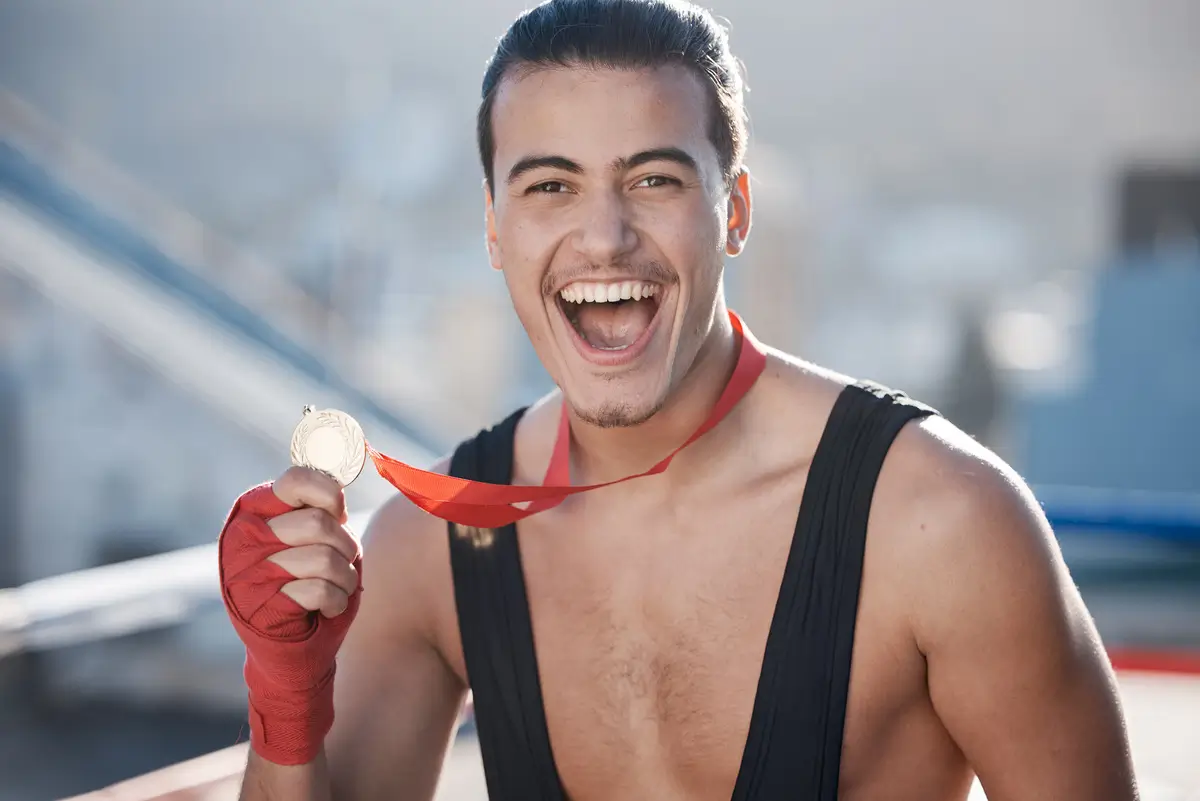
Some of the best college wrestlers in the state of Florida will gather under one roof this Sunday.
No, this is not a National Collegiate Athletic Association (NCAA) event. It’s the USF Duals, featuring both men’s and women’s teams, at Fivay High School in Hudson, a northern Tampa suburb.
Host University of South Florida (USF) will welcome teams from:
The Florida schools will be joined by Auburn, Georgia State and Life University in this one-day National Collegiate Wrestling Association (NCWA) event. All schools will bring men’s teams, and several will also field women’s teams.
The USF Duals take place Sunday, February 22, 2026 at Fivay High School, 12115 Chicago Avenue (at SR-52), Hudson, FL. Doors open at 9:00 a.m., with wrestling set to begin at 10:00 a.m. and continuing throughout the day. Admission is $11, with proceeds shared between USF’s men’s wrestling team and the Fivay High School boys and girls wrestling programs. The tournament will use a round-robin format, allowing each wrestler to compete in five matches.
What Is the NCWA?
The National Collegiate Wrestling Association (NCWA) is a nonprofit, club-level organization consisting of 162 member schools across six conferences nationwide. Founded in 1997, the NCWA remains one of college sports’ best-kept secrets.
Unlike NCAA Division I programs:
- NCWA schools do not offer wrestling scholarships
- Athletes do not receive revenue-sharing funds
- Wrestlers generally do not secure NIL (Name, Image and Likeness) deals
Instead, NCWA athletes compete for the love of the sport. For many wrestlers, it’s the best opportunity to continue competing at a high level after high school — especially in states like Florida that lack NCAA Division I options.
Women’s Wrestling on the Rise
Women’s wrestling is one of the fastest-growing college sports in the country. Since being added to the Olympics in 2004, participation has surged at both the high school and collegiate levels. The NCWA has been at the forefront of this growth, offering women’s programs at schools that don’t yet have NCAA options.
Sunday’s event will feature women’s teams alongside the men, giving local fans a chance to see both sides of the sport’s future in Florida.
Why Doesn’t Florida Have NCAA Division I Wrestling?
Despite strong high school wrestling traditions — including Brandon High School’s national record 459-match winning streak from 1974 through 2008 — Florida does not have a single NCAA Division I wrestling program.
St. Thomas University (Miami), Nova Southeastern (Lakeland) and Keiser University (Fort Lauderdale) compete at the NAIA level instead. The NCWA fills the gap for athletes who want to wrestle at the collegiate level without leaving the state.
NCWA programs operate on smaller budgets, financed largely through donations and fundraisers. Most teams compete in eight to 10 events per year, sometimes facing NCAA Division II and NAIA opponents. In some cases, NCWA programs have transitioned to the NCAA level — a pathway made smoother because the NCWA strictly adheres to NCAA rules.
USF Wrestling Makes History
This is USF’s historic first season as a wrestling program, and Head Coach James Lawless is building something special in Tampa Bay.
The Bulls currently have five wrestlers ranked in the NCWA, and the program is working to establish itself as a force in Florida’s growing collegiate wrestling scene.
For those wanting to learn more about the program’s journey and future, check out the recent podcast featuring Head Coach James Lawless, where he explains how USF Wrestling is working to make its mark on college wrestling across Florida.
Community members, wrestling fans, and local families are encouraged to come out and show their support for this new program and the student-athletes representing the region.
Follow USF Athletics on X: @USFAthletics
Learn More About the NIL Landscape
Name, Image, and Likeness plays an increasing role in college sports, and understanding how it works often requires more than individual articles or news updates.
RallyFuel is a platform focused on NIL-related topics across college athletics. It brings together information about athletes, NIL activity, and the broader structure behind modern college sports, helping readers explore the topic in more depth.



An interesting dialogue is worth comment. I think that you need to write extra on this subject, it may not be a taboo subject but usually individuals are not enough to talk on such topics. To the next. Cheers
I loved as much as you’ll receive carried out right here. The sketch is tasteful, your authored subject matter stylish. nonetheless, you command get bought an impatience over that you wish be delivering the following. unwell unquestionably come further formerly again as exactly the same nearly a lot often inside case you shield this increase.