

Introduction
The Milano-Cortina 2026 Winter Olympics are currently underway, and American audiences are once again immersed in elite winter sport. Olympic broadcasts highlight medal counts, national narratives, and star performances. Yet beneath that global spotlight lies a structural imbalance: college winter athletes Olympic 2026 media coverage remains disproportionately limited compared to revenue-generating NCAA sports.
Undervaluation in this context is not about athletic merit. It is structural. It refers to disparities in national broadcast time, recurring media narratives, NIL market amplification, and institutional promotion during the Olympic cycle itself. Even as NCAA winter sports Milano Cortina 2026 athletes compete on the world stage, the visibility of their collegiate affiliations rarely matches the sustained attention given to football or basketball programs.
This imbalance becomes particularly noticeable during the current Games. Olympic success does not automatically translate into enhanced NCAA brand recognition, increased media integration, or consistent exposure for winter programs. The question is not whether college athletes are present in Milano and Cortina — they are — but why their collegiate identities remain marginal within broader sports media ecosystems.
The Olympic Spotlight Effect

Every Olympic cycle produces what can be described as a spotlight compression. Media attention intensifies around medal outcomes, national team storylines, and international rivalries. In this compressed environment, athlete narratives are streamlined for global audiences.
During Milano-Cortina 2026, coverage prioritizes:
- Medal table positioning
- Individual podium performances
- Broad national representation
- Professional-level branding
Collegiate affiliation becomes secondary information. Even when athletes currently enrolled in NCAA programs compete, broadcasts often emphasize Team USA designation over institutional identity.
This dynamic creates a paradox. The Olympic platform is the highest exposure window in winter sports, yet it does not structurally integrate the NCAA ecosystem into primary storytelling. As a result, Olympic media bias college sports dynamics persist, with winter disciplines receiving situational recognition rather than sustained institutional coverage.
NCAA Winter Sports During the Regular Season — The Coverage Gap
Outside the Olympic window, why winter NCAA sports get less coverage becomes clearer. Revenue hierarchies drive national broadcast priorities. Football and men’s basketball dominate linear television contracts and digital streaming platforms. Winter sports operate within narrower regional or conference-based audiences.
Even in 2026, during an Olympic year, regular-season winter NCAA programming remains limited to:
- Conference networks
- Specialized streaming platforms
- Regional sports channels
National prime-time slots remain concentrated in revenue sports.
NCAA Media Exposure — Revenue vs Winter Sports (2026 Context)
| Sport | National Broadcast Presence | Olympic Relevance | NIL Market Visibility |
|---|---|---|---|
| Football | Very High | None (Winter Games) | Extremely High |
| Basketball | Very High | None (Winter Games) | Extremely High |
| Ice Hockey | Moderate to High | Direct (Olympic tournament) | Moderate |
| Skiing (Alpine/Nordic) | Low | Direct | Low to Moderate |
The table illustrates a central imbalance. Even when winter sports are directly connected to Olympic competition, their NCAA regular-season exposure remains structurally lower than that of revenue sports unrelated to the Winter Games.
This contributes to limited brand carryover when athletes transition from collegiate competition to Olympic performance.
Ice Hockey — The Partial Exception During Milano-Cortina 2026
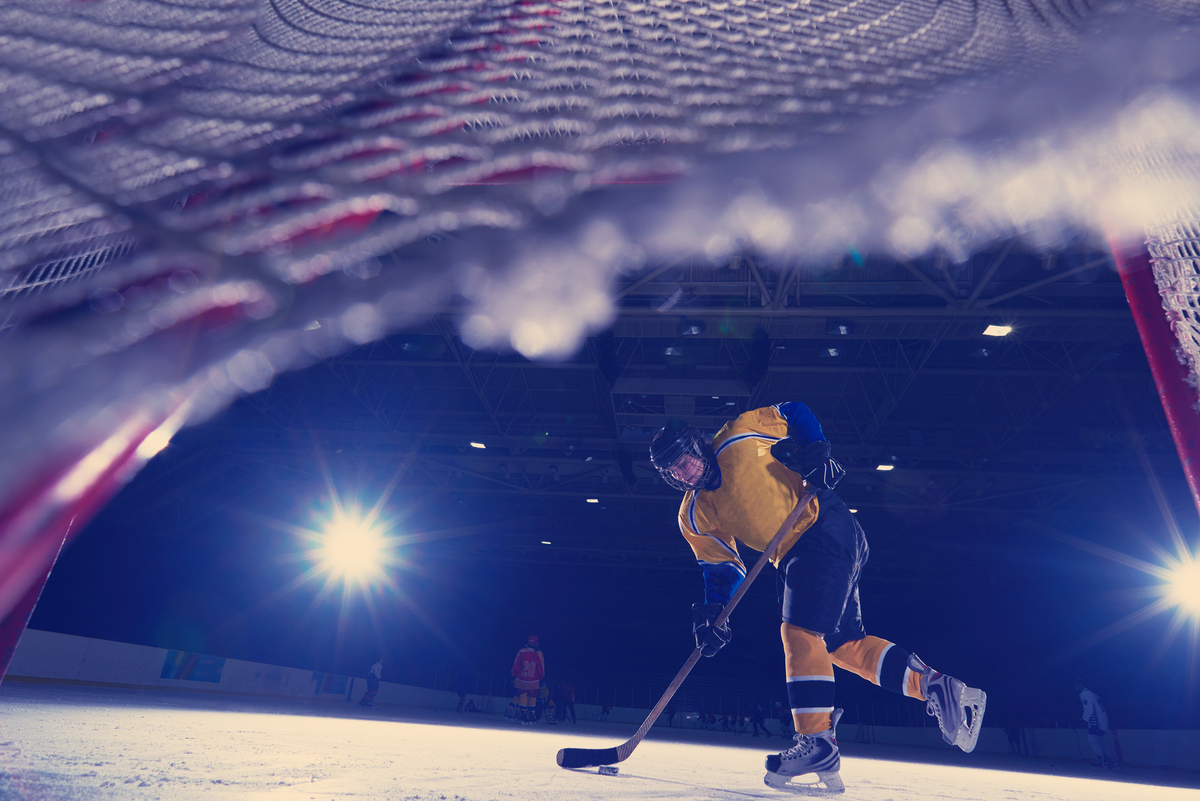
Ice hockey stands as the most visible exception during Milano-Cortina 2026. The college hockey Olympics visibility factor is measurably stronger than in other winter disciplines.
Women’s hockey, in particular, features a significant NCAA backbone. Broadcast commentary occasionally references Division I programs, conference rivalries, and national championships. This creates a clearer pipeline narrative between collegiate development and Olympic performance.
Men’s hockey reflects a more blended model. While many athletes are NCAA alumni, professional leagues often dominate storytelling.
Even so, ice hockey benefits from:
- Established collegiate championships with national broadcast contracts
- Recognizable NCAA brand alignment
- Media familiarity with the collegiate hockey system
However, even this partial exception has limits. NCAA program branding rarely receives extended analysis during Olympic broadcasts. The focus remains on national identity and immediate tournament outcomes rather than collegiate ecosystems.
Olympic Success Does Not Equal NCAA Visibility
A central misconception is that Olympic success automatically elevates NCAA winter programs. In practice, this correlation is weak.
During the current Games:
- Medal-winning athletes are framed primarily as Olympians, not as college competitors
- Institutional affiliations appear briefly in athlete bios
- Broadcast narratives emphasize personal journeys over collegiate systems
This disconnect reinforces NCAA Olympic athletes media exposure limitations. Even in sports where collegiate pathways are integral — such as hockey — the NCAA brand does not consistently benefit from Olympic visibility.
The result is structural undervaluation. Athletic contribution is acknowledged, but institutional identity remains peripheral.
The NIL Visibility Paradox in 2026

Name, Image, and Likeness frameworks theoretically position college athletes to capitalize on Olympic exposure. Yet the NIL visibility paradox is evident during Milano-Cortina 2026.
Revenue-sport athletes benefit from:
- Established social media followings
- Ongoing national media integration
- Corporate partnerships tied to major conferences
Winter sport athletes, by contrast, operate within smaller visibility ecosystems. Even when competing in Olympic events, NIL activation remains constrained by:
- Lower pre-existing audience scale
- Limited crossover promotion
- Reduced broadcast emphasis on collegiate affiliation
Thus, the Olympic year does not automatically resolve NIL disparities. The college winter athletes Olympic 2026 media coverage gap persists despite global competition exposure.
Why Broadcast Economics Drive This Imbalance
Broadcast economics remain the most significant structural driver.
National networks prioritize:
- Advertising revenue predictability
- Audience scale metrics
- Established seasonal programming contracts
Football and basketball guarantee high ratings. Winter NCAA sports, even during an Olympic year, do not deliver equivalent domestic advertising returns.
During Milano-Cortina 2026 coverage:
- Prime-time slots focus on medal events
- Collegiate context receives limited screen time
- Analysis centers on international rivalries
This economic structure explains why Olympic media bias college sports is not necessarily intentional but systemic. Revenue alignment determines sustained coverage allocation.
Media Impact on Athlete Opportunity During Olympic Years
Media visibility directly affects opportunity structures, particularly during Olympic cycles.
Media Exposure and Opportunity Gap — Olympic 2026
| Factor | Revenue Sports | Winter Sports | Olympic-Year Impact |
|---|---|---|---|
| NIL Earnings | High baseline | Limited baseline | Modest temporary increase |
| Recruiting Visibility | National constant | Regional focus | Slight spike during Games |
| Interview Access | Frequent | Limited | Short-term Olympic attention |
| Brand Retention Post-Games | Strong | Variable | Often declines after Games |
The table demonstrates that Olympic exposure provides temporary amplification for winter athletes but does not fully bridge structural gaps.
Media coverage influences:
- Sponsorship renewals
- Recruiting pipelines
- Post-Olympic brand sustainability
In 2026, these effects are observable but uneven.
Is Milano-Cortina 2026 Changing the Narrative?
Milano-Cortina 2026 has increased visibility for winter athletes due to the nature of the Games. However, the underlying structural hierarchy remains intact.
There are signs of incremental change:
- Increased digital platform coverage
- Athlete-driven social media storytelling
- Conference-level promotional campaigns
Yet national broadcast integration of NCAA winter sports into mainstream sports dialogue remains limited.
The Olympic window amplifies individual achievement but does not fundamentally rebalance media ecosystems. Collegiate winter programs receive acknowledgment but not structural elevation.
Conclusion
During the Milano-Cortina 2026 Winter Olympics, American audiences are witnessing elite performances from athletes with NCAA backgrounds. Yet college winter athletes Olympic 2026 media coverage remains structurally limited compared to revenue sports.
Ice hockey provides the clearest collegiate-to-Olympic pipeline and receives moderate visibility. Skiing and other winter disciplines operate within hybrid systems where NCAA branding remains secondary. Federation-driven sports remain largely disconnected from collegiate narratives.
Undervaluation, therefore, is not about athletic legitimacy. It is rooted in broadcast economics, media prioritization, and revenue structures. Even in an Olympic year — when winter sports command global attention — NCAA winter athletes do not receive proportional institutional visibility.
Milano-Cortina 2026 highlights both the contribution and the constraint: college winter athletes are central to competition, yet peripheral within the broader sports media hierarch
Learn More About the NIL Landscape
Name, Image, and Likeness plays an increasing role in college sports, and understanding how it works often requires more than individual articles or news updates.
RallyFuel is a platform focused on NIL-related topics across college athletics. It brings together information about athletes, NIL activity, and the broader structure behind modern college sports, helping readers explore the topic in more depth.
👉 Explore the Athletes on RallyFuel – Discover top college athletes, compare NIL valuations, and dive deeper into the world of NIL.
FAQ
Why are college winter athletes considered undervalued during the 2026 Winter Olympics?
College winter athletes are considered undervalued due to structural media dynamics rather than athletic performance. During Milano-Cortina 2026, broadcast coverage prioritizes medal outcomes and national team narratives over collegiate affiliations. Even when NCAA athletes compete prominently, institutional visibility remains limited compared to revenue sports like football and basketball.
Does Olympic participation increase NCAA winter sports media exposure?
Only temporarily. While the Olympic spotlight creates short-term visibility spikes, it does not consistently translate into sustained coverage of NCAA winter programs. After the Games cycle stabilizes, media attention typically returns to established revenue sports structures.
Which NCAA winter sport benefits most from Olympic visibility in 2026?
Ice hockey benefits the most, particularly women’s hockey. The collegiate system serves as a primary development pipeline, and broadcasters occasionally reference Division I programs during Olympic competition. However, even in hockey, NCAA branding remains secondary to national team identity.
Why don’t skiing and Nordic programs receive the same recognition?
Alpine and Nordic skiing operate within hybrid development systems. While NCAA programs contribute to athlete conditioning and competition readiness, national federations drive elite progression. As a result, Olympic coverage focuses more on national training systems than collegiate structures.
Is there media bias against NCAA winter sports?
The imbalance is largely economic rather than intentional. Broadcast contracts, advertising revenue, and audience metrics prioritize sports with higher domestic ratings. Winter NCAA sports have smaller regular-season audiences, which limits sustained national exposure—even during Olympic years.


Leave a Comment