
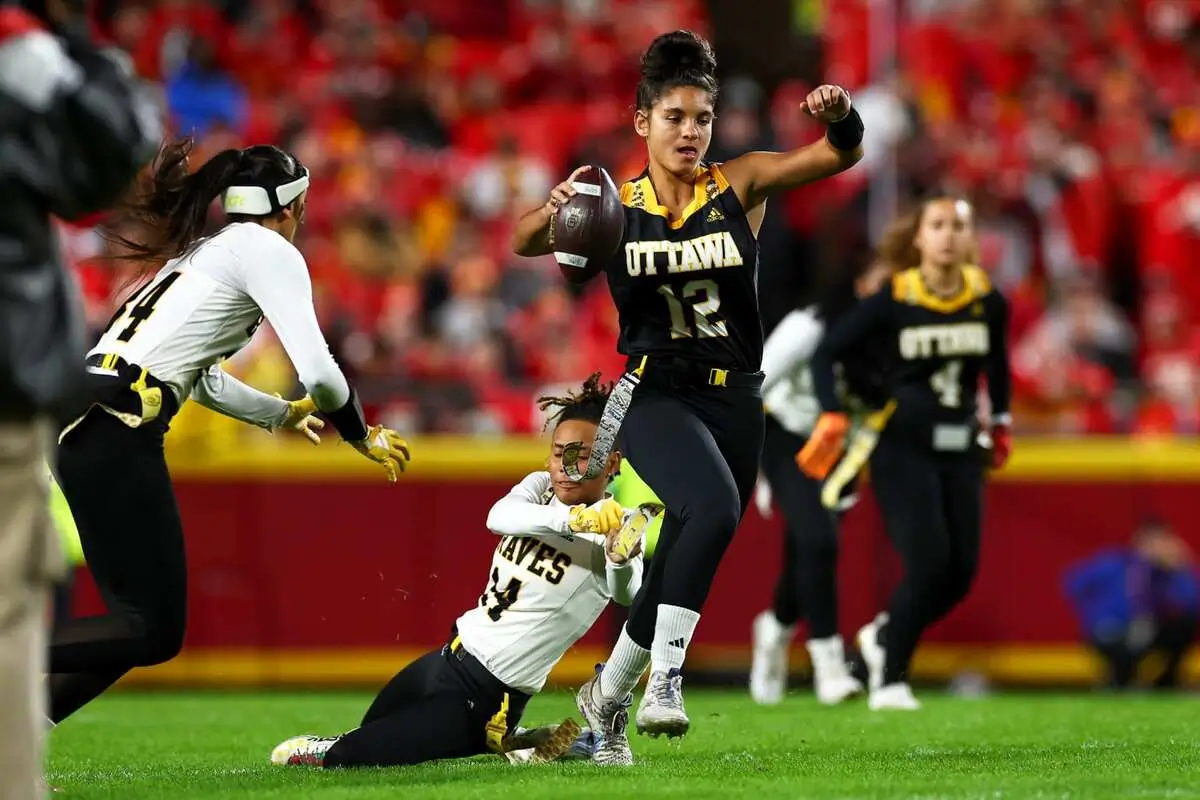
Flag football is quickly moving beyond isolated, makeshift fields and intramural status.
On Wednesday at the annual NCAA Convention, the Division I cabinet officially added flag football to the Emerging Sports for Women program. This comes 11 months after NCAA officials first recommended the addition.
The momentum doesn’t stop there; having featured 65 club or varsity-level teams last season, the 7-on-7 sport is poised to make its Olympic debut in 2028 in Los Angeles, with both men’s and women’s competitions.
From Club Fields to Varsity Status
Building on this progress, the Emerging Sports for Women program—founded in 1994—has a proven track record of lifting sports from club and intramural levels to full NCAA varsity competition. Wrestling, rowing, ice hockey, water polo, bowling, and beach volleyball have all followed this path, and now women’s flag football is next in line.
Several Division I schools have already formed varsity women’s flag football teams or are in the process of doing so. These programs include Alabama State, Cal Poly, Long Island, Mercyhurst, Mount St. Mary’s, and UT Arlington. Schools in the Eastern United States currently lead the charge.
A Major Boost From the New York Jets
Adding further momentum, last month marked a major inflection point for the sport.
The New York Jets’ Betty Wold Johnson Foundation announced a $1 million grant. The money will support women’s flag football programs within the Eastern College Athletic Conference (ECAC). So far, 14 ECAC schools have opted in. They will receive grants to help offset the costs of launching and sustaining the sport.
This level of support is already resonating with athletes.
Penn State Schuylkill wide receiver Sierra Wishnefsky can hardly believe it. Soon, there will be a Jets-sponsored ECAC Women’s Flag Football League.
“I couldn’t imagine being a little girl and seeing they’re playing in a league sponsored by the New York Jets, an NFL team,” Wishnefsky said. “Just having the name there … this conference is going to open so many doors.”
Conference Championships and What Comes Next
Division III helped pave the way last year. The Atlantic East Conference hosted a conference championship matchup. This signaled that structured postseason competition is already taking shape.
Despite these advances, there is still work to be done.
For the NCAA to grant championship status, 40 schools must sponsor women’s flag football as a varsity sport within 10 years. The NCAA also requires teams to meet set minimums for the number of games played and roster sizes.
A Sport Growing in Real Time
Those looking to follow the sport’s rapid evolution can use www.womenscollegeflagfootball.com as a hub. The site tracks Division II, Division III, NAIA, and active club programs. It also covers the smaller but growing group of committed Division I teams.
It also pIt publishes a Top 25 ranking and reminds readers how rapidly women’s college flag football is evolving:ourage teams to contact us with changes as we strive to be current.
The Bigger Picture: Olympic and Pro Pathways
Looking even further ahead, there is now discussion around the possibility of a professional women’s flag football league.
“The New York Jets are proud to have played a role in this growth of the sport. We can’t wait to see where it goes,” said Jesse Linder, the Jets’ Vice President for Community Relations. “From high school sanctioning to elite club play to collegiate flag football, a pathway to the Olympics and professional flag football is being forged.”
Learn More About the NIL Landscape
Name, Image, and Likeness plays an increasing role in college sports, and understanding how it works often requires more than individual articles or news updates.
RallyFuel is a platform focused on NIL-related topics across college athletics. It brings together information about athletes, NIL activity, and the broader structure behind modern college sports, helping readers explore the topic in more depth.




Leave a Comment