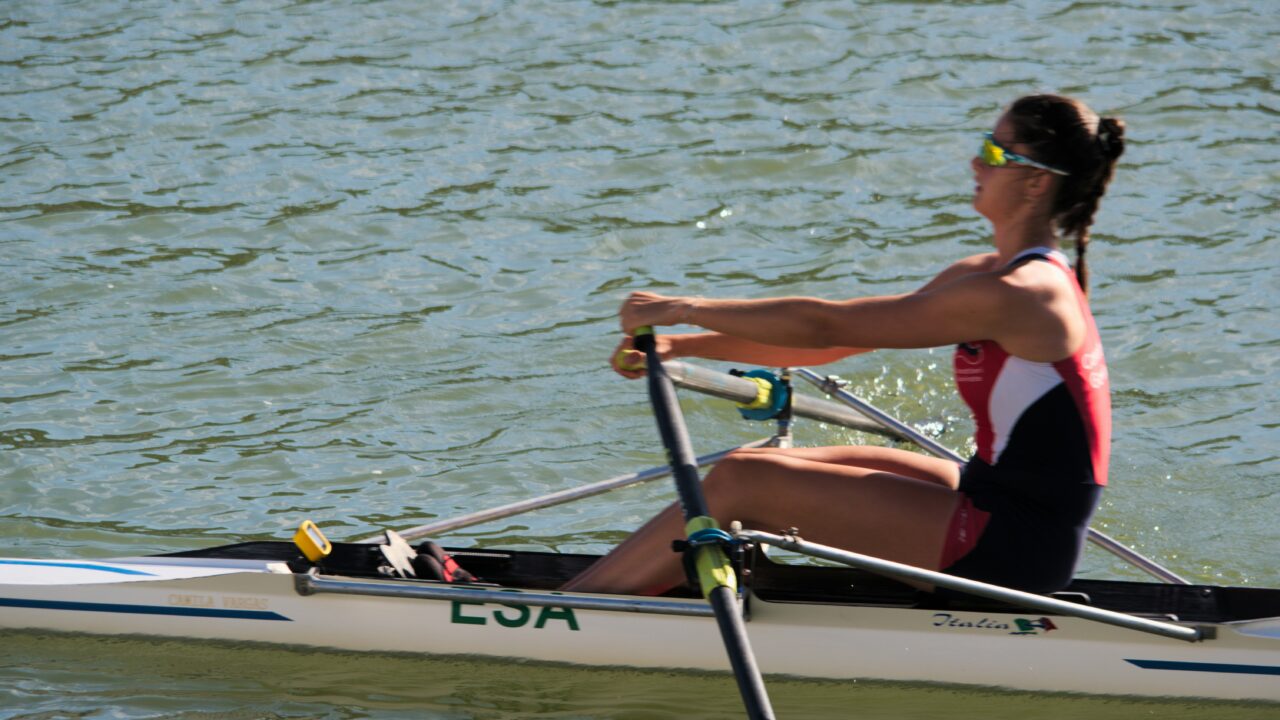
The 2026 NCAA Division I Women’s Rowing Championship field is set. On May 19, the NCAA Division I Women’s Rowing Committee announced the 22 teams that will race May 29 through 31 at Lake Lanier Olympic Park in Gainesville, Georgia, with North Georgia and the City of Gainesville serving as hosts. Ten teams earned automatic bids by winning their conference points championships, and 12 more received at-large selections to round out one of the deepest fields in recent memory.
This guide walks through the selection-show results, the seeding across all three boat classifications, and the storylines that will define the regatta. Whether you are tracking your alma mater, following a favorite athlete, or just trying to figure out who has the best shot at the team title, here is what to know heading into Gainesville — plus how fans can put real support behind the rowers they want to see on the podium.
The Field: Automatic Qualifiers and At-Large Selections
The team championship is composed of 22 teams. Ten conferences earned automatic qualification this year, and the remaining 12 slots were filled with at-large selections.
The automatic qualifiers:
- Atlantic 10: Rhode Island
- ACC: Stanford
- Big 12: UCF
- Big Ten: Washington
- CAA: Northeastern
- Ivy League: Princeton
- MAAC: Jacksonville
- MAC: UMass
- Patriot League: Boston U.
- WCC: Oregon State
The 12 at-large selections: Brown, California, Columbia, Miami (Florida), Michigan, Ohio State, Rutgers, Syracuse, Tennessee, Texas, Virginia, and Yale.
Columbia’s selection is the first NCAA Championship bid in program history. Miami (Florida) also appears to be making its first NCAA Championship appearance based on available historical records.
Each program is required to field two boats of eight rowers and one boat of four rowers. All 22 boats will be seeded into four heats across the I Eights, II Eights, and Fours.
How the Scoring Works
For fans new to NCAA rowing, the team championship is decided on a points system tied to where each boat finishes in its event:
- The Varsity Eight (I Eights) winner earns 66 points, second place gets 63, third gets 60, and so on.
- The Second Varsity Eight (II Eights) winner earns 44 points, with two-point steps down the field.
- The Varsity Four winner earns 22 points, with one-point steps.
Add up a program’s three results and you have its team score. When two teams tie, the higher finish in the Varsity Eight breaks it. The system rewards depth — winning one event is not enough if your other two boats fall off the pace.
Seeding Across the Three Boat Classifications
The committee published seeds for each boat class. Here is how the top of the field shapes up.
Varsity Eight (I Eights) — top seeds
- Tennessee
- Texas
- Stanford
- Princeton
- Yale
- Virginia
- California
- Syracuse
Second Varsity Eight (II Eights) — top seeds
- Stanford
- Texas
- Virginia
- Princeton
- Washington
- Yale
- Brown
- Tennessee
Varsity Four — top seeds
- Stanford
- Texas
- Washington
- Rutgers
- Tennessee
- Virginia
- Yale
- UCF
A few patterns jump out. Stanford holds the No. 1 seed in two of the three classifications. Texas is seeded No. 2 in all three. Tennessee enters as the top seed in the marquee Varsity Eight and earned an at-large bid that reflects how strong the Lady Vols have rowed this spring. Princeton, Yale, and Virginia all appear in the top eight across multiple classifications, signaling real team depth.
The Defending Champion: Stanford
Stanford comes into Gainesville as the reigning national champion. The Cardinal claimed the 2025 NCAA team title at Mercer Lake in West Windsor, New Jersey, the program’s third national championship and its first as a member of the ACC. Stanford won the Varsity Four and Second Varsity Eight Grand Finals in 2025 and finished second in the Varsity Eight, totaling 129 points to outlast runner-up Yale (121) and third-place Texas (118).
Head coach Derek Byrnes returns a program that, by Stanford’s own reporting, brings back 18 members of its 2025 NCAA boats. The Cardinal also swept the 2025 ACC Championship and entered the postseason undefeated across its NCAA scoring crews. Stanford polled at No. 2 in the final CRCA/Pocock coaches poll before the selection show. Combine that with returning talent, depth across all three boat classes, and a top-three seed in every event, and the Cardinal is an obvious favorite to repeat.
The Challengers: Tennessee, Texas, and Yale
Tennessee is the story heading into Gainesville. The Lady Vols won the SEC Championship this spring and arrived at the selection show as the No. 1 team in the final CRCA/Pocock coaches poll, then drew the top Varsity Eight seed. Tennessee is seeking its first NCAA team title — its best prior finish was third place in 2024 — and brings a top-eight seed in the Second Varsity Eight (8) and a top-five seed in the Varsity Four (5) alongside that No. 1 I Eight. This is a program built across all three boats, not a one-event surprise.
Texas, the 2024 national champion, brings the kind of resume that always shows up in late May. The Longhorns are seeded No. 2 across all three boat classifications — Varsity Eight, Second Varsity Eight, and Varsity Four — which is the most balanced seeding profile in the entire field. Programs that score in all three events tend to win national championships, and Texas is built for exactly that.
Yale opens 2026 with the No. 5 seed in the Varsity Eight and top-eight finishes across the other two events. The Bulldogs were the 2025 runners-up and beat Stanford in last year’s Varsity Eight Grand Final. If Yale can repeat that result and find points in the supporting events, the team title race could come down to the final boat across the line.
Other Programs to Watch
Princeton earned the Ivy League automatic qualifier and is seeded in the top four in both eights events. The Tigers have a long history of contending at NCAAs and bring the kind of pedigree that translates well in three-day racing.
Washington, the Big Ten automatic qualifier, holds the No. 3 seed in the Varsity Four and No. 5 in the Second Varsity Eight. The Huskies are perennial podium threats in boat-level competition and could rack up event points even if the Varsity Eight does not run all the way to the top of the dock.
Virginia returns to NCAAs as an at-large selection with top-eight seeds across all three boat classes, the kind of profile that quietly stacks points all weekend. California, Brown, and Syracuse round out the group of at-large programs that could disrupt the top of the team standings if results go their way.
On the conference side, UCF earned the Big 12 automatic qualifier and Oregon State took the WCC bid. Both bring strong boat-level results and could land in the medal mix in individual events. Boston U. (Patriot League), Northeastern (CAA), and UMass (MAC) round out the automatic qualifiers and will look to build on conference championship form when they hit Lake Lanier.
For Columbia, the trip to Gainesville is historic on its own terms — the Lions’ first NCAA Championship appearance ever, capped by a fourth-place finish in the Varsity Eight Grand Final at the Ivy League Championship.
Format and Schedule
The championship runs three days, May 29 through 31, at Lake Lanier Olympic Park. All 22 boats will be seeded into four heats per classification, racing through heats, repechages, and finals across the weekend. Grand Finals decide the event titles, and the team championship points add up as the final crews cross the line on Sunday.
For fans, NCAA.com will carry the broadcast and live results. The format rewards programs that race well across all three boat classes rather than betting everything on one crew, which is exactly why the seeding patterns matter heading in.
How the Race for the Team Title Could Play Out
Based on the seeds, the coaches poll, and the way last year’s results lined up, three scenarios feel realistic for the team championship:
Tennessee finishes the breakthrough. The Lady Vols enter as the poll’s No. 1 team, the top Varsity Eight seed, and the SEC champion, with top-eight seeds in the other two boats. If the I Eight delivers and the supporting crews row to seed, Tennessee wins its first national title.
Stanford repeats. The Cardinal is the No. 1 seed in two of three classifications and brings back the depth that won 2025. A clean weekend across all three boats and Stanford likely lifts the trophy again.
Texas wins on depth. The Longhorns are the only program seeded No. 2 across all three boat classes. If Texas wins or finishes second in two events and stays in the top five in the third, it is right back in the team title conversation.
Yale remains the wildcard — a Varsity Eight win there, combined with points in the other two boats, could swing the team title given the I Eight’s 66-point top prize.
Fan-Fueled Support for the Rowers in the Field
Rowing tends to fly under the national NIL radar compared to football and basketball, but the athletes in this field put in just as much work and bring real local followings to their programs. RallyFuel is one way fans can put money directly behind individual rowers and their teams. Each program in the 2026 field has a dedicated page on the platform where fans can Fuel athletes from that school — a simple way for supporters of programs like Stanford, Texas, Tennessee, Yale, and the rest of the field to back their crews heading into Gainesville.
The model is straightforward: fans pool Fuel toward NIL deals for the athletes they want to support, and if the conditions are not met the contributions are refunded. For a sport built on team depth and individual effort across multiple boats, that kind of fan-driven support adds another layer to a championship weekend.
The Bottom Line
The 2026 NCAA Division I Women’s Rowing Championship brings 22 of the country’s best programs to Lake Lanier with a deep mix of automatic qualifiers and at-large selections. Tennessee enters as the coaches poll’s No. 1 team and the top Varsity Eight seed, chasing its first national title. Defending champion Stanford brings the most balanced profile and the deepest returning roster. Texas, Yale, and Princeton all have legitimate paths to the trophy. The seeding tells the story heading in; the results across three days of racing in Gainesville will tell the rest.