
3×3 basketball is no longer a side activity for college players. It has become a serious development and visibility lane, especially for athletes who
want to sharpen decision-making under pressure and get evaluated in national team environments.
The format’s speed, physicality, and simplicity make every possession matter. For coaches and scouts, it creates a clean evaluation setting where
players cannot hide behind complex systems or long rotations.
Summary
The 3×3 model is accelerating player growth for high-level college athletes by forcing quick reads, efficient scoring, and defensive versatility.
USA Basketball camps and showcases now give under-23 players direct access to national-team tracking, while the Olympic cycle keeps the format highly
relevant. For college stars, 3×3 is no longer optional exposure; it is part of the modern pathway.
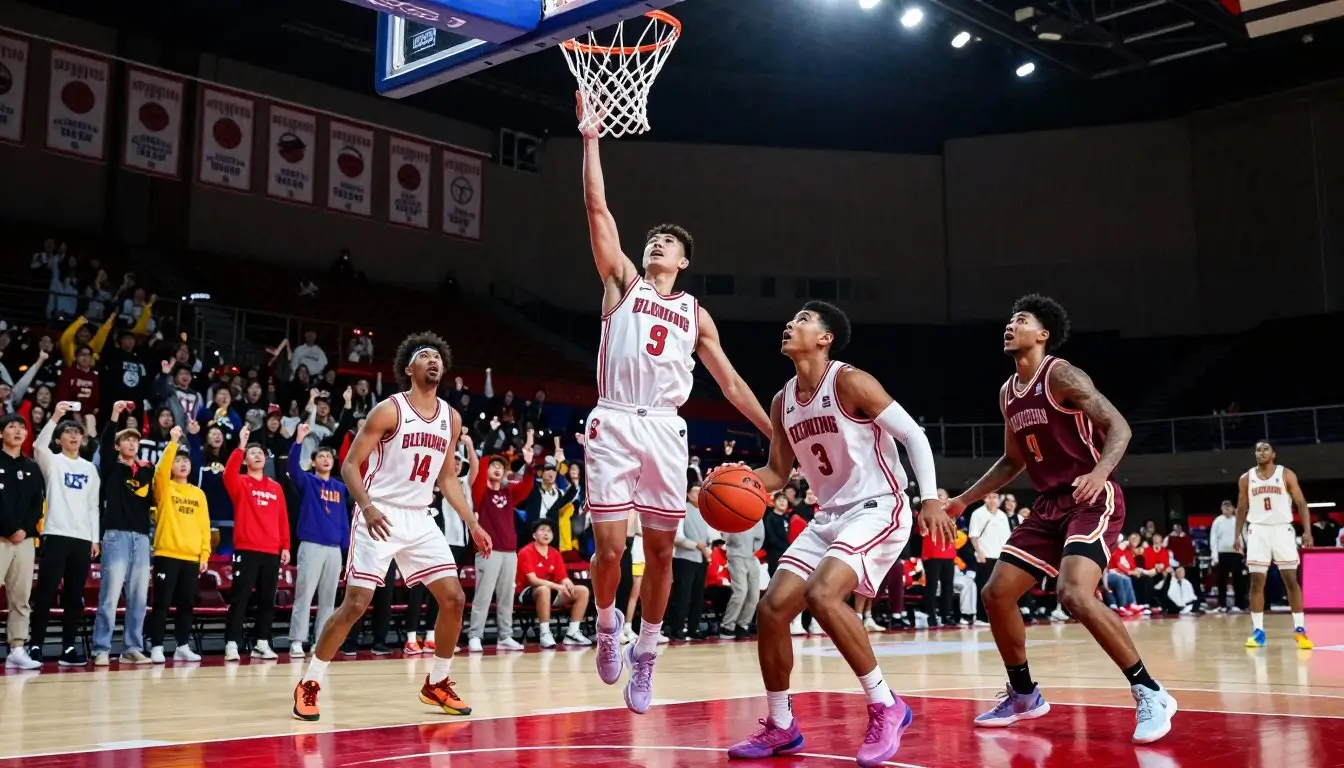
What Makes 3×3 Different from Traditional 5-on-5
In 3×3, pace and accountability are constant. Teams play on a half-court, possessions run on a 12-second shot clock, and games end at 21 points or at
the end of regulation time. That structure compresses every decision and increases the cost of hesitation.
Instead of long half-court sequences, players repeatedly operate in quick actions: attack, react, recover, and switch roles in seconds. That rhythm
makes 3×3 one of the most efficient environments for developing ball security, spacing instincts, and late-clock scoring judgment.
For official rules context, see the FIBA 3×3 overview.
Why USA Basketball Camps Matter More Now
The latest USA Basketball 3×3 development cycle shows how seriously this track is being treated. Camp groups now include proven college producers,
transfer-impact players, and athletes with prior international 3×3 experience.
These settings are not ceremonial. They are practical evaluation windows for future roster decisions in USA Basketball’s 3×3 system, where chemistry,
poise, and two-way consistency can separate players quickly.
Program updates and team pathways are tracked on USA Basketball.
Players to Watch in the 3×3 Pipeline
The newest camp cohort includes high-output college names from major conferences, including athletes already known for scoring efficiency, creation
under pressure, and international adaptability. Several are making USA Basketball debuts, which signals that the funnel is expanding.
One example is Ava Heiden, whose interior efficiency profile fits naturally in the 3×3
environment. For school-level tracking and roster context, fans can follow pages like
Iowa on RallyFuel.
Why College Athletes Are Leaning In
For years, the national-team route was viewed mainly through pro-level timelines. 3×3 changes that by giving under-23 players meaningful reps before
they enter professional basketball. The format rewards maturity in decision speed, shot quality, and physical competitiveness.
It also complements college development. Athletes return to their campus seasons with sharper reads, stronger late-clock confidence, and improved
comfort in space. Those gains transfer directly to 5-on-5 impact.
The Olympic and Long-Term Development Angle
With 3×3 fully integrated into the Olympic cycle, national federations are treating pipeline construction as a year-round priority. That means camps,
showcases, and international events now form a continuous progression model instead of one-off summer appearances.
For college players, this creates a realistic bridge between campus performance and global competition. Strong camp showings can quickly lead to deeper
looks in future USA Basketball events.
How Fans Can Follow the 3×3 Wave
If you want to track this space like an insider, follow three layers together: college production, 3×3 camp invitations, and offseason showcase
performance. The overlap reveals who is climbing fastest.
- Track eligibility windows: under-23 cycles are a key opportunity period.
- Watch efficiency, not just volume: 3×3 rewards clean decisions over empty usage.
- Follow offseason events: many selection signals happen outside the college season.
- Monitor context channels: combine federation sources with athlete and school tracking pages.
For broader college-athlete coverage and ongoing updates, see the RallyFuel Blog.
FAQ
Is 3×3 basketball really useful for 5-on-5 players?
Yes. It improves real-time decision speed, spacing awareness, and late-clock execution in ways that transfer directly to college and pro 5-on-5 play.
Can college players reach USA Basketball through 3×3?
Yes. Development camps and showcases are active evaluation points, and strong performances can move players into future national-team consideration.
Why is the 12-second clock so important?
It removes passive possessions and forces constant action, making each read, touch, and defensive decision much more valuable.