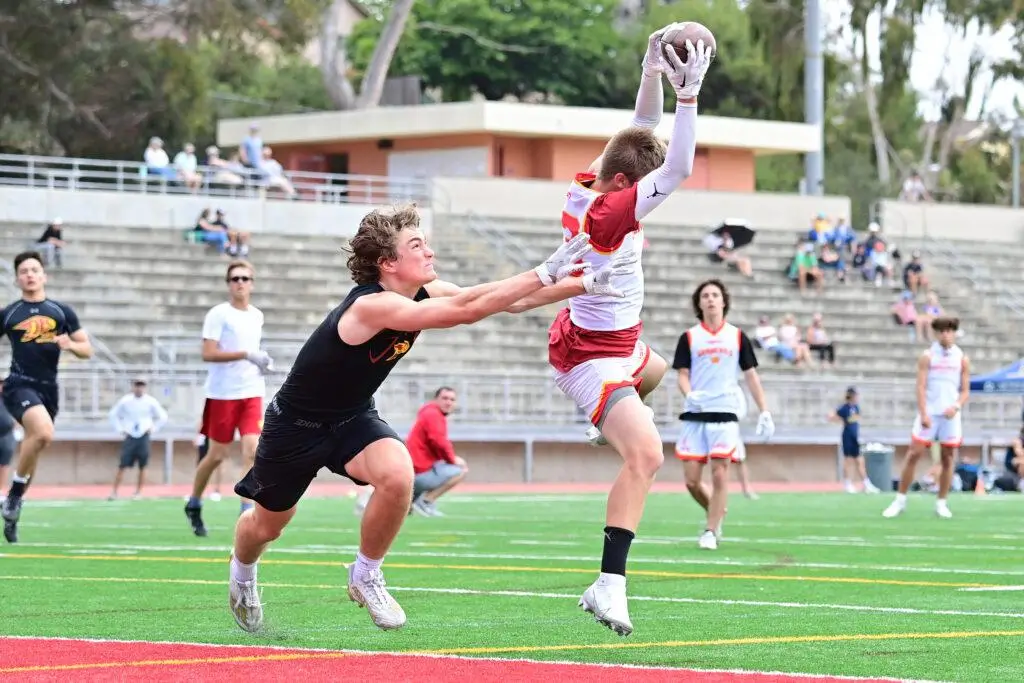
For the Class of 2026, the recruiting clock isn’t just ticking—it’s accelerating. Many talented sophomores dominate their local leagues but wait far too long to seek national exposure, missing the crucial window where college scouts build their preliminary boards. Industry data reveals that 40 of the top 50 recruits in the previous class were tournament staples, proving that the off-season is where real momentum begins. Navigating the 2026 high school football recruiting circuit means recognizing that this winter and spring serve as the primary doorway to securing athletic scholarships.
Think of these passing tournaments as the aerial section of a standard Friday night game, completely stripped of linemen and rushing plays. This specialized environment highlights the importance of 7v7 football camps for college recruitment, allowing evaluators to obsess over pure athletic technique. Because scouts cannot measure tackling ability here, they heavily scrutinize non-contact football training for skill positions like quarterbacks, wide receivers, and defensive backs.
Summary
For 2026 recruits, 7v7 season is the fastest path to national exposure—start local for development, then progress to invite-only national circuits for true scouting eyes. The Big Three—OT7, Pylon, and Rivals—drive rankings and visibility, with tight registration windows that sell out early. Stand out by honing technical skills, capturing elite reps, and building a targeted social media presence while weighing travel costs against realistic ROI. Follow the month-by-month plan from winter tryouts to summer championships to stay on track for offers.
Decoding the 7v7 Landscape: Choosing Between Elite National Circuits and Local Showcases
Stepping onto the summer football scene often feels like entering a maze of flashy graphics and bold promises. Since this journey requires serious financial commitment, conducting a cost analysis of national travel 7v7 teams is crucial before writing a check. Many families accidentally fall into “pay-to-play traps”—pricey events promising immense exposure but delivering zero legitimate college scouts. To avoid funding these clout-only camps, you must understand the event hierarchy.
Your current recruiting profile dictates which venue makes sense for your budget and goals. Here is how the two primary tiers compare:
- Regional Showcases (Open): The best regional 7v7 circuits for high school athletes serve as accessible proving grounds. Focus on evaluating coaching staff at youth football camps here to ensure you gain actual developmental value for your fee.
- Elite National Circuits (Invite-Only): Exclusive events driven by heavy media coverage and national scouting networks. These operate strictly as high-stakes job interviews rather than teaching sessions.
Properly identifying the correct doorway accelerates your recruiting timeline. Once you dominate the local level and build your foundation, it is time to elevate your target to the national stage.
The Big Three: How OT7, Pylon, and Rivals Shape Your 2026 Ranking
Making the leap to a recognized 3-star or 4-star recruit requires performing on the right platforms. In any Pylon 7v7 vs Rivals camp series comparison, you must understand their distinct purposes. Pylon operates on a massive scale, testing your stamina and ability to produce against diverse talent nationwide. Conversely, Rivals focuses intensely on technical metrics—like your forty-yard dash and isolated one-on-one reps—that directly feed into their national peer-review system and dictate your official star ranking.
Standing at the peak of modern exposure is the OT7 circuit, functioning more like a high-stakes professional league than a standard weekend camp. Mastering the OT7 national championship qualification process means earning an exclusive invitation, usually secured by dominating regional events or catching scouts’ eyes with exceptional game film. Think of this as the varsity playoffs of the passing game; starring here puts you directly in front of major college programs.
Time is currently your biggest opponent in the recruiting cycle. Because these circuits are incredibly competitive, families must carefully track registration deadlines for 2026 summer football camps and major 7v7 football camps, as premier regional qualifiers routinely sell out by early spring. Securing your spot at these mega-events is just the doorway to your ultimate goal. Once you finally step onto the turf, you need a specific plan to capture a coach’s attention.
From Highlight Reel to Scholarship: 3 Tactics to Get Scouted During 7v7 Season
Stepping onto the turf is only half the battle; understanding how to get scouted at 7v7 tournaments requires strategy. Evaluators use these passing camps to measure your “off-platform play metrics”—how well you adjust your body control and technique when a standard play breaks down. To stand out, athletes must master specific drills to prepare for national 7v7 tryouts, prioritizing fluid hip movement and precise route running over pure straight-line speed. When building scouting reports for 2026 defensive back prospects, analysts specifically seek versatile coverage skills captured on camp film to supplement standard 11-on-11 high school highlights.

Once the weekend ends, your digital hustle begins. Building a targeted “social media footprint”—a professional, easily searchable online resume on platforms like Twitter/X or Instagram—is crucial for your recruiting journey. To convert those weekend reps into legitimate college interest, follow this post-camp checklist:
- Clip your top three plays showcasing technical versatility.
- Tag regional scouts and realistic target college coaches when posting.
- Update your profile bio with your 2026 graduation year and current GPA.
With your digital presence locked in, you must ensure the financial side makes sense.
Maximizing Your Investment: A Cost and ROI Analysis of Travel 7v7 Teams
Chasing offers requires balancing family budgets against realistic expectations. A true cost analysis of national travel 7v7 teams reveals that flights, hotels, and hidden contract fees quickly multiply. Families must spot red flags like “guaranteed exposure” upcharges to ensure the potential scholarship ROI actually justifies this massive upfront expense.
Smart spending often starts locally. Many athletes leverage the recruiting benefits of winter passing academies, which double as the best passing leagues for high school quarterbacks to refine timing before spring. Mastering these financial decisions ensures you maintain a sustainable path through the crucial spring and summer months.
Your 2026 Recruiting Roadmap: A Month-by-Month 7v7 Action Plan
The recruiting window for the Class of 2026 is wide open. You no longer have to navigate youth football blindly; you can now execute a proactive strategy to secure spots before they sell out and stay on national scouts’ radars:
- January-February: Tryouts and local circuit qualifiers.
- March-May: Regional showcases and top 7v7 football camps 2026.
- June-July: College-hosted summer camps and national championships.
Evaluate your local and national options, secure your spot at a regional qualifier, and use these specialized platforms to build your path to the next level.
Learn More About the NIL Landscape
Name, Image, and Likeness plays an increasing role in college sports, and understanding how it works often requires more than individual articles or news updates.
RallyFuel is a platform focused on NIL-related topics across college athletics. It brings together information about athletes, NIL activity, and the broader structure behind modern college sports, helping readers explore the topic in more depth.
Q&A
Question: Why is 7v7 so important for Class of 2026 recruits right now?
Short answer: The winter and spring of your sophomore year are the primary doorway to scholarships because that’s when scouts build early boards and momentum is made. Industry data shows 40 of the top 50 recruits in the previous class were tournament staples, proving off-season participation drives exposure. Follow the timeline to stay visible: January–February (tryouts and local qualifiers), March–May (regional showcases and top camps), June–July (college-hosted camps and national championships).
Question: How should I choose between regional showcases and elite national circuits?
Short answer: Base it on your current recruiting profile and budget. Start with regional, open showcases to develop and verify your skills—evaluate coaching quality to ensure you’re getting real instruction. Once you’ve dominated locally and built a foundation, target invite-only national circuits, which function as high-stakes interviews with real scouting eyes. Track registration windows closely; premier qualifiers often sell out by early spring.
Question: What’s the difference between OT7, Pylon, and Rivals—and how do they impact rankings?
Short answer: Each serves a distinct role in exposure. Pylon runs large-scale events that test your stamina and performance against diverse national talent. Rivals emphasizes technical metrics (like 40-yard dash and isolated 1-on-1 reps) that feed directly into its peer-reviewed star rankings. OT7 operates like a high-stakes professional league; you typically earn an invitation by dominating regional events or standing out on film, and performing there puts you in front of major college programs.
Question: How can I stand out to scouts during 7v7 and convert performances into interest?
Short answer: On the field, prioritize technical polish over straight-line speed: fluid hip movement, precise route running, and strong “off-platform” adjustments when plays break down. Defensive backs should showcase versatile coverage on film to complement 11-on-11 highlights. After events, build a targeted social media footprint: clip your top three technically sound plays, tag regional scouts and realistic college targets, and update your bio with “Class of 2026” and your current GPA.
Question: How do I evaluate the cost and ROI of travel 7v7 teams and avoid “pay-to-play” traps?
Short answer: Add up all expenses—flights, hotels, and hidden contract fees—and be wary of “guaranteed exposure” upcharges. The ROI should align with your realistic recruiting goals. Often, smart spending starts local: use winter passing academies and regional circuits to develop and get verified reps before investing in national travel. This keeps your path sustainable through spring and summer while maximizing legitimate exposure.