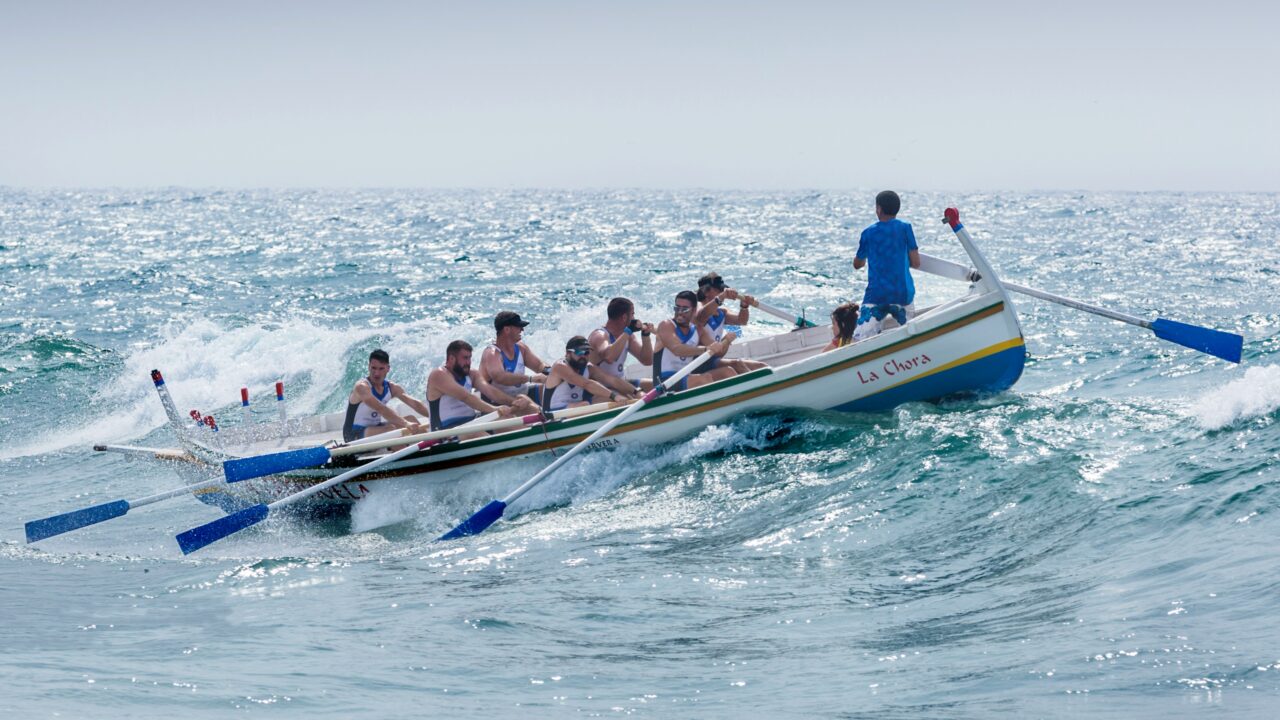
Last month in Duisburg, Germany, six crews lined up for the men’s coxless four final at the World Rowing Under 23 Championships. Great Britain won in 5:56.10. Australia took silver at 5:58.94. The United States came through for bronze in 6:00.26.
Three countries. Three flags. Three national anthems on the medals dock.
And five of the twelve athletes on that dock row for Princeton.
Marcus Chute and Tristan Wenger won the world title for Britain. Matt and Dan Cashman, twins, took silver for Australia. Kian Aminian took bronze for the United States. Same boathouse in New Jersey. Same coach shouting at them through a megaphone in March. Three different flags in July.
That is not a fluke. That is the structure of the sport, and almost nobody outside it knows.
The pipeline has a return address
Look at the men’s eight final and the same thing happens. Gold to Great Britain, silver to the United States, bronze to New Zealand, and all three crews carried Harvard oarsmen. Kynan Tallec-Botos and coxswain Natalia Toms in the British boat. Marcus Chung and Sam Gallaudet in the American one. Sam Woodgate in the Kiwi bronze.
Two boat classes. Two podium sweeps by proxy. Two American universities.
Widen the lens and it gets harder to dismiss. California sent nineteen rowers competing for nine different nations: the United States, Great Britain, Germany, Australia, Switzerland, Serbia, the Netherlands, New Zealand and Italy. One boathouse in Berkeley, nine national teams, split across the men’s and women’s squads. The University of Texas sent fifteen athletes across seven countries. Yale sent ten across seven, spread over its heavyweight, lightweight and women’s programs. Dartmouth sent six rowers competing for four different countries. Syracuse sent four across three, including Olivia Bachert and Ella McKinley, teammates who raced the eights against each other for the United States and Canada. Virginia sent six competing for five countries.
Four of those programs, California, Stanford, Syracuse and Virginia, now row in the same league, and between them they sent forty four athletes to Duisburg. Realignment has quietly made the ACC the deepest rowing conference among the power four. The SEC, by comparison, sent sixteen, and fifteen of those were Longhorns.
But the largest block came from the Ivy League: roughly fifty rowers across Princeton, Yale, Harvard, Dartmouth and Brown, from a conference that prohibits athletic scholarships entirely.
More than twenty American athletic departments were represented in Duisburg. Some of them, like Gonzaga and Middlebury and Michigan State, are not names anyone associates with international sport. Levi Munster sculled the men’s single for the United States out of Middlebury, where the rowing program competes in Division III and the NCAA permits no athletic scholarships at all. He qualified through the same trials as everyone else, and he raced the same course.
The women’s four gold medal went to a United States crew made up of two Stanford athletes, one from Texas and one from California, coached by Texas’s own associate head coach. They beat Great Britain by 0.71 seconds. Every single member of the British crew they beat rows in the NCAA too: Amelia Gleed and Rhiannon Luke at Texas, Ellie-Kate Hutchinson and Niamh Cassidy at Syracuse.
Read that again. The gold and silver crews in a World Championship final were, between them, eight American college athletes racing each other for two different countries.
What these programs actually are
Here is what Duisburg showed, plainly.
An American university rowing program is not only an American rowing program. It is where Great Britain, Australia, Canada, Germany, Italy, New Zealand, Ireland, the Netherlands, Spain, Switzerland, Serbia, Greece, Slovenia and the Czech Republic develop the athletes they send to World Championships. Berkeley alone fed nine national teams this summer. Yale fed seven. Texas fed seven. These boathouses are shared infrastructure for the world’s rowing nations, funded and staffed by American schools.
And they are how the United States builds its own team. The American squad in Duisburg came from twenty two colleges and universities. Not from a national academy, not from professional clubs. From campuses.
Amelia Boes walked on to the rowing team at Ohio State as a novice four years ago. She had never rowed. In July she won a World Championship gold medal in the United States women’s eight. That is a college program turning someone with no experience into a world champion in four years, and there is no other structure in American sport that does it.
Toby Finn rows for Gonzaga, a program that races outside the sport’s traditional power conferences. In his first appearance for his country he was put in the stroke seat, the rhythm setter, the hardest job in the boat, of a crew assembled from four different universities with a few weeks to figure each other out. He rowed them to bronze.
Annika Jeffery found out on a Saturday night that she would stroke the American mixed eight the next morning. The crew’s only practice together was the row to the start line. They won the inaugural running of the event by seven tenths of a second over Romania.
Natalia Toms coxes Harvard’s varsity eight. In Duisburg she steered the British men’s eight to a seventh consecutive world title, having already become the first woman ever to cox a British men’s crew to gold at the junior level.
What keeps it running
Every one of these athletes was back to ordinary life within a week. They row because they love it, in programs built by people who love it, and the results speak for themselves.
Rowing has always run on a particular kind of devotion. Large rosters, early mornings, no gate revenue, no television deal. What holds it up instead is a century and a half of alumni, families, coaches and volunteers who kept the boats on the water because they believed the thing was worth doing. That is one of the great achievements in American sport, and it is why a dozen countries can now develop their national team athletes on these rivers.
The sport has earned a wider audience. Duisburg is the argument for it.
Where fans come in
Donors have carried Olympic sports for a century. The boathouses, the launches, the endowed coaching positions, the shells themselves: those exist because alumni and families paid for them, year after year, with no television money behind any of it. Rowing at this scale would not survive without them. But that giving goes to programs, which is what it is for, and there is one thing that giving was never designed to do, which is reach each athlete personally. The novice in Columbus. The stroke seat in Spokane. The coxswain in Cambridge who just made history in a boat on the other side of the world.
Fans can do that.
That is the gap RallyFuel exists to close: ordinary fans backing individual athletes directly, transparently, with compliance built in. It does not replace an athletic department’s budget. It sits alongside it, putting support behind the athletes themselves in the years when they are producing results like the ones above.
Because here is the thing about Duisburg. The results were extraordinary. The United States finished tied with Greece at the top of the medal table with four golds, its best haul since 2022. The women’s quadruple sculls won for the first time since 2007. The women’s eight extended a medal streak that now stands at twenty consecutive championships. Nineteen nations reached a podium, several for the first time in their history.
None of that had to be invented to be interesting. It was already there, in a canal in western Germany, being rowed by college athletes whose names you have never heard, in programs that gave them the chance to get there. All they need now is for people to watch.
They are worth backing. Let’s back them.