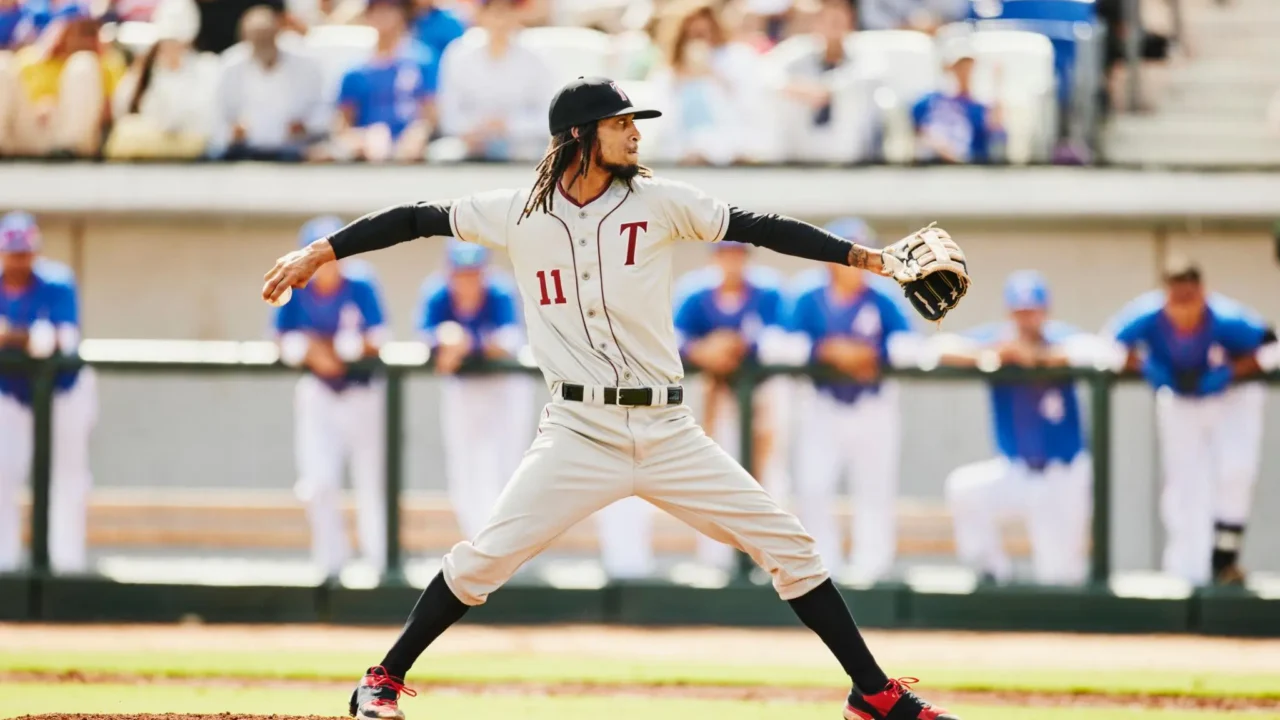
Every late spring and early summer, two Midwestern cities transform into the absolute center of college diamond sports. Fans descend on Oklahoma City and Omaha wearing burnt orange, crimson, powder blue, or purple, chasing the magic of the ultimate championship events: the College World Series. These annual festivals serve as the grand finales that players dream about from childhood—and the crown jewels of the college playoffs.
Getting there requires surviving a grueling path known as the Road to Omaha on the baseball side and the Road to Oklahoma City on the softball side. Both tournaments select 64 teams from a pool of hundreds of Division I programs, which sports analysts consistently call the diamond equivalents of March Madness. Most spectators never realize how fiercely difficult it is to advance through regional matchups just to become one of the final eight teams standing.
In professional leagues, athletes rely on long seasons to eventually bounce back from a slump. The College World Series offers no such luxury, operating under high-pressure elimination rules where an entire season can vanish in two bad afternoons. Every single pitch carries monumental weight.
In the modern NIL era, these tournaments are also where future pros cement their personal brands in front of millions of viewers. Fans looking to directly back the players behind the storylines can now engage through verified NIL partnerships, turning a hot tournament run into real support for the athletes driving it.
Historically, Omaha has hosted the Men’s College World Series every year since 1950—an uninterrupted streak nearing 75 years—and the NCAA’s hosting agreement keeps the event in Nebraska through 2035. On the softball side, Oklahoma City has hosted the Women’s College World Series every year since 1990, with the lone exception of 1996 (Columbus, Georgia, to preview the Atlanta Olympics). That combined tradition sets the stage for the 2026 brackets ahead.
Summary
In 2026, the College World Series crowns national champions in both baseball and softball. The Women’s College World Series runs May 28 – June 5, 2026, at Devon Park in Oklahoma City. The Men’s College World Series runs June 12–22, 2026, at Charles Schwab Field Omaha, with the best-of-three championship series beginning Saturday, June 20. Both events trim a 64-team field to eight through Regionals and Super Regionals, then use double-elimination brackets and a best-of-three final to crown a champion. LSU enters as the defending MCWS champion after beating Coastal Carolina 2–0 in the 2025 series under coach Jay Johnson, with pitcher Kade Anderson winning Most Outstanding Player. Texas defends the WCWS title after a 10–4 Game 3 victory over Texas Tech for the program’s first-ever softball championship under coach Mike White.
2026 Key Dates at a Glance
Whether you’re plotting a trip to Oklahoma or Nebraska, these are the dates to circle:
- WCWS Selection Show: Sunday, May 10, 2026 (7 p.m. ET, ESPN2)
- Softball Regionals: May 15–17, 2026
- Softball Super Regionals: May 21–24, 2026
- WCWS at Devon Park: May 28 – June 5, 2026 (Oklahoma City)
- WCWS Championship Series: Best-of-three, June 3–5 on ESPN
- MCWS Selection Show: Monday, May 25, 2026 (Noon ET, ESPN2)
- Baseball Regionals: May 29 – June 1, 2026
- Baseball Super Regionals: June 5–8, 2026
- MCWS at Charles Schwab Field: June 12–22, 2026 (Omaha)
- MCWS Championship Series: Best-of-three, beginning Saturday, June 20
Navigating the Road to Omaha and Oklahoma City: How 64 Teams Shrink to 8
Much like basketball’s March Madness, both postseasons begin by evaluating teams against strict NCAA selection criteria. For baseball, the committee leans heavily on the RPI (Rating Percentage Index)—a formula measuring win quality and schedule difficulty—to pick exactly 64 teams on Selection Monday. Softball follows a parallel process: 31 conferences receive automatic qualification bids, while 33 at-large teams earn their way in based on record, strength of schedule, and committee evaluation.
The journey kicks off with Regionals, where the 64 selected teams are grouped into 16 four-team mini-tournaments. Top-ranked schools earn the right to host these opening games, drawing massive, passionate hometown crowds. Every team gets a two-loss lifeline here, meaning one bad afternoon will not instantly end their entire season.
Advancing reveals the stark difference between Regionals and Super Regionals. The 16 survivors are paired into eight head-to-head matchups, trading the chaotic four-team format for a focused, best-of-three series. Tournament seeds for hosting these high-stakes clashes trace directly back to those initial Selection Monday rankings, rewarding the most dominant regular-season teams with crucial home-field advantage.
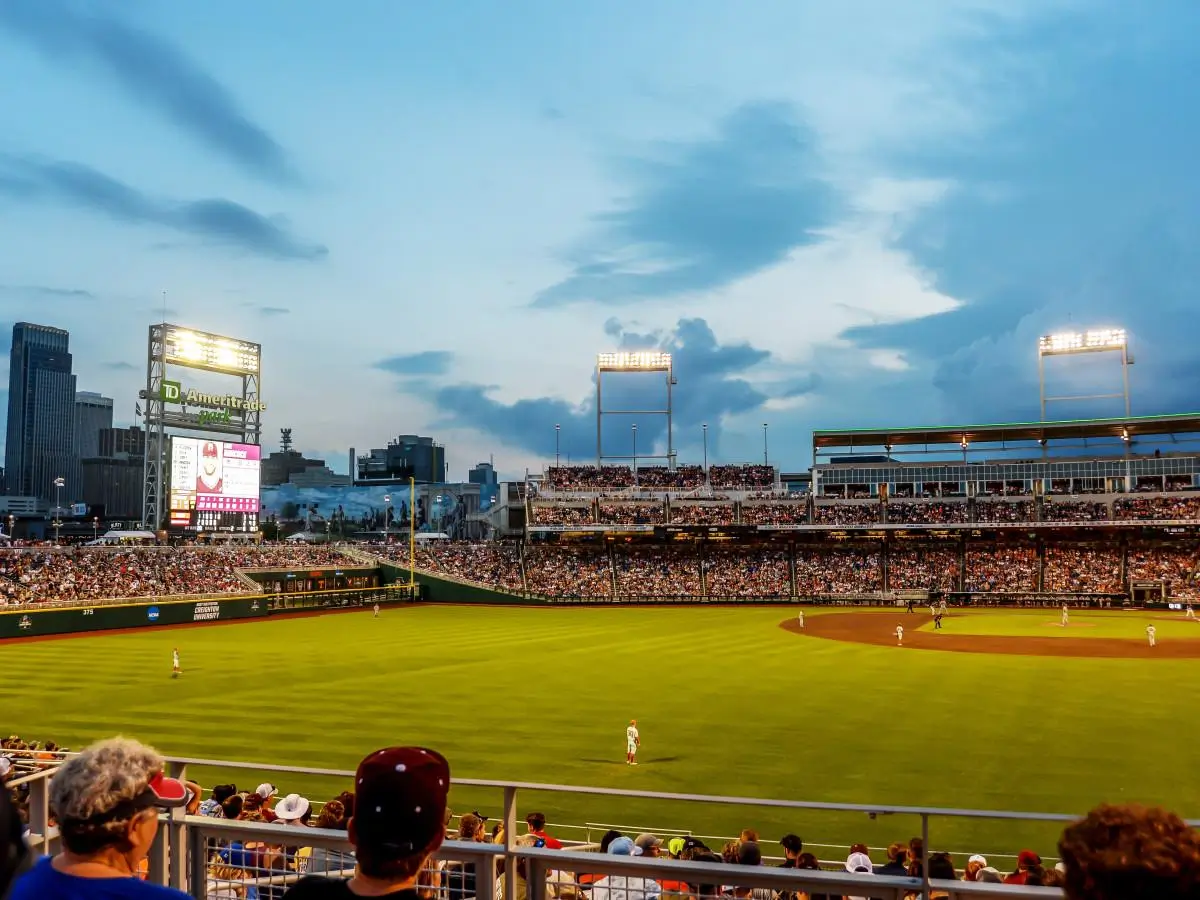
Worth noting for 2026: the NCAA baseball selection committee expanded the number of national seeds from 16 to 32, grouping teams outside the top 16 by location. The bracket structure stays the same—16 regionals, 8 super regionals—but seeding is more nuanced than ever.
Only eight ultimate winners from each sport survive this gauntlet to finally pack their bags. Reaching the grandest stage in college sports is a monumental achievement, but the pressure only intensifies upon arrival.
Decoding the Bracket: Mastering the Double-Elimination Survival Game
Arriving in Omaha or Oklahoma City is just the beginning. On the baseball side, the eight surviving teams are immediately split into two groups of four—Bracket 1 and Bracket 2—and exclusively play opponents within their own group, essentially creating two simultaneous mini-tournaments. The softball bracket uses a similar structure but with a notable twist: the loser of a second-round game on one side crosses over to the other side’s loser’s bracket, meaning any two of the eight teams can theoretically meet in the final.
Both formats rely on a forgiving yet incredibly stressful “two lives” system. The double-elimination bracket operates much like a video game’s lives system—winning keeps a team resting comfortably in the winner’s circle, but a single defeat drops them into the lower elimination tier. One more bad afternoon down there means an immediate end to the season.
To conquer this high-pressure format, teams experience three potential realities:
- The Fast Track: Stay undefeated through the bracket and punch a straight ticket to the finals.
- The Hard Way: Suffer an early loss, forcing you to string together consecutive must-win elimination games just to escape.
- The Exit: Accumulate two total losses at any stage of bracket play and pack your bags.
Eventually, the last teams standing meet in a straightforward best-of-three Championship Series for the national trophy. Previous losses vanish—it’s simply win two of three and hoist the hardware. With the survival math settled, the true spectacle shifts to the energetic on-field environment and the unique sounds of each game.
Aluminum Bats and Walk-Off Pings: What Makes College Baseball and Softball Unique
Tuning into a broadcast, the first thing you notice is the sound. Unlike the traditional crack of professional wood, NCAA baseball and softball are both defined by a sharp, echoing “ping.” The dynamic of aluminum bats versus wood bats comes down to pure action—engineered metal bats with massive sweet spots produce faster hits, higher scores, and thrilling offensive shootouts.
Major League managers can easily buy or trade for power, but college coaches must get creative. Because programs operate under strict scholarship limits, teams rarely assemble an entire lineup of flawless sluggers. Instead, they rely heavily on small ball—strategic bunts, aggressive base stealing, and manufacturing runs through speed rather than waiting for a home run. On the softball side, a dominant pitcher can single-handedly flip a series, making the ace in the circle arguably the most valuable player in the sport.
Every single pitch pulses with raw emotion because these athletes are fighting for school pride rather than multi-million-dollar contracts. Dugout celebrations are wild, rivalries are deep, and the unbridled joy of college ball creates a festival atmosphere that television cannot fully capture. To truly feel that unmatched energy, experiencing it live from the stands is essential.
Planning Your Pilgrimage to Omaha: Tickets, Tailgates, and Charles Schwab Field
Every June, downtown Omaha transforms into a sprawling celebration of baseball. Arriving at Charles Schwab Field feels less like a traditional sporting event and more like a massive block party, complete with roaring crowds and fans decked out in their school colors. Note that the 2026 MCWS schedule introduces at least four games that deviate from the traditional 1 p.m. / 6 p.m. start times, so check each day’s slate carefully.
Scoring MCWS tickets requires some strategy. For secure purchases, stick to the official NCAA or Ticketmaster exchange. When checking a Charles Schwab Field seating chart, remember the third-base side offers crucial shade from the afternoon sun. Alternatively, embrace the famous General Admission (GA) line culture—die-hard fans camp out for hours to claim outfield bleacher seats, turning the sidewalk wait into a vibrant community tailgate.
Maximize your trip with these quick pro tips:
- Park Smart: Look for parking options in the northern surface lots near the stadium.
- Enjoy Fan Fest: The free MCWS Fan Fest Presented by Capital One runs daily, with baseball games, giveaways, and the iconic Road to Omaha sculpture—a 1,500-pound bronze installation unveiled in 1999 to commemorate Omaha’s 50th year as MCWS host.
- Stay Central: The best hotels for baseball fans sit in the nearby Old Market district, surrounded by legendary steakhouses. Marriott Bonvoy is the NCAA’s official hotel partner.
- Pack Smart: The MCWS enforces a clear bag policy at all events, so plan your gear accordingly.
Planning Your Pilgrimage to Oklahoma City: Devon Park and the WCWS Experience
If Omaha is the cathedral of college baseball, Devon Park is the mecca of college softball. The 13,000-seat stadium—formerly known as the USA Softball Hall of Fame Stadium—sits inside the USA Softball Hall of Fame complex and has hosted the WCWS every year since 1990, with the lone exception of 1996 (when the event visited Columbus, Georgia, to preview the Atlanta Olympics). Fittingly, Devon Park is also set to host the softball portion of the 2028 LA Olympics.
Oklahoma City’s softball culture runs deep. This is the town that helped nurture legends like Jocelyn Alo, Monica Abbott, and Jennie Finch, and the crowd energy during Championship Series week rivals anything in college athletics. Tickets move fast once the field is set on May 10, so securing your seats early through the NCAA’s official WCWS page is strongly recommended.
A few things worth knowing before you go:
- Plan around the nine-day format: The WCWS runs from May 28 to June 5, with the best-of-three Championship Series played Wednesday through Friday of the final week (June 3–5).
- Watch the Oklahoma connection: Oklahoma under Patty Gasso dominated with four straight titles from 2021–2024 before Texas broke through in 2025—the longest dynasty in WCWS history.
- TV coverage is loaded: Nearly every game airs across ESPN, ESPN2, or ABC, making it easy to follow from home if you can’t make the trip.
Settled into your seat at either venue, the real magic finally begins. You aren’t just watching a game—you are witnessing future superstars cementing their legacy and joining the ranks of historic diamond legends.
Legends of the Diamond: Record-Breaking Schools and Most Outstanding Players
While modern fans fill the state-of-the-art Charles Schwab Field, the soul of the men’s tournament was forged a few miles away. The rich history of Rosenblatt Stadium—Omaha’s iconic host from 1950 to 2010—still echoes through the city with its legacy of sunburned bleachers and unforgettable home runs. That historic diamond watched generations of college athletes transform into national icons.
Chasing championship glory is the ultimate goal for college baseball’s elite Blue Blood programs. USC leads the all-time record books with 12 national titles, most of them captured during Rod Dedeaux’s legendary dynasty from 1958 to 1978. LSU has surged into second place with 8 championships—four under Skip Bertman in the 1990s and four more in the modern era under Paul Mainieri and Jay Johnson, including back-to-back runs in 2023 and 2025. Texas sits at 6 titles, while Arizona State, Miami (FL), Cal State Fullerton, and Arizona round out the programs with four or more. Recent champions include Tennessee (2024) under Tony Vitello, Ole Miss (2022), and Mississippi State (2021).
On the softball side, UCLA remains the all-time leader with 13 championships under legendary coaches Sharron Backus and Sue Enquist (most recently in 2019), though the NCAA vacated the program’s 1995 title. Oklahoma has caught fire under Patty Gasso with 8 titles—including a historic four-peat from 2021 to 2024—while Arizona‘s 8 titles all came during Mike Candrea’s Hall of Fame tenure from 1991 to 2007. Texas joined the champions list for the first time in 2025 with a 10–4 Game 3 victory over Texas Tech.
Beyond team accomplishments, the grueling tournaments mint individual legends through the prestigious Most Outstanding Player awards. LSU pitcher Kade Anderson earned the 2025 MCWS honor, following in the footsteps of names like Paul Skenes (2023), Dansby Swanson (2014), and Jackie Bradley Jr. (2010)—many of whom turned Omaha’s spotlight into decorated professional careers. Those same breakout moments now drive authentic NIL partnerships, turning postseason heroics into long-term brand deals that fans can actively support.
These historical stakes make every pitch more thrilling, transforming casual viewers into dedicated fans.
Your Game Day Checklist: How to Watch the 2026 Series Like a Pro
When late May and June bring thousands of passionate fans to Oklahoma City and Nebraska, the stakes of the 2026 College World Series are clear from the first pitch to the final trophy presentation. You know exactly what that distinct metal “ping” means, and you understand how the unforgiving “two lives” double-elimination format turns every afternoon matchup into a thrilling battle for survival.
To execute your viewing plan for both the WCWS and MCWS, use this fan checklist:
- Mark both windows: WCWS May 28 – June 5, MCWS June 12–22.
- Set your channels: Tune into ESPN, ESPN2, and ABC for live broadcast coverage of both events. Streaming is available through the ESPN App.
- Identify the powerhouses: Watch for traditional heavyweights—LSU, Tennessee, Coastal Carolina, and preseason favorites UCLA, Texas, and Georgia Tech in baseball; Oklahoma, Texas, UCLA, and Florida in softball.
- Scout future pros: Apply your knowledge to identify future MLB and pro softball stars by watching top-tier pitchers and MOP contenders.
- Track the action: Create a daily viewing schedule to monitor each bracket’s progression—both sports move fast once the tournament begins.
This summer, witness the raw, unpredictable magic that makes these tournaments must-watch events. Print the brackets, pick an underdog from each sport to support, and enjoy the ride.
Learn More About the NIL Landscape
Name, Image, and Likeness plays an increasing role in college sports, and understanding how it works often requires more than individual articles or news updates.
RallyFuel is a platform focused on NIL-related topics across college athletics. It brings together information about athletes, NIL activity, and the broader structure behind modern college sports, helping readers explore the topic in more depth.
Q&A
Question: What are the 2026 dates and locations for the MCWS and WCWS?
Short answer: The 2026 Men’s College World Series runs June 12–22 at Charles Schwab Field Omaha, with the best-of-three championship series beginning Saturday, June 20. The 2026 Women’s College World Series runs May 28 – June 5 at Devon Park in Oklahoma City, with the championship series played June 3–5.
Question: How do 64 teams narrow down to the final eight in each tournament?
Short answer: Both tournaments select 64 teams on a Selection Show (May 10 for softball, May 25 for baseball) through a mix of automatic conference bids and at-large selections. Those 64 enter 16 four-team Regionals (double elimination) hosted by top-ranked schools. The 16 winners advance to eight Super Regionals—best-of-three, head-to-head series. Each Super Regional winner earns a trip to Omaha or Oklahoma City.
Question: How does the double-elimination format work once teams arrive?
Short answer: The eight teams are split into two four-team groups (Bracket 1 and Bracket 2). Baseball keeps the two brackets completely separate until the best-of-three final. Softball uses a crossover quirk where second-round losers switch sides, meaning any two teams can meet in the championship. Both sports use a “two lives” system—two losses ends your season. The lone survivor from each side meets in a best-of-three Championship Series with previous losses reset.
Question: Who are the defending 2025 champions, and which programs dominate the record books?
Short answer: LSU is the defending MCWS champion—its 8th title—after beating Coastal Carolina 2–0 in the 2025 final series under coach Jay Johnson, with pitcher Kade Anderson named MOP. Texas is the defending WCWS champion after topping Texas Tech 10–4 in Game 3 for the program’s first-ever softball title under coach Mike White. Historically, USC leads baseball with 12 titles, while UCLA’s 13 softball championships top that sport. Oklahoma’s four-peat (2021–2024) is the longest WCWS dynasty ever.
Question: What’s the best way to watch the 2026 College World Series?
Short answer: Both tournaments air across the ESPN family of networks—ESPN, ESPN2, and ABC—with streaming available on the ESPN App. For tickets, buy through the official NCAA or Ticketmaster exchanges. In Omaha, target the third-base side for afternoon shade and note the clear bag policy at all events; in Oklahoma City, Devon Park seats move quickly once the field is set, so book early. Follow a printed bracket daily and pick an underdog in each sport to make every game feel personal.