
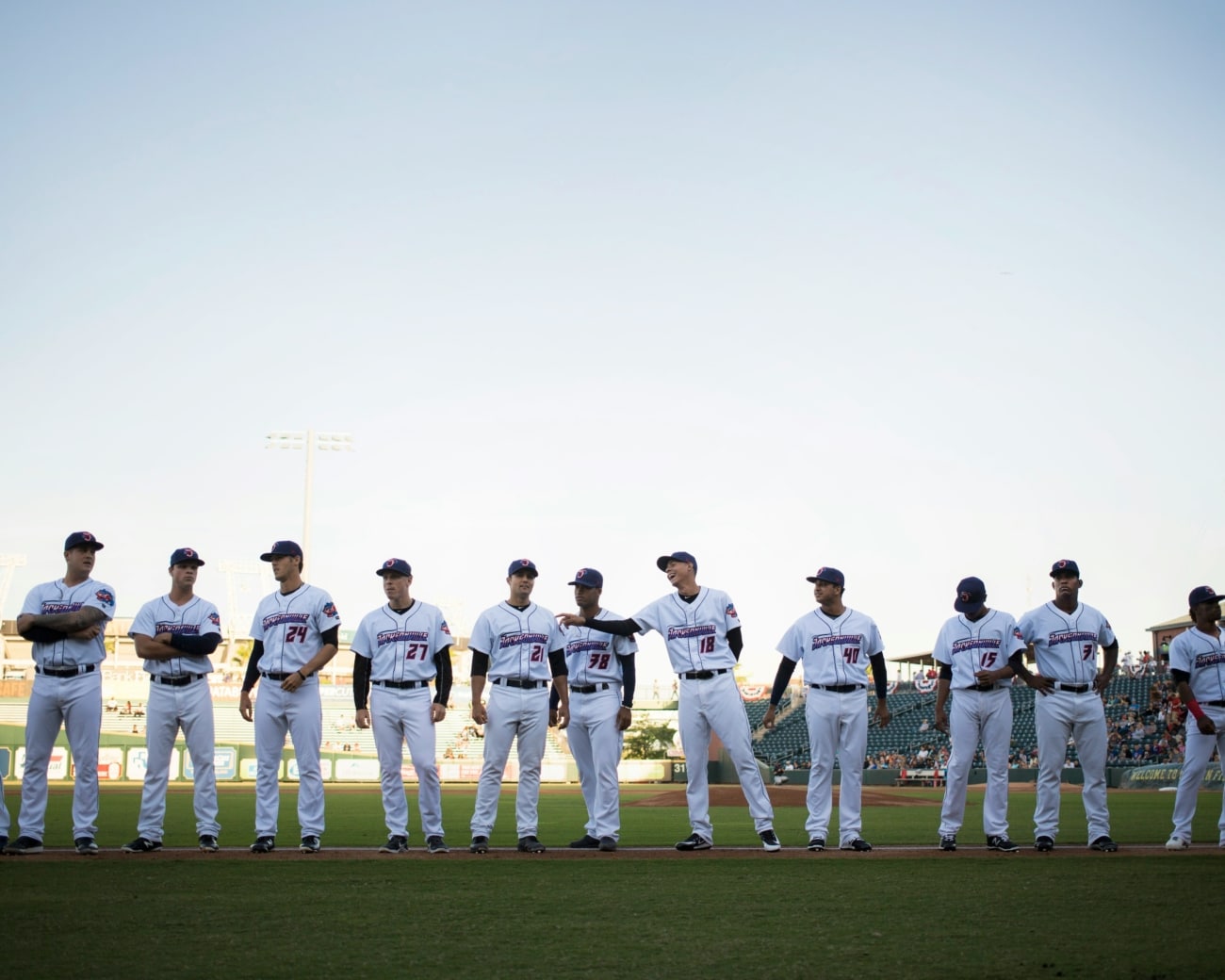
When Name, Image and Likeness deals became legal on July 1, 2021, the headlines went straight to the top: the draft-eligible stars, the SEC powerhouses, the six-figure valuations. Five years later, those headlines are still where the conversation starts. But in baseball — and across college sports — they’re nowhere near where it ends.
Here’s a look at the biggest baseball NIL deals of 2026, and how NIL is finally reaching the players who make up the rest of the roster, in baseball and well beyond it.
The Highest-Paid College Baseball Players in 2026
The most detailed public ranking of active college baseball players comes from SportsGrid’s “Top 13 D1 Baseball NIL Rankings” (February 2026). According to that list, elite baseball prospects are now commanding annual valuations from roughly $125,000 up past $850,000, driven by the 2026 MLB Draft cycle.
The top of that ranking:
- Caden Sorrell (Texas A&M, OF) — estimated $850K+. A projected top-15 draft pick and the face of the Aggies’ brand.
- Gavin Guidry (LSU, RHP) — estimated $500K+.
- DeAmez Ross (UCF, OF) — estimated $400K+.
- Travis Chestnut (Texas A&M) — estimated $350K+.
From there the list runs down through names like Cade Brown (Georgia Tech) and Titan Kamaka (Mercer) before bottoming out around $125K.
A word of caution on those numbers: baseball NIL valuations are estimates, not disclosed contracts. The market relies on figures from collectives and analysts, and people who follow specific programs closely openly question individual valuations. Read the SportsGrid list as a credible ranking of market value — not a payroll.
Why the Top Doesn’t Tell the Whole Story
Here’s the part the rankings miss. That Top 13 represents 13 players. College baseball rosters average roughly 42 players each — and programs split just 11.7 scholarships among all of them. Men’s basketball, by comparison, has 13 scholarships for rosters of about 16.
Partial scholarships are the baseball norm. For most players, NIL income isn’t a windfall on top of a free ride — it’s how they close the gap on tuition, housing, and the cost of staying in school. As Royals pitcher Chris Stratton put it, NIL can genuinely help “the kids whose parents don’t have a lot.”
And the real market reflects that. The headline valuations belong to a tiny group of draft-eligible stars. Below them are thousands of D1, D2 and D3 baseball players whose NIL reality looks nothing like the SportsGrid list. For them, a deal is more likely to be a few hundred dollars from a local business or a hometown fan than a national apparel partnership.
It’s Not Just Baseball: The Olympic-Sport Story
Baseball’s partial-scholarship squeeze isn’t unique. It’s the everyday reality across nearly every Olympic and non-revenue college sport — gymnastics, hockey, track and field, soccer, golf, swimming, volleyball. These programs work with limited scholarship pools and rosters that stretch them thin, and football and basketball NIL money rarely trickles down to them.
Yet these are the athletes for whom NIL can matter most. Many compete at an elite, even international level while still piecing together the cost of a college education. The same engine that helps the partial-scholarship baseball player — smaller, fan-driven NIL support rather than a collective’s budget — applies just as directly to the gymnast, the hockey player, or the soccer midfielder.
It’s already happening. Olympic-sport athletes are building real NIL profiles, from gymnastics to hockey to track, and fans are increasingly able to back athletes in any sport their school fields — not just the two that dominate the headlines. For an Olympic-sport athlete, a few hundred dollars in fan-driven NIL support can be the difference that keeps them in school and in their sport.
NIL Is Reaching Further Down the Lineup
The encouraging news for 2026 is that the everyday athlete is no longer shut out. A few signs of where NIL is actually headed:
It’s reaching high school. Chase Fuller, a Florida State commit and Perfect Game’s No. 1-ranked baseball prospect in the 2027 class, signed with a local cryotherapy business — believed to be the first NIL deal between a high school athlete and a local company in the Tallahassee area. No national brand required.
Athletes are building their own deals. Clemson pitchers Aidan Knaak and Justin LeGuernic launched their own company, Cardiak Cats, selling hats through their own website — owning the product instead of endorsing someone else’s.
Fans are funding athletes directly. Increasingly, NIL support comes not from corporations or booster collectives but from the people in the stands. Fan-powered platforms now let supporters contribute directly to specific athletes — in any sport — turning everyday fans into a real NIL funding source for players the big collectives overlook.
The Bottom Line
The top of baseball’s NIL market in 2026 is real — and well-publicized. But it’s a sliver. The bigger, less-told story is everyone else: the partial-scholarship players, the D2 and D3 athletes, the high schoolers, and the Olympic-sport athletes across gymnastics, hockey, track and soccer — all now finding NIL support that fits their actual situation. Increasingly, that support comes straight from the fans.
That’s the gap RallyFuel was built to close — connecting fans with D1, D2 and D3 athletes across every sport through verified NIL deals, so support can reach the athletes the rankings overlook.
Based on reporting and data from SportsGrid, Cronkite News, Clemson Tigers On SI, and High School on SI. All NIL valuation figures are estimates and should be treated as approximate.


Leave a Comment