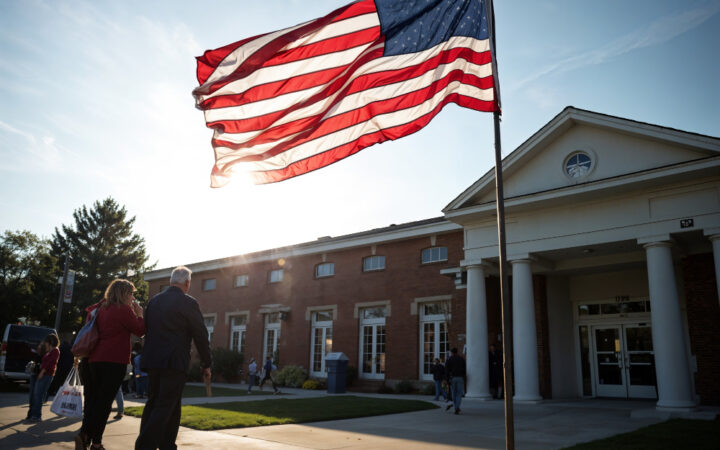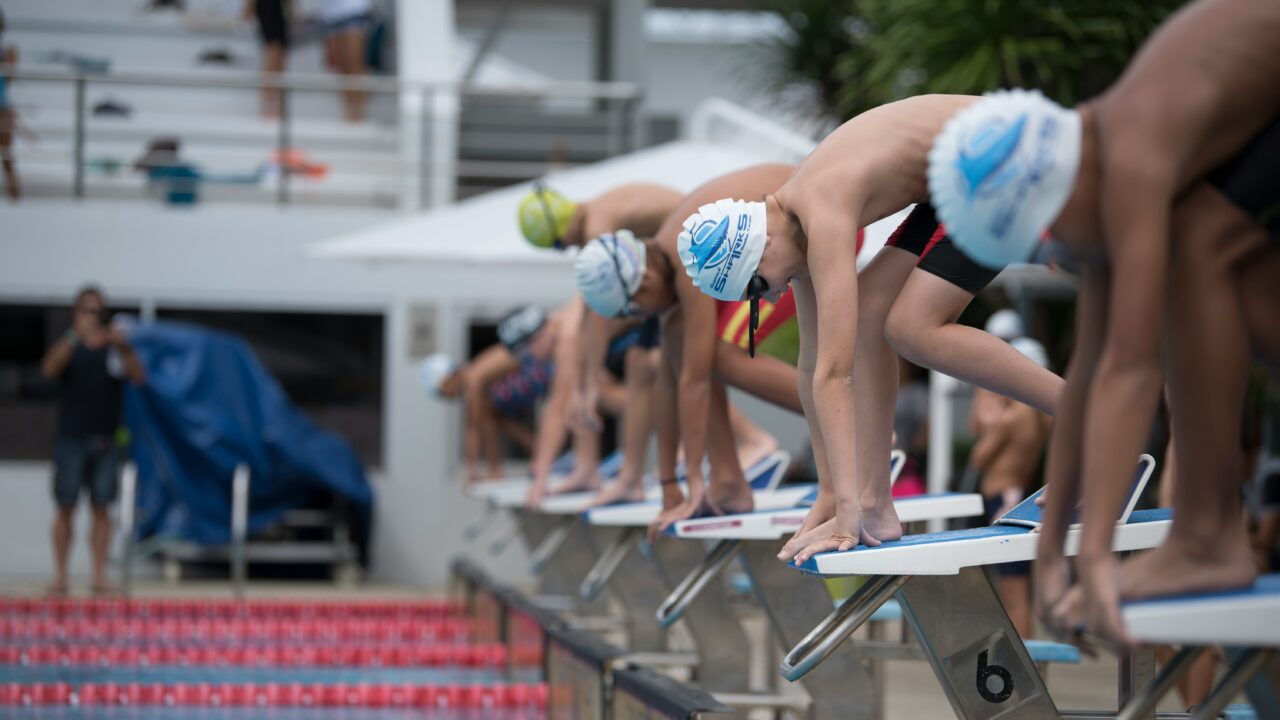
Nike signed 19 football athletes on July 16 and 18 aquatic athletes on July 29. Here’s what the two classes reveal about where brand NIL is actually going, and what it means for everyone who isn’t on the list.
Table of Contents
- The July Signing Spree
- Nike’s Football Class: 11 High Schoolers, 8 College Stars
- Nike Swim’s Inaugural NIL Class
- How High School NIL Became Legal
- Nike’s Playbook: From Jordan to a Signing Class
- Two Different Strategies: Getting There First vs. Category Building
- What This Means If You’re an Athlete
- The Reality Check
- Q&A
The July Signing Spree
Somewhere in Springfield, Tennessee, there is a high school cornerback who cannot legally rent a car and has a Nike contract.
On July 16, Nike announced a new class of football partnerships: eight college players and eleven high schoolers, some from the class of 2028. Thirteen days later, Nike Swim announced its own first NIL class of eighteen more athletes across swimming, diving, and water polo.
Thirty-seven athletes. Four sports. Under two weeks.
A generation ago, either announcement would have triggered an NCAA investigation. In 2026, they’re press releases with photo galleries. That shift is the story.
Nike’s Football Class: 11 High Schoolers, 8 College Stars
The high schoolers were selected at The Opening Finals, Nike’s invite-only summer showcase at the company’s Oregon campus. The event functions as a combine, a camp, and, increasingly, a scouting trip for the marketing department. The eleven, from the classes of 2027 and 2028:
- Quarterbacks: Elijah Haven (The Dunham School, Baton Rouge), Peyton Houston (Evangel Christian, Shreveport), Neimann Lawrence (American Heritage, Plantation, FL)
- Wide receivers: Madoxx Davis (Cartersville, GA), Quentin Hale (Centennial, Corona, CA), Jamarin Simmons (Godby, Tallahassee)
- Cornerbacks: Jermaine Cobbins (Springfield, TN), Juju Johnson (Long Beach Poly), Gabriel Osborne Jr. (Mustang, OK)
- Running back: Myson Johnson-Cook (East St. Louis)
- Tight end: Jaxon Dollar (East Lincoln, Denver, NC)
The college eight are names you’ll hear all fall. Ole Miss quarterback Trinidad Chambliss, who won an extra year of eligibility in a fight with the NCAA, and Rebels running back Kewan Lacy. Texas receiver Cam Coleman, the Auburn transfer now catching passes from Arch Manning, plus Longhorns edge rusher Colin Simmons. Oregon quarterback Dante Moore, who passed on the NFL to return to Eugene and is the only signee from Nike’s own backyard. LSU tight end Trey’Dez Green, Ohio State receiver Chris Henry Jr., and Vanderbilt five-star freshman quarterback Jared Curtis.
It’s an SEC-heavy list of projected first-rounders and Heisman candidates. At the high school level, it’s a group that hasn’t taken a college snap.
The concentration isn’t accidental. Nike reportedly carries 58 college football players on NIL deals nationally, 40 of them at SEC schools, including 11 at LSU and eight at Alabama. The eight announced in July are additions to a roster that already leans hard toward one conference.
That Heisman connection isn’t incidental. Jayden Daniels won the trophy at LSU in 2023 and now sits on Nike’s pro roster, and Nike’s own materials frame these signees as starting the same journey taken by Daniels, Saquon Barkley, Derrick Henry, and Ja’Marr Chase. With Fernando Mendoza entering the season as the reigning winner, expect several of this year’s eight in the 2026 conversation from Week 1.
The RallyFuel data shows the shape of what Nike is buying, and it isn’t production.
Five of the eight signees carry NIL Index scores as of publication: Moore at 57.3, Chambliss at 51.2, Coleman at 49.2, Simmons at 21.3, and Lacy at 18.8. The top three are two quarterbacks and a wide receiver. The bottom two are an edge rusher who recorded 12 sacks and a running back who ran for 1,567 yards and 24 touchdowns, which is the most productive season anyone in this group had. The gap between the two clusters is close to 30 points, and it maps onto position almost exactly.
Position appears to be doing more work than performance. Moore’s NIL visibility is scored at a maximum 100 and Coleman’s at 75, while both sit near the floor on fan demand, a figure that tracks activity on RallyFuel itself and starts cold on any new profile. This isn’t a quirk of one scoring model. Quarterbacks command the highest NIL valuations in college football by a wide margin, and that pattern holds across every public valuation method, not just this one. Nike signed all five regardless of where they land on the index. Whatever the brand is scoring, it isn’t only what the market has already priced.
Chris Henry Jr. and Jared Curtis make the point cleanest. They are the only two true freshmen in the college class. Henry carries no NIL Index at publication and no college statistics to build one from. Curtis hasn’t taken a college snap either, and he arrived at Vanderbilt as a consensus five-star and one of the top quarterbacks in his class, with endorsement deals already signed. One of them has nothing to score yet. The other was commercially valuable before he enrolled. Neither has played a down of college football, and Nike signed both.
Nike Swim’s Inaugural NIL Class
The swim announcement is a different animal: eighteen current NCAA athletes on year-long contracts spanning three disciplines. Twelve swimmers, five divers, one water polo player. That’s a bigger single-day investment in college swimming and diving than most national brands make in a year.
The headliners are Virginia’s Leah Hayes, a world championship bronze medalist and world junior champion in the IM; Texas distance swimmer Jillian Cox, reigning NCAA champion in the 1,650 free; and Missouri platform diver Derek Colbert of the USA Diving national team.
What’s notable is the rest of the roster. The blue-chip programs are represented, with athletes from Texas, Virginia, Stanford, UCLA, and Cal. But the class also reaches into North Carolina, UConn, San Diego State, San Jose State, Brown, and Alabama. Nike Swim is describing this as a collaborative program, with athletes involved in campaigns, product testing, and creative direction rather than just wearing a logo.
Two-thirds of the swim class is women. All nineteen football signees are men.
(Sourcing note: the swim announcement circulated as sponsored partner content, so the framing throughout is Nike’s own.)
How High School NIL Became Legal
Quick refresher for readers newer to this. NIL, or name, image, and likeness, became permissible in 2021, when the NCAA, under heavy legal pressure, stopped prohibiting athletes from earning money off their own identity. It’s not payment for playing. It’s payment for commercial use of who you are: an ad, an autograph session, a sponsored post, a logo.
Most states have since extended the same permission to high school athletes, though the rules vary considerably by state and the compliance details matter enormously. What you can endorse, whether school marks can appear, whether a parent or agent must be involved: all of it differs. Anyone in the class of 2028 looking at a deal should check the rules that apply to them before signing anything.
Nike did not create this environment. It’s just moving through it faster than most.
Nike’s Playbook: From Jordan to a Signing Class
Nike’s history is a series of early commitments made before the consensus arrived.
In 1984 it signed a rookie guard out of North Carolina who had never played an NBA game. Converse and Adidas were bigger shoe brands then. Nike built him a signature line anyway, and the Air Jordan became one of the most successful product launches in the history of consumer goods.
In 2003 it signed LeBron James while he was still enrolled at his Akron high school, reportedly for around $90 million, before a single professional minute. That same year it began its long partnership with Serena Williams.
So signing early is the house style. What’s changed is scale and ceremony.
Jordan and LeBron were once-a-decade signings, each its own corporate drama. Thirty-seven athletes in a fortnight is not a drama. NIL has converted athlete endorsement from a rare, individually negotiated event into a marketing channel a brand manager can fill on a quarterly schedule.
Two Different Strategies: Getting There First vs. Category Building
The football and swim classes look similar and are doing opposite jobs.
Football is about getting there first. A deal with an unproven junior costs a fraction of what that athlete commands after a Heisman campaign. Some of the eleven will never start a college game. Two or three might be All-Pros in 2033. The math works even with a high failure rate, and relationships are stickier when they start early. Ask any brand that arrived second.
There’s also the room itself. Nike’s football roster includes six active Super Bowl champions, 19 All-Pros, and 28 Pro Bowlers. Jerry Rice and Barry Sanders attended The Opening to talk with the prospects. When you’re seventeen and Barry Sanders is giving you career advice, you are not comparison shopping.
Swimming is category building. The sport offers no comparable upside, because there is barely a market. Aquatics generates a rounding error of football’s endorsement money, and commercial attention arrives in four-year spikes around the Olympics. So Nike Swim isn’t speculating on who might become a star. It’s signing athletes who are the best in the country right now and using them to establish presence in a category where competitors are long entrenched. That’s why the class skews toward proven champions instead of teenage prospects, and why it includes mid-major programs. The goal is coverage of the pool deck, not a single breakout.
The compensation almost certainly reflects that gap. Gear, apparel, campaign work, and product testing is a real package for a college swimmer. It is not a football contract.
What This Means If You’re an Athlete
A few practical takeaways.
Showcases are now scouting trips for two departments. The Opening has always mattered for college recruiting. It now doubles as a brand pipeline. The same is increasingly true of national championship meets and elite camps across Olympic sports.
Olympic-sport athletes have more leverage than they think. Eighteen swim, dive, and water polo athletes just signed with a brand that had no NIL program in those sports a month ago. Category-building deals go to athletes with credentials and an audience, not necessarily to athletes in revenue sports. That’s why swimming and diving athletes with national-level results are worth more to a brand than their sport’s TV ratings suggest.
Mid-major status is not disqualifying. UConn, San Jose State, and San Diego State are on that roster. National-level results travel. If you want to see how your program actually stacks up, RallyFuel’s school comparison tool puts any two side by side on NIL, fan engagement, and rankings.
Read your state’s rules first. Especially in high school, where the variation is widest and a signature can affect eligibility.
The Reality Check
The upside here is real and shouldn’t be waved away. These athletes are getting money, gear, media training, and professional guidance at an age when previous generations got an eligibility form and a warning about accepting a free sandwich. The old amateurism regime wasn’t protecting athletes. It was mostly protecting everyone else’s revenue. For Olympic-sport athletes in particular, including swimmers who have worked part-time jobs between two-a-days, any structure routing brand money toward them is an improvement.
But 37 is a very small number.
There are roughly half a million NCAA athletes and over eight million high school athletes in the United States. A Nike class is not a funding model for college sports. It’s the top of a very narrow pyramid. Most athletes will never see a national brand deal, and the ones who do are disproportionately concentrated in football, at a handful of programs.
The other complication is on the high school side, where adolescence becomes a business phase. A sixteen-year-old with a contract has obligations, an image to maintain, and a reason to treat every rep as an audition. Most of the eleven will not play in the NFL. That’s arithmetic, not pessimism.
Nike points to alumni of The Opening who made it: Derrick Henry, Saquon Barkley, Kyler Murray, Ja’Marr Chase. It’s a legitimately impressive list. It’s also, by construction, the survivors. Plenty of others came through that showcase and now have ordinary careers, which is a fine outcome, though a harder adjustment if you spent your teens being told you were an investment.
Nike signed a pro in 1984, a high school senior in 2003, and thirty-seven athletes across four sports in a single July. Middle school athletes already have national rankings and highlight reels. Someone will test that line, and given the incentives, it probably won’t be long.
Following the 2026 race? RallyFuel’s Heisman NIL Power Rankings track contenders on a composite of on-field performance, NIL visibility, social reach, and fan demand, updated weekly through the season. Several of Nike’s new signees will be on it.
Q&A
Question: How many athletes did Nike sign in July 2026, and in which sports? Short answer: Thirty-seven across four sports. On July 16, Nike announced 19 football athletes, made up of 11 high school prospects from the classes of 2027 and 2028 plus 8 college players. On July 29, Nike Swim announced an inaugural class of 18 NCAA athletes across swimming, diving, and water polo.
Question: Can high school athletes really sign brand deals now? Short answer: In most states, yes. NIL became permissible at the NCAA level in 2021, and most states have since extended similar rights to high school athletes. The specifics vary widely, since restrictions on categories, use of school marks, and required disclosures all differ by state. An athlete should check state association rules and, ideally, get the agreement reviewed before signing.
Question: Why would Nike sign a high schooler who may never play college football? Short answer: Cost and timing. Signing an unproven prospect is far cheaper than signing the same athlete after a breakout season, and early relationships are harder for competitors to displace. Nike is building a portfolio where a high failure rate is acceptable because a small number of hits are extremely valuable.
Question: Why is the swim class made up of established champions instead of prospects? Short answer: Because the strategy is different. Swimming has a fraction of football’s endorsement market, so Nike Swim isn’t signing athletes for who they might become later. It’s establishing credibility in a category with entrenched competitors by signing athletes who are already winning national titles and international medals.
Question: What does this mean for athletes outside the top tier? Short answer: Realistically, national brand deals reach a very small number of athletes, concentrated in football and at high-profile programs. The more accessible paths are local and regional partnerships, collective and school-facilitated arrangements, and direct fan support, which is where the large majority of NIL activity actually happens. Fan-funded platforms are one route: instead of waiting for a national brand to notice you, you raise from the people already watching you compete. RallyFuel carries profiles for Division I, II, and III athletes, and fan contributions are refunded automatically when a deal’s conditions aren’t met.