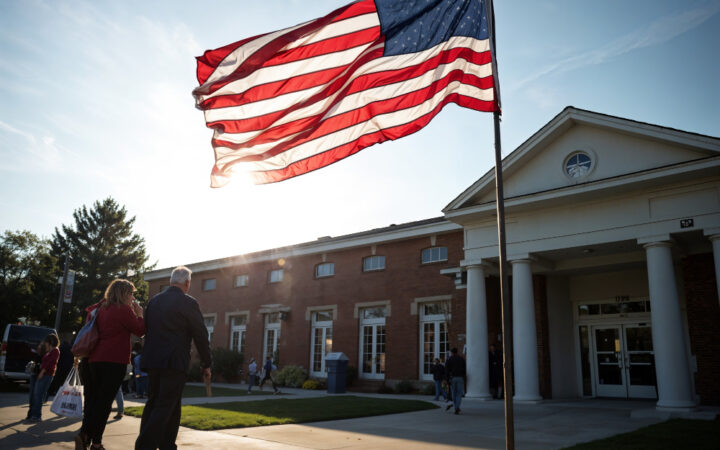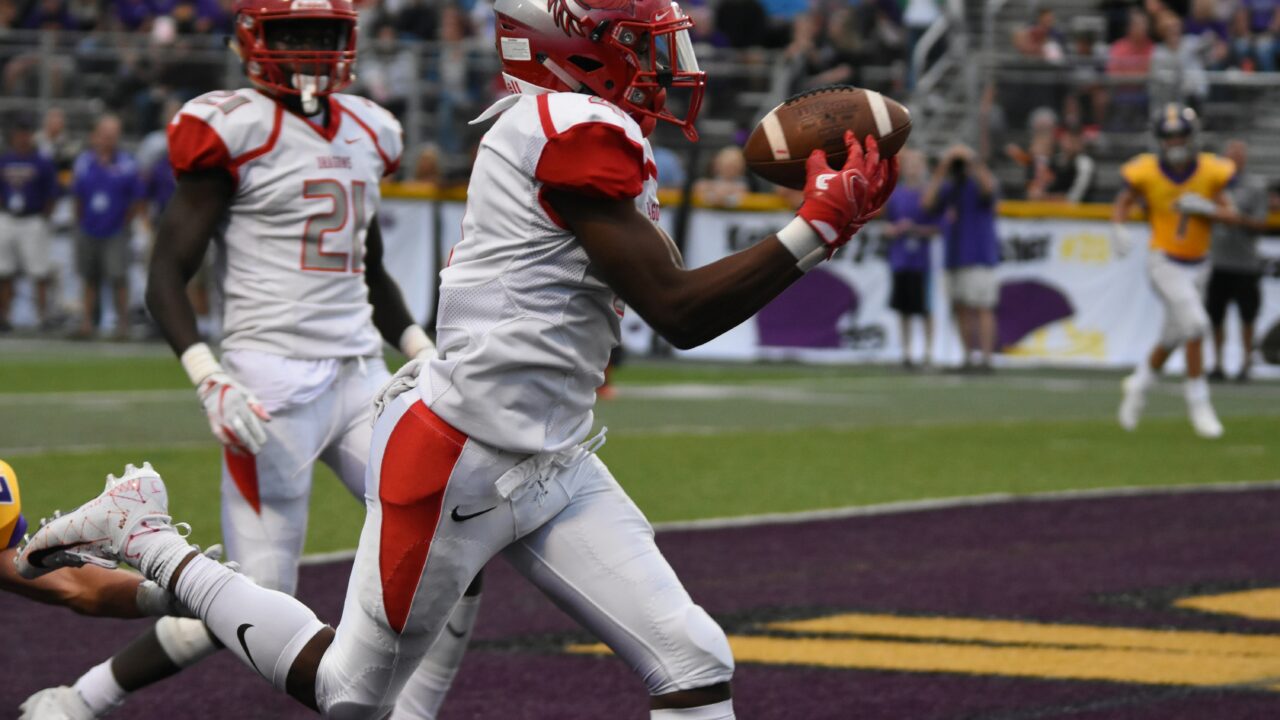
The most recent Rose Bowl was a rout. Indiana beat Alabama 38-3 on January 1, 2026, at Rose Bowl Stadium in Pasadena. Fernando Mendoza went 14-for-16 for 192 yards and three touchdowns in his first game after winning Indiana’s first Heisman Trophy. It was the 112th edition of the game and served as a College Football Playoff quarterfinal under the 12-team format. The Hoosiers went on to win the national championship.
Table of Contents
- What is the Rose Bowl?
- How the Rose Bowl fits in the 12-team CFP
- Recent Rose Bowl results
- What’s next: the 2027 Rose Bowl
- How teams get to Pasadena
- Going to the game: Pasadena logistics
- What to do in Pasadena on Rose Bowl weekend
- How rosters can shift between November and kickoff
- Q&A
The next Rose Bowl is already set: Friday, January 1, 2027, and it’ll be a CFP quarterfinal. The Rose Bowl has locked in the New Year’s Day afternoon slot for the 2026 and 2027 seasons. If you’re catching up on what the Rose Bowl looks like today, this is the guide.
What is the Rose Bowl?
The Rose Bowl is the oldest postseason college football game in the country, and the first one ever played. It began at Pasadena’s Tournament Park on January 1, 1902, when Michigan routed Stanford 49-0 in a game so lopsided that Stanford quit in the third quarter. The Tournament of Roses responded by dropping football entirely and running Roman-style chariot races instead, inspired by the popularity of Ben-Hur, along with ostrich races and other spectacles. Football was permanently reinstated in 1916 and has been played every year since. Broadcaster Keith Jackson gave the game its nickname, “The Granddaddy of Them All,” and it stuck.
Crowds eventually outgrew Tournament Park, and the game moved into its permanent home, a stadium designed after the Yale Bowl, for the January 1, 1923 edition. That’s where the venue got its name.
Winners receive the Leishman Trophy, named for former Tournament of Roses presidents William L. and Lathrop K. Leishman. Prudential has been the presenting sponsor since 2023, making the official name the Rose Bowl Game presented by Prudential.
It got there first. Beyond being the original bowl game, the Rose Bowl has a long run of broadcast firsts: the first transcontinental radio broadcast of a sporting event (1927), the first national telecast of a college football game (1952), the first coast-to-coast color telecast of a college football game (1962), and the first College Football Playoff semifinal (2015).
Two things separate the Rose Bowl from every other bowl:
It’s tied to a parade. The Rose Parade runs through Pasadena on New Year’s morning, and the game kicks off a few hours later. The two events are run by the same organization, the Pasadena Tournament of Roses, and they’ve been paired for more than a century.
It refuses to move. The Rose Bowl is played on January 1 unless January 1 falls on a Sunday, in which case it slides to January 2. It has kept that afternoon slot even as the playoff has reshaped the rest of the bowl calendar. The game has left Pasadena exactly twice: in 1942, when West Coast crowds were restricted after Pearl Harbor and Duke hosted it in Durham, North Carolina, and in 2021, when California’s COVID-19 rules pushed it to AT&T Stadium in Arlington, Texas.
It’s also the biggest draw in the sport’s postseason: the highest-attended college football bowl game every year since 1945, and the only CFP bowl not played in an NFL stadium.
The Big Ten connection didn’t go away
From 1947 through 2023, the Rose Bowl matched the Big Ten champion against the Pac-12 champion (or their predecessor conferences). The deal was struck in 1946 and is the oldest postseason bowl agreement between two major conferences in the country. Realignment ended the Pac-12 half of it, but the Big Ten tie-in survived into the playoff era in modified form: when the Rose Bowl hosts a quarterfinal, the CFP selection committee assigns the Big Ten champion to Pasadena if it’s among the top four conference champions in the final rankings. When the Rose Bowl hosts a semifinal, the Big Ten champion goes there if it’s a top-two seed.
That’s not a formality. Oregon, the Big Ten champion, landed in the 2025 Rose Bowl. Indiana, the Big Ten champion, landed in the 2026 Rose Bowl. If you’re projecting brackets, the Big Ten champ is the single best predictor of who plays in Pasadena.
USC has won the most Rose Bowls with 25, followed by Ohio State with 10 and Michigan with 9, though Michigan is 9-12 in the game, one of the few programs with more Rose Bowl appearances than wins. UCLA, the other Los Angeles program and the only school that has played Rose Bowls in its own backyard, has 5 wins in 12 tries. All-time, the Big Ten is 37-40 in the game and the Pac-12 and its predecessors went 52-46-3.
How the Rose Bowl fits in the 12-team CFP
The College Football Playoff expanded from four teams to 12 for the 2024-25 season. The Rose Bowl is one of six bowls that host playoff games on a rotation, alongside the Cotton, Fiesta, Orange, Peach, and Sugar Bowls. Its insistence on the New Year’s Day afternoon window means it has drawn quarterfinal duty every year of the expanded format so far.
Here’s the 12-team format for the 2026 season:
- The field includes the four Power Four conference champions (ACC, Big Ten, Big 12, SEC), who are now guaranteed a spot regardless of where they finish in the rankings
- Plus the highest-ranked champion from the American, Conference USA, MAC, Mountain West, Pac-12, and Sun Belt
- Plus the next seven highest-ranked teams
- Notre Dame is guaranteed a spot if it finishes in the top 12
- The top four seeds get byes to the quarterfinals
- Seeds 5 through 12 play first-round games on campus
- Quarterfinals are at the bowl sites, including the Rose Bowl
- Semifinals rotate to two other bowls
- The two semifinal winners play for the national championship
The Pac-12’s place on that list is worth a footnote. After ten of its twelve schools left in 2024, it spent two seasons down to Oregon State and Washington State, which was not a realistic path to a bid. For 2026-27 it rebuilds to nine members, adding Boise State, Fresno State, Colorado State, Gonzaga, San Diego State, Texas State, and Utah State. That’s eight football schools, enough to hold FBS status, and enough to make a Pac-12 champion a live contender for the Group of Six slot again.
The Power Four guarantee is new for 2026. It’s a direct response to 2025, when Duke won the ACC at 8-5 and missed the field entirely while two Group of Five teams got in on rankings.
The field itself stays at 12. The CFP management committee announced in January 2026 that it would hold the format steady for a third year after the Big Ten and SEC couldn’t agree on what expansion should look like. The SEC favored a 16-team model with five automatic qualifiers, the Big Ten pushed for a 24-team field with more automatic bids.
Recent Rose Bowl results
| Date | Result | Notes |
| Jan 1, 2026 | Indiana 38, Alabama 3 | CFP quarterfinal. Players of the game: Pat Coogan (C), D’Angelo Ponds (CB). 112th edition. Attendance 90,278. Indiana’s only prior trip was a 14-3 loss to USC in the 1968 game. |
| Jan 1, 2025 | Ohio State 41, Oregon 21 | CFP quarterfinal. First Rose Bowl under the 12-team format, and the first Rose Bowl between two teams from the same conference since 1944. Also a rematch; Oregon had won 32-31 in the regular season. |
| Jan 1, 2024 | Michigan 27, Alabama 20 (OT) | CFP semifinal. Only the second Rose Bowl ever to reach overtime. Michigan tied it late, Blake Corum scored in OT, and the defense stopped Alabama on fourth-and-goal. |
| Jan 2, 2023 | Penn State 35, Utah 21 | Penn State’s first Rose Bowl win since 1995. |
| Jan 1, 2022 | Ohio State 48, Utah 45 | Decided by a 19-yard Noah Ruggles field goal with nine seconds left. |
The 2026 game came close to being a weather story. Rain fell across Pasadena from December 30 through the morning of the game, and the Rose Parade got soaked. Both marching bands performed from the stands to protect the field, and most on-field pregame entertainment was scrapped. The rain stopped before kickoff, but clouds hid the traditional Rose Bowl sunset.
Going in, the fan prediction split on RallyFuel’s Indiana vs. Alabama game page sat at roughly 65-35 in Indiana’s favor. The Hoosiers were a 7.5-point favorite, and they more than covered it.
The lopsided score didn’t hurt the audience. The 2026 Rose Bowl was the most-watched game of the 12-team playoff era to that point, drawing a bigger audience than 18 of the previous 22 CFP semifinals, a useful reminder that the Rose Bowl brand still carries weight regardless of where it sits in the bracket.
That sunset is also a casualty of scheduling. The Rose Bowl traditionally kicked off at 2:00 p.m. Pacific (5:00 p.m. Eastern), and the sun dropping behind the San Gabriel Mountains midway through the game became part of the broadcast’s identity, and the CFP has built its entire calendar around protecting that slot. For the 2026 edition the game moved up an hour, to 1:00 p.m. Pacific, so it wouldn’t crowd the Sugar Bowl’s start time. The practical effect is that the sunset now arrives late in the fourth quarter, or after the game has ended entirely.
What’s next: the 2027 Rose Bowl
The 113th Rose Bowl is scheduled for Friday, January 1, 2027, at Rose Bowl Stadium. It will be a CFP quarterfinal, part of a New Year’s Day tripleheader alongside the Cotton Bowl and Peach Bowl. A fourth quarterfinal, the Fiesta Bowl, is played two days earlier on Wednesday, December 30, 2026.
The winner advances to a semifinal: the Orange Bowl on Thursday, January 14, 2027, or the Sugar Bowl on Friday, January 15. The National Championship Game follows on Monday, January 25, 2027, at Allegiant Stadium in Las Vegas.
Kickoff is down to two options. The Rose Bowl will go at either 1 p.m. PT (4 p.m. ET, on ABC and ESPN) or 5 p.m. PT (8 p.m. ET, on ESPN). Which one gets locked in on Selection Day, Sunday, December 6, 2026, when the Peach, Cotton, and Rose Bowls are assigned to their windows. The 5 p.m. Pacific option would make this a night game in Pasadena, with no sunset at all, which would be a real departure for a game built around that image.
The rest of the broadcast picture: quarterfinals are split between ESPN and TNT Sports, and January 14 marks TNT’s first CFP semifinal under its sublicense deal with ESPN. The first round runs Friday, December 18 and Saturday, December 19 at campus sites.
The Rose Bowl’s role in the 2027-28 season is already set too: another quarterfinal, on Saturday, January 1, 2028.
How teams get to Pasadena
The CFP selection committee, 13 members drawn mostly from former coaches, athletic directors, and journalists, releases weekly rankings every Tuesday night in November and into December. The final ranking sets the 12-team bracket.
The committee weighs three main factors:
- Overall record
- Head-to-head results between contenders
- Strength of schedule
Strength of schedule is where teams with one or two losses often outrank undefeated teams from weaker conferences. A 10-2 team that played five top-25 opponents can rank ahead of an 11-1 team that played a soft slate. That factor gets more interesting in 2026, as the ACC and SEC both move to nine-game conference schedules, which is expected to push more two- and three-loss teams into the conversation.
Once the bracket is set, placement into the Rose Bowl specifically isn’t random. The Big Ten champion is assigned to Pasadena if it finishes as one of the top four conference champions, so watching the Big Ten Championship Game in early December tells you most of what you need to know about who’ll be there on New Year’s Day.
“Bracketology” is the term for projecting the final bracket before it’s locked in. ESPN, CBS, The Athletic, and most major college football outlets run weekly projections from October on. They’re useful for tracking momentum and matchup possibilities.
Going to the game: Pasadena logistics
The Rose Bowl is played at Rose Bowl Stadium, 1001 Rose Bowl Drive, in the Arroyo Seco about two miles from downtown Pasadena. Official capacity is 92,542. It held more than 100,000 for decades before reconfigurations, and it’s still the largest stadium hosting a postseason bowl game. Recent Rose Bowls have drawn right around 90,000. A few practical things:
Tickets. Buy through the CFP and Rose Bowl official sites, participating school allotments, or verified resale platforms like Ticketmaster, SeatGeek, or StubHub. On Location handles official ticket-and-hospitality packages. Prices swing hard depending on which fan bases travel. A Big Ten blue blood two hours from Pasadena is a very different market than a first-time qualifier.
Seating by seed. In the CFP quarterfinal format, the higher seed (1-4) occupies the West sideline, with its fans in the West and North sections. The lower seed (5-12) gets the East sideline, with fans in the East and South sections.
Getting there. This is the part people underestimate. The Rose Parade runs the same morning and closes streets across Pasadena, so driving to the stadium on game morning is genuinely difficult.
- Metro. Take the A Line to Memorial Park Station in Pasadena, then walk to the shuttle pickup near Parsons for a free bus to the stadium. In 2026 the shuttle ran from 9 a.m. until two hours after the game.
- Driving. Stadium lots open early. In-and-out privileges are prohibited: leave and you pay again. Golf course lots may close in rain.
- Rideshare. Uber and Lyft can’t drop off at the stadium. Pickups and drop-offs are routed to Old Pasadena, and you take the shuttle from there.
- Arrive early. Officials have recommended being at the stadium several hours before kickoff. Take that seriously on New Year’s Day.
Where to stay. Three practical bases:
- Old Pasadena / Downtown Pasadena: walkable, restaurants and bars, closest to the Metro station and the parade route
- South Lake Avenue district: quieter, shopping and dining, short drive to the stadium
- Downtown LA or Glendale: more inventory and often better rates, with the A Line running straight into Pasadena
Book early. Rose Bowl weekend stacks on top of holiday travel and the parade brings hundreds of thousands of people into a city of 140,000.
Bag policy. Rose Bowl Stadium and Tournament of Roses events enforce a clear bag rule. Approved: clear plastic bags no larger than 12 by 6 by 12 inches, one-gallon clear freezer bags, and small clutches up to 4.5 by 6.5 inches. Diaper bags are fine with a child. Backpacks, tinted bags, purses, camera cases, and fanny packs don’t get in, and there’s no bag storage at the gates.
What to do in Pasadena on Rose Bowl weekend
The Rose Parade steps off on New Year’s morning and runs roughly five and a half miles up Orange Grove Boulevard and east along Colorado Boulevard. Grandstand seats are sold in advance; curbside viewing is free but people camp out overnight for it. A temporary flight restriction covers both the parade and the game, so no drones.
The pre- and post-parade events are underrated. Float decorating sites open to visitors in the days before, Bandfest showcases the participating marching bands, Equestfest features the parade’s equestrian units, and Floatfest lets you see the floats up close for a few days afterward.
Rose Bowl FanFest sets up outside the stadium on game day, with band performances, activities, and food. The clear bag policy applies there too. Alumni association tailgates cluster at Brookside Golf Course just north of the stadium.
Pasadena itself is worth a day:
- Old Pasadena: historic blocks of shopping, restaurants, and bars
- Norton Simon Museum: small, exceptional collection, right on the parade route
- The Huntington Library, Art Museum, and Botanical Gardens: in nearby San Marino, easily a half-day
- The Gamble House: landmark Craftsman architecture, tours available
Food-wise, Old Pasadena covers most bases, and Pie ‘n Burger has been a Pasadena counter institution since 1963. If you don’t have game tickets, sports bars across Old Pasadena and Colorado Boulevard fill up early.
How rosters can shift between November and kickoff
The CFP runs from mid-December through late January, and rosters at the start of the playoff don’t always look like rosters at the end. A few moving pieces:
NFL Draft opt-outs. Projected first- and second-round picks sometimes sit out bowl games to protect their draft stock. This was common in non-playoff bowls and is less common inside the CFP, where the games actually matter.
Transfer portal. The portal window opens in December. Players unhappy with playing time, position room, or fit can enter, and some leave mid-playoff run. RallyFuel’s transfer portal tracker filters by portal status, sport, and conference, so you can see who has entered, who is exploring, and who has committed.
NIL and revenue sharing. Collectives and, since the House settlement took effect, direct school revenue sharing can keep a star on the roster who might otherwise leave. Retention money is now a standard part of how programs get through December intact. For 2025-26 the revenue-sharing cap sat at $20.5 million per school, with football programs taking roughly 75 percent of it at Big Ten schools. Indiana is a useful case study, a program that went from the longest bowl-win drought among Power Four teams to a national championship. You can back Hoosiers athletes directly on RallyFuel.
Draft departures after the fact. The other side of the ledger: 45 Rose Bowl alumni were selected in the 2026 NFL Draft, 10 of them in the first round. Playoff rosters turn over fast, and last January’s stars are frequently gone by spring.
Mendoza is the cleanest illustration. He won the Heisman, threw three touchdowns in the Rose Bowl, won a national title, and then graduated and headed to the NFL Draft. The player who defined the 2026 game won’t be on the field in 2027. That’s the normal rhythm of the sport now, not an exception.
When you’re predicting playoff games, especially deep into the bracket, check who’s actually playing rather than assuming the November depth chart still holds. The Big Ten cut of the tracker is the fastest place to start, since the Big Ten champion is the team most likely to be in Pasadena.
Q&A
Q: Who won the most recent Rose Bowl? Indiana beat Alabama 38-3 on January 1, 2026, in a CFP quarterfinal. Fernando Mendoza threw three touchdown passes. Center Pat Coogan and cornerback D’Angelo Ponds were named players of the game. Mendoza tops RallyFuel’s Heisman NIL Power Rankings, which blend on-field production with NIL visibility and fan demand. It was Indiana’s first Rose Bowl win and its first CFP win, and the Hoosiers went on to take the national title.
Q: When is the next Rose Bowl? The 113th Rose Bowl is Friday, January 1, 2027, at Rose Bowl Stadium in Pasadena. It’s a CFP quarterfinal. Kickoff will be either 1 p.m. or 5 p.m. Pacific, with the window assigned on Selection Day, Sunday, December 6, 2026.
Q: Why is the Rose Bowl always a quarterfinal? The game insists on its traditional New Year’s Day afternoon slot, and CFP semifinals are played roughly two weeks later. The Rose Bowl has drawn quarterfinal duty in 2025, 2026, and 2027, and is scheduled as a quarterfinal again on January 1, 2028.
Q: Does the Rose Bowl still have a Big Ten tie-in? Yes, in a modified form. The traditional Big Ten vs. Pac-12 matchup ran from 1947 to 2023 and ended with the Pac-12’s collapse, but the Big Ten side survived. When the Rose Bowl hosts a quarterfinal, the CFP assigns the Big Ten champion there if it’s one of the top four conference champions. When it hosts a semifinal, the Big Ten champion goes there if it’s a top-two seed. Oregon and Indiana both reached Pasadena that way in 2025 and 2026.
Q: Has the Rose Bowl ever been played outside Pasadena? Twice. The 1942 game was moved to Duke Stadium in Durham, North Carolina, after Pearl Harbor raised fears about large West Coast gatherings. The 2021 CFP semifinal was moved to AT&T Stadium in Arlington, Texas, after California declined an exemption that would have let fans attend during the pandemic. Both kept the Rose Bowl name.
Q: Is the playoff expanding? Not for the 2026 season. The CFP announced in January 2026 that it will stay at 12 teams for a third year after the Big Ten and SEC deadlocked over 16- and 24-team proposals. The only changes are guaranteed spots for all four Power Four champions and for Notre Dame if it finishes in the top 12.
Q: What’s the Rose Bowl Stadium bag policy? Clear plastic bags no larger than 12 by 6 by 12 inches, one-gallon clear freezer bags, or clutches up to 4.5 by 6.5 inches. Backpacks, tinted bags, purses, and camera cases aren’t permitted, and there’s no storage available.
Q: What’s the best way to get to the stadium? Take the Metro A Line to Memorial Park Station and catch the free shuttle. The Rose Parade closes streets across Pasadena the same morning, rideshare can’t drop off at the stadium, and parking has no in-and-out. Public transit plus an early arrival is the low-stress option.