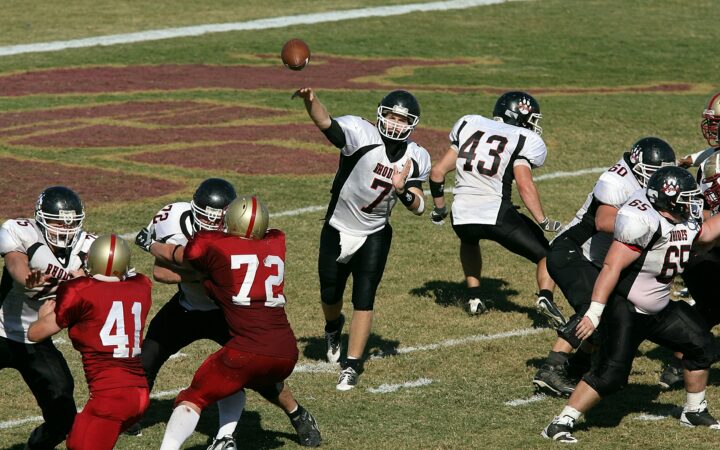
San Francisco State fields ten NCAA Division II teams. Two of them are among the best in the country in their sport, one has a national championship banner, and three were cut in 2025 when the budget ran out. That is the real story of Gators athletics right now, and it is more interesting than the version most guides tell.
Here is what the program is, where it plays, and how to follow it or join it.
The basics
SF State competes in NCAA Division II. Most teams play in the California Collegiate Athletic Association, the conference the school has built its schedule around for decades. Wrestling is the exception. It competes in the Mountain Pacific Sports Federation, which launched a Division II men’s wrestling league in the 2024 to 2025 school year.
The CCAA is the strongest conference at this level. Founded in December 1938, it now has 14 members, and its schools have won 157 NCAA championships between them, more than any other Division II conference. Regular conference opponents include Chico State, Cal State East Bay, Cal State Monterey Bay, and Stanislaus State. Two schools joined on July 1, 2026: Fresno Pacific, which came over from the Pacific West Conference, and Menlo College.
The Gators currently sponsor ten varsity sports:
Men’s: basketball, cross country, track and field, wrestling Women’s: basketball, cross country, soccer, softball, track and field, volleyball
School colors are purple and gold. The fight song is the “State Victory Song.”
What happened in 2025
In March 2025, President Lynn Mahoney announced that baseball, men’s soccer, and women’s indoor track and field would be eliminated as of July 1 that year. The cuts affected 44 student athletes and brought the department from 13 teams down to 10.
The reasons were financial. An athletics task force formed the previous fall found the department projecting a deficit of roughly $360,000 and carrying about $1.2 million in debt on its scholarships account, against a backdrop of declining enrollment and proposed state cuts to the CSU system. Eliminating the three teams was projected to save up to $1 million a year.
Wrestling was on the task force’s list too. Instead of cutting it, the university moved the program out of the Rocky Mountain Athletic Conference and into the MPSF, which cut travel costs by an estimated 25 to 40 percent.
This was not the first time. The athletics site keeps a Retired SF State Sports page honoring discontinued programs, and the list runs well beyond the 2025 cuts to include football, men’s swimming, women’s swimming, men’s tennis, and women’s tennis. SF State was not alone in 2025 either. Sonoma State discontinued its entire athletics department at the end of June that year and, as of mid 2026, has not set a firm return date.
If you are a prospective athlete, this matters. It tells you the department is small, careful with money, and has ended programs before. Ask coaches direct questions about program stability.
The teams worth watching
Women’s volleyball is the headline. The 2024 team went 26 and 7, won the NCAA Division II West Regional, and finished as national runner up, the deepest tournament run in program history. The school now carries an endowed scholarship named for that regional championship. Setter Kimberly DeBoer, named CCAA Setter of the Year three times, was a 2025 Top 30 NCAA Woman of the Year honoree.
Softball had its own breakthrough in 2025: a record of 39 and 20, the program’s first CCAA Tournament title, and its first time hosting an NCAA West Regional.
Wrestling is the program with the trophy. In 1997, head coach Lars Jensen led SF State to the school’s only NCAA team championship, beating Omaha 95 to 81. The program sent a qualifier to the Division II national championships every year from 1965 to 2017. Under current head coach Jason Welch, Johnny Lopez won the 141 pound national title in 2025, and the Gators sent three qualifiers to nationals in 2026 with another All American finish. For a stretch SF State was the only Division II wrestling program in California. Cal Poly Humboldt, Menlo, and Vanguard have since joined the MPSF.
Men’s basketball reached the NCAA tournament in the 2016 to 2017 season for the first time since 1994, winning 25 games and finishing ranked 22nd nationally.
Women’s basketball had its strongest run a generation ago, with nine consecutive postseason appearances beginning in the late 1970s and NCAA tournament trips in 1982, 1983, 1984, and 1985. Natasha Smith currently leads the program.
You can follow current Gators and the rest of the conference on the CCAA athlete directory.
Where the Gators play
San Francisco Federal Credit Union Gymnasium at Don Nasser Family Plaza, known to everyone as The Swamp. The building opened in 1951 and sits at the center of campus. The plaza outside was named in 2014 for alumnus and donor Don Nasser, and the gym itself received its current corporate name in March 2026. It hosts basketball, volleyball, and wrestling, and houses the athletics offices and locker rooms.
Cox Stadium, the outdoor venue, sits on the northern side of campus behind the gymnasium. It has a 400 meter track and a grass field, seats about 5,500, and hosts soccer and track and field. It is also where commencement happens. From 1946 to 1994 it was the home of Gators football.
SFSU Softball Field runs along Font Boulevard behind the Mashouf Wellness Center. It was upgraded alongside the Wellness Center’s construction with new batting cages, covered dugouts, and a new entrance and seating area.
Speedway Meadow at Golden Gate Park is the fourth official venue and the one most people miss. Cross country does not race on campus. It races in Golden Gate Park, which is a better setting than most Division II programs can offer.
Going to a game
The M Ocean View Muni line stops at campus, which is the least stressful way to arrive. If you plan to drive, the athletics site points to the campus parking office at parking.sfsu.edu for current lot and permit information, which changes often enough that it is worth checking rather than guessing.
Schedules, rosters, and tickets live on sfstategators.com. Conference broadcasts run through CCAA on FloCollege, linked from the athletics site. Admission policies change season to season, so check before you go rather than trusting a blog post about bag rules.
The Gator
Students picked the mascot in 1931, after the campus paper asked readers to suggest one. The winning pitch was practical rather than fierce. The alligator was chosen for strength and steadfastness, something that moves steadily toward its goal. It beat out a seal, a panther, and a puma.
The original spelling was “Gaters,” with an e, as a pun on the Golden Gate. Misspellings piled up until “Gators” won by default, though the Golden Gater name still turns up in the school’s own historical pages. In the 1960s SF State had a live alligator named Al who appeared at football games once or twice a year. The current costumed mascot, Alli, got a full redesign in 2023, the first significant update in more than ninety years.
The history worth knowing
SF State fielded football from 1931 until the program was discontinued after the 1994 season. It won Far Western Conference titles in 1951, 1954, 1956, 1957, 1958, 1959, 1962, 1963, 1965, and 1967. Old conference rivals from that era include Sacramento State, which shared the Far Western Conference with SF State before moving up to Division I in 1991 and joining the Big West in July 2026.
The lasting legacy is coaching. Vic Rowen ran the program from 1961 to 1989 and produced a coaching tree that includes Andy Reid, Mike Holmgren, Dirk Koetter, Bob Toledo, and Tom Melvin. Two Super Bowl winning head coaches came out of a Division II program in the Sunset District, which is a better fact than most schools this size can claim.
On the track, the 2017 women’s 4×400 relay of Atiya Harvey, Vanessa Koontz, Kennedy Hardemion, and Timarya Baynard won the Division II national championship in 3:37.80. The women’s team won consecutive CCAA titles in 2018 and 2019.
Across all sports, SF State counts 275 All Americans and 34 Academic All Americans. The department maintains two halls of fame, a general SF State Athletics Hall of Fame and a separate Football Hall of Fame, known as the Gridiron Club, both listed on the athletics site.
Joining the program
Recruiting runs on standard NCAA Division II rules. The practical steps:
- Fill out the prospective student athlete questionnaire on sfstategators.com for your sport. Every program has one, grouped under Become A Gator.
- Put together current highlight film. Coaches want to see mechanics and decision making, not just results.
- Contact the position coach directly. At a department this size, coaches read their own email.
- Register with the NCAA Eligibility Center before you expect to compete.
Division II schools can offer athletic aid, and awards are frequently partial rather than full. SF State also carries named endowed scholarships in volleyball, wrestling, and cross country and track. Given the scholarship account debt described above, ask specific questions about what is actually available in your sport for your year.
Walk on opportunities come up. Requirements typically include NCAA eligibility certification, a physical, and full time enrollment. Confirm the current specifics with the athletics compliance office rather than relying on a general figure.
If you are weighing a move between programs, the CCAA transfer tracker shows who is on the move across the conference. The school comparison tool puts two programs side by side on NIL activity, fan engagement, rankings, and championships, which is a useful gut check when you are choosing between offers.
Support once you are on a roster
The athletics department runs dedicated pages for Academics, Sports Medicine, and Compliance, and the Student Athlete Advisory Committee gives athletes a formal voice in department decisions. If you want to know what academic support actually looks like day to day, those pages and the staff directory are the place to start, and the people listed there answer questions from recruits.
Where NIL fits at this level
Division II NIL does not look like the Division I version. There are no collectives writing enormous checks here. What there is: athletes who can be paid for their name, image, and likeness by local businesses, alumni, and fans, under NCAA and institutional rules.
If you want to see how that plays out beyond one campus, RallyFuel keeps a Division II conference directory that ranks conferences on combined team performance, fan engagement, and NIL activity.
At a school in SF State’s position, that matters more than it would elsewhere. A department carrying scholarship debt and cutting teams is not going to close the gap for individual athletes on its own. NIL is one of the few levers that does not run through the athletic budget.