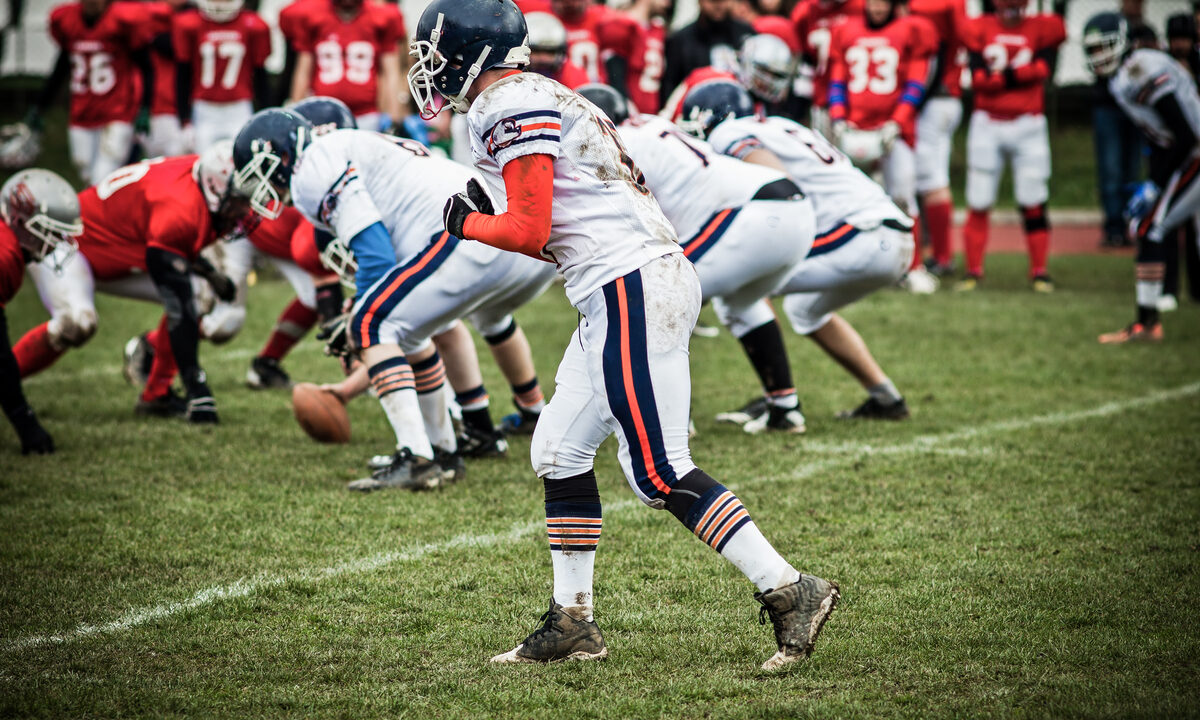
Drive south from Pittsburgh on I-79 and in about 75 miles you cross into West Virginia. The skyline gives way to ridgelines. The three rivers give way to the Monongahela’s tributaries. And the blue and gold gives way to blue and gold — different shades, different loyalties, same rivalry. Pittsburgh leads the all-time football series 63–42–3 through 108 games. WVU is on a 1-game win streak. The Backyard Brawl has been played since 1895.
How It Started
The first game in the series was played on October 26, 1895, in Morgantown — then West Virginia beat then-Western University of Pennsylvania 8–0. The school wouldn’t become the University of Pittsburgh for another decade. By the time it did, the two programs were already one of eastern college football’s defining rivalries.
The connection runs deeper than geography. The 1921 Backyard Brawl at Forbes Field in Pittsburgh — a 21–13 Pitt victory — was the first college football game ever broadcast on the radio, when Harold Arlin announced it live on KDKA. The game helped establish college football as a broadcast-worthy national sport. Pittsburgh won that game; WVU would have preferred otherwise; radio won regardless.
The series ran annually from 1895 to 2011 with only wartime interruptions. When Pittsburgh joined the ACC and WVU joined the Big 12 in 2012, the rivalry went on a 10-year hiatus — the first time since 1943 that it wasn’t played. Both programs committed to a four-game renewal running 2022–2025, then announced in September 2025 an extension through 2036. The next game after the current series ends is September 8, 2029, in Pittsburgh.
The Series by the Numbers
Pittsburgh leads 63–42–3. The Panther’s longest winning streak was 15 consecutive wins from 1929 to 1946. The largest win in series history belongs to Pittsburgh: 53–0 in 1904. WVU’s largest margin was 63–48 in 1965 — which at the time was one of the highest-scoring major college games ever played, confusing teletype operators across the country who kept messaging the press box wondering if the score was real.
The basketball rivalry tells a different story. WVU leads the men’s basketball series 102–90 through 192 games, including a 71–49 win in Morgantown in November 2025. WVU also leads in baseball (122–93) and men’s soccer (35–11–5). Pittsburgh leads club lacrosse 19–8. The Backyard Brawl is the most-played rivalry for either school in football — 108 games, more than either school has played against any other opponent.
The Defining Games
1965 — 63–48: WVU beat Pitt 63–48 in Morgantown in one of the highest-scoring major college games of its era. Teletype operators nationwide kept asking if the score was accurate. It was. Pitt then lost to Notre Dame 69–13 the following week.
1970 — Bobby Bowden’s Darkest Day: WVU led 35–8 at halftime. Pitt switched to a Power-I offense and rallied with four second-half touchdowns to stun the Mountaineers. WVU fans beat on the dressing room door afterward, screaming at then-rookie head coach Bobby Bowden — who later set coaching records at Florida State. Bowden called it his “darkest day in coaching.”
2002 — The Sellout: WVU won 24–17 at Heinz Field in the first Backyard Brawl ever played at the stadium. The crowd of 66,731 was the largest ever for a game at Heinz Field at the time.
2007 — The 100th Game and the National Title Crash: December 1, Morgantown. The 100th Backyard Brawl. WVU was ranked No. 1 in the Coaches’ Poll and No. 2 in both the AP and BCS, one win away from the national championship game. Pitt was 4–7. The Panthers won 13–9 in one of the biggest upsets in college football history. WVU was eliminated from the BCS National Championship Game. Rich Rodriguez infamously left WVU to become Michigan’s head coach days after the loss. ESPNU fans voted it “Game of the Year.”
2009 — The Field Goal Ending: An unranked WVU team upset No. 8 Pittsburgh 19–16 on a game-ending field goal in Morgantown. Despite the loss, Pitt finished with ten wins for the first time since 1981.
2011 — The Last Big East Brawl: WVU trailed by 10 and came back to win 21–20 in Morgantown. The win helped the Mountaineers earn a share of the Big East title and their first ever Orange Bowl appearance, where they beat Clemson 70–33.
2022 — The Return: The first game since 2011. Pitt won 38–31 at Acrisure Stadium before 70,622 fans — a Pittsburgh city record for any sporting event. WVU led in the fourth quarter before M.J. Devonshire returned an interception 56 yards for a touchdown with 2:58 left to give Pitt the lead for good.
2025 — Rich Rod’s Return and the OT Comeback: September 13, Milan Puskar Stadium. Rich Rodriguez returned to coach WVU for the first time since his departure in 2007. Pitt led 24–14 entering the fourth quarter. WVU scored 10 unanswered points including a touchdown in the final seconds of regulation to force overtime. Running back Tye Edwards rushed for 141 yards and three touchdowns; Edwards scored the OT winner. WVU won 31–24. Current win streak: WVU 1.
Two Programs, Two Conferences, Same Region
Pitt competes in the ACC, where it has been since 2013. WVU competes in the Big 12, where it has been since 2012. The rivalry is now played as a non-conference game — which makes it unusual in an era when programs increasingly schedule for conference strength of schedule. Both athletic departments committed to it anyway, because the 75-mile corridor between Pittsburgh and Morgantown makes the Backyard Brawl genuinely matter to both fanbases in ways that scheduling metrics can’t fully account for.
Pitt’s NIL ecosystem is built around Alliance 412, the primary collective, and the player-led Oaktown NIL Club. Pennsylvania’s Fair Pay to Play Act governs the framework — athletes can earn from endorsements, appearances, social media, and merchandise royalties without losing eligibility, but all deals must satisfy a “quid pro quo” requirement ensuring payments are tied to tangible services rather than athletic performance. Pitt’s Pittsburgh market — the corporate environment of Acrisure Stadium, UPMC, Carnegie Mellon, the Pittsburgh Steelers ecosystem — gives Panthers athletes access to brand partnerships in one of the most economically dense mid-sized markets in the country.
RallyFuel’s weekly college football predictions game lets fans earn points and direct them toward NIL support. The schools leaderboard tracks total fan-driven contributions heading into each September. The Trophy Case tracks Heisman contenders — Pitt has produced seven Heisman Trophy winners historically, though none since the Tony Dorsett era; WVU has not won the Heisman but has produced Pat White, Pat Bostick, and a pipeline of NFL quarterbacks from the Holgorsen era.
Why 75 Miles Feels Like More
The Pittsburgh metropolitan area is home to one of the largest concentrations of WVU alumni in the country — walk through downtown Pittsburgh on a fall Friday and the Flying WV appears as frequently as Pitt’s script logo. Thousands of Pittsburgh-area students choose Morgantown every year for WVU’s Big 12 campus experience. Northern West Virginia residents depend on Pittsburgh International Airport for air travel, on Pittsburgh’s hospital network for specialized healthcare, and on Pittsburgh’s professional sports teams — the Steelers, Penguins, and Pirates — as their adopted franchises.
The border between Pennsylvania and West Virginia is real on the map and invisible in daily life. The Backyard Brawl is what happens when 75 miles of that invisibility is asked to produce a winner, once a year, in front of a stadium full of people who live on both sides of the line.
Pitt leads 63–42–3. WVU won in 2025. The next game is 2029 in Pittsburgh. The series runs through 2036.