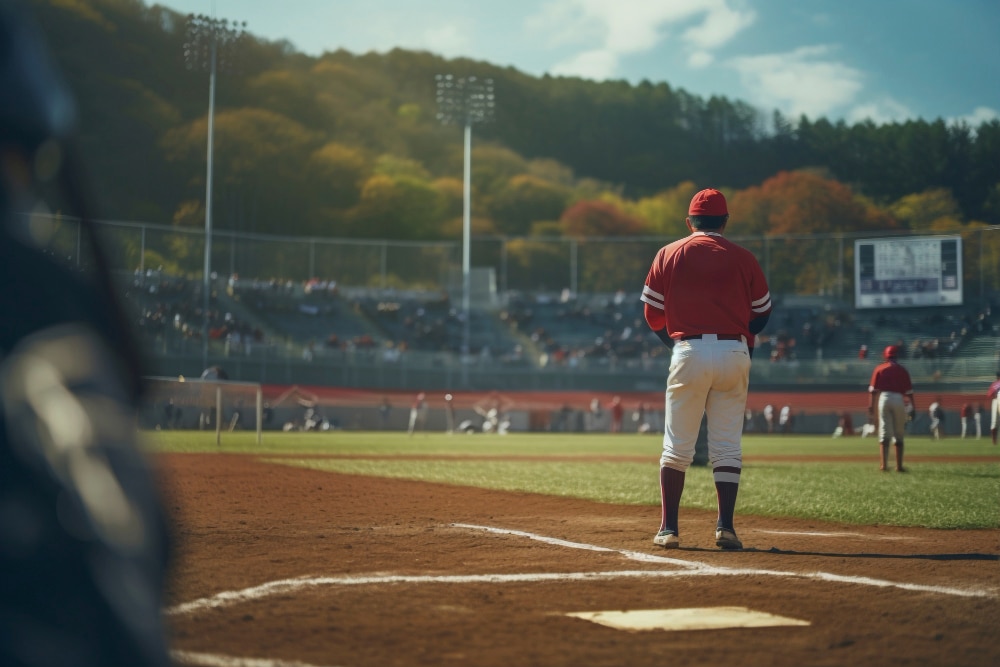
Close your eyes when Rays–Brewers starts Friday night in Milwaukee and you might swear you’re in Omaha in June. A team picked to finish last in its own division. A small-market club the experts never quite trust in October. Bunts treated like works of art. Pitchers who throw strikes and dare you to hit them. A roster full of guys other teams gave up on. And at the end of it, someone celebrates a title their franchise has never had.
The 2026 World Series isn’t the usual coastal superpower showdown. It’s the closest thing Major League Baseball has to the College World Series, and that’s the best thing that could have happened to October. (Want the real thing? Browse the college baseball programs on RallyFuel.)
No blue bloods, just programs
In college baseball, everyone knows the blue bloods: the schools with the biggest budgets, the shiniest facilities and the five-star recruits. Then every few years a program that does it the hard way crashes the party in Omaha. That’s this World Series.
The Rays rank 26th in payroll and the Brewers 19th, and their markets rank 19th and 30th. Milwaukee is literally the smallest market in the sport. Yet these were the two No. 1 seeds: Tampa Bay won 98 games and the AL East, and Milwaukee won 103 before sweeping the two-time defending champion Dodgers in the NLCS.
That’s the College World Series story in a sentence. Money helps, but the best-run programs find a way. The Rays and Brewers are arguably the two best-run organizations in baseball, and the family tree proves it: Brewers president of baseball operations Matt Arnold is one of many executives who learned the trade in Tampa Bay, like assistant coaches who leave a powerhouse program to run their own.
Small ball is back
The aluminum-bat game in Omaha has always rewarded the little things: move the runner, steal the base, make the play. These two teams play exactly that way.
- The Rays reached the World Series having hit only six home runs all postseason. Instead they run wild (Chandler Simpson is the fastest baserunner in the majors), treat the sacrifice bunt with respect, and played 54 straight innings of error-free baseball in the ALCS.
- The Brewers drew the second-most walks in baseball, had the lowest chase rate, and hit .276 with runners in scoring position, best in the majors. They win by grinding at-bats, not by waiting for the three-run homer.
Watching these two face each other will feel like looking in a mirror. That’s a college coach’s dream matchup: two teams that will beat you if you walk a guy, botch a grounder or fall asleep on the bases.
Murph Ball: a college coach in the dugout
The comparison isn’t just a metaphor. Brewers manager Pat Murphy spent more than 25 years as a college head coach, the last two decades at Notre Dame and Arizona State, before he ever managed in the majors. His players notice. Right fielder Sal Frelick, a Boston College star and 2021 first-round pick, told MLB.com’s Mike Lupica that the Brewers’ clubhouse may feel like a college atmosphere because of all those years Murphy coached on campus. His name for it: “So I guess you can call it Murph Ball.”
Frelick describes a team of self-described average Joes who love bunting, baserunning and defense. That’s the same recipe that wins regionals and super regionals every June.
Both rosters were built on campus
College baseball isn’t just the vibe of this series. It’s the foundation. By our count, 24 of the 52 players on the two rosters played college ball, from Pac-12 and ACC powers to junior colleges and an Ivy. The Rays lean on it more, with 14 former college players to Milwaukee’s 10.
| Team | Player | Pos. | College |
| Brewers | Jacob Misiorowski | SP | Crowder College (JUCO) |
| Brewers | Aaron Ashby | RP | Crowder College (JUCO) |
| Brewers | Andrew Vaughn | 1B | Cal (Golden Spikes winner) |
| Brewers | Sal Frelick | RF | Boston College |
| Brewers | Garrett Mitchell | CF | UCLA |
| Brewers | Robert Gasser | SP | Houston |
| Brewers | Joey Ortiz | SS | New Mexico State |
| Brewers | David Hamilton | 3B | Texas |
| Brewers | JoJo Romero | RP | Yavapai College (JUCO) |
| Brewers | Trevor Megill | RP | Loyola Marymount |
| Rays | Drew Rasmussen | SP | Oregon State |
| Rays | Griffin Jax | SP | Air Force |
| Rays | Ian Seymour | SP | Virginia Tech |
| Rays | Bryan Baker | RP | North Florida |
| Rays | Brody Hopkins | RP | College of Charleston |
| Rays | Cole Sulser | RP | Dartmouth |
| Rays | Nick Fortes | C | Ole Miss |
| Rays | Liam Hicks | C | Arkansas State |
| Rays | Taylor Walls | SS | Florida State |
| Rays | Richie Palacios | 2B | Towson |
| Rays | Ben Williamson | 2B | William & Mary |
| Rays | Chandler Simpson | LF | Georgia Tech |
| Rays | Cedric Mullins | CF | Campbell |
| Rays | Jonny DeLuca | RF | Oregon |
A few stories stand out. The NL’s best pitcher, Misiorowski, came out of a Missouri junior college, the same one as bullpen lefty Ashby. And the Rays’ Cole Sulser, a 25th-round pick in 2013, earned two Dartmouth degrees, in public policy and mechanical engineering. An Ivy League engineer could be wearing a World Series ring in 11 days.
Walk-ons, transfers and team dinners
Every great college team has the walk-on who becomes a star and the transfer who finds a home (you can follow those moves on RallyFuel’s transfer tracker). The Rays are built almost entirely from those stories.
- The walk-on: Cam Booser retired in 2017 after injuries kept him from getting past High-A, and went to work in construction. He resurfaced in indie ball, debuted at 32, and joined the Rays in June. Now he’s one of their top setup men.
- The transfer portal: Freddy Peralta arrived at the deadline after struggling with the Mets. The Rays told him they’d help get his confidence back. He posted a 0.75 ERA in the ALCS and won series MVP.
- The overlooked recruit: Evaluators thought Jonathan Aranda had no position. He became an All-Star. Richie Palacios, cut loose by Cleveland, hit .500 against the Guardians in the ALCS.
- The team captain: 36-year-old Nick Martinez, unsigned three days before spring training, became the clubhouse glue, hosting team dinners that regularly drew more than 20 teammates.
That’s a college locker room. Rays players keep describing a no-egos, play-for-each-other culture, the kind of thing usually said by 20-year-olds in dugouts at Charles Schwab Field.
Friday night aces and a deep bullpen
In Omaha, you win with your Friday night ace and a bullpen deep enough to survive the weekend. Both World Series teams fit that blueprint, just from opposite ends.
Tampa Bay leans on starters. Drew Rasmussen has been the best pitcher of the postseason, with a 1.29 ERA over a playoff-leading 21 innings, including eight scoreless innings against the Yankees in the ALDS opener. Behind him, Peralta and Martinez go deep enough that closer Bryan Baker and setup men Booser and Tyler Wells stay fresh.
Milwaukee leans on relievers. The Brewers’ bullpen has a 1.33 ERA this postseason, led by Trevor Megill, Aaron Ashby, Abner Uribe and DL Hall, and has helped them win six playoff games in which they trailed. Ace Jacob Misiorowski was the NL’s best pitcher in the regular season but has looked tired in October, so expect Pat Murphy to go to that bullpen early.
It’s the classic college debate: ride your ace, or trust your pen? This series might answer it.
Swagger, showmanship and a first-ever title
College baseball wears its emotion on its sleeve: bat flips, dugout dances, dogpiles. Junior Caminero brought that energy to Game 6 of the ALCS. After his two-run homer clanged off the foul pole, he took 38.7 seconds to round the bases, the longest postseason trot of the Statcast era. He finished by crossing his arms at former Ray Randy Arozarena in the stands, copying Arozarena’s famous 2020 pose. Pure Omaha.
Then there’s the stakes. One of these teams will win its first championship. The Brewers have never won one in 58 years and haven’t been to the World Series in 44. The Rays lost their only two trips, in 2008 and 2020. It’s just the second World Series between two franchises without a title in the past century, and the first since 1980.
That’s the College World Series feeling: a program that’s been knocking on the door for decades finally getting its dogpile, and a fan base that has waited a lifetime to see it.
Play ball
Some fans will grumble that Rays–Brewers lacks star power or TV ratings. They’re missing the point. This is baseball at its purest: pitching, defense, smart at-bats, speed and teams that believe in each other. The sport is heading toward a contentious labor fight over a salary cap, but for the next week and a half, two “small” teams get to remind everyone what the game looks like when it’s played the right way.
Most projections make Milwaukee the favorite. But if Omaha has taught us anything, it’s that the underdog with the hot ace and the clean glove can win any June, or October, night.
Game 1 is Friday at American Family Field. Grab your seat. It’s going to feel like June.
Fuel the next Omaha run
The Rays and Brewers prove that culture and development beat payroll. The same is true in college, where fans can now back the players they believe in directly. RallyFuel connects fans with college athletes through verified, transparent NIL deals. See how it works, brush up on the lingo in the NIL glossary, make your picks on RallyFuel Predictions, and read more on the RallyFuel NIL Blog.