
For decades, wearing a Trojan jersey meant playing strictly for school pride, but the rules changed in 2021. Today, stars like quarterback Miller Moss or basketball sensation JuJu Watkins aren’t just competing for championships; they are building business empires in the heart of Los Angeles through USC Southern California NIL deals.
Summary
USC athletes are capitalizing on Los Angeles’ powerful media and corporate ecosystem to monetize their name, image, and likeness through work-for-pay sponsorships, with the House of Victory collective providing a compliant, organized baseline of support. Individual branding and locally driven endorsements—often facilitated by agencies—create the highest earning potential. Strict adherence to NCAA rules, California’s athlete-friendly laws, and tax obligations is essential to protect eligibility and income. The LA advantage, combined with transfer portal dynamics, positions USC athletes to build enduring brands well beyond the field.
Think of a modern college athlete NIL agreement less like a professional salary and more like a sponsorship for a lifestyle YouTuber. In practice, a player posts a photo with a local beverage brand or signs autographs at a car dealership, and they receive payment for that specific service. It is a “work-for-pay” arrangement where their fame—their Name, Image, and Likeness—becomes a marketable asset.
Los Angeles serves as the ultimate backdrop for this evolution, offering access to entertainment giants that smaller college towns simply cannot match. As USC NIL deals continue to reshape the sport, these student-athletes are operating as mini-corporations, proving the game has moved far beyond the field.
Why the Los Angeles Market Advantage Creates Unmatched NIL Opportunities for Trojans
While many powerhouse football programs dominate quiet college towns where the university is the only show, USC operates in the center of the global entertainment universe. This geographic reality offers student-athletes a massive advantage: they aren’t just playing on Saturdays; they are living next door to the headquarters of the brands sponsoring them. In the world of “professional influencers,” proximity to Los Angeles means easier access to casting directors, marketing executives, and tech startups in Silicon Beach.
The sheer volume of potential partners in Southern California drives up the market value of a USC roster spot. Coach Lincoln Riley’s arrival did not just bring offensive firepower; it signaled to national advertisers that the Trojans were “primetime” again. When a team is constantly in the national spotlight, the monetary value of every social media post made by its players skyrockets compared to schools with less visibility.
Three distinct factors separate the Los Angeles market advantages for college athletes from the rest of the field:
- Media Proximity: Direct access to the second-largest media market in the country ensures maximum exposure.
- Fortune 500 Concentration: A higher density of corporate headquarters provides more diverse sponsorship options.
- Entertainment Synergy: Unique crossover opportunities exist between sports, film, and music industries.
However, having these opportunities is one thing; managing them compliantly is another. To organize this flood of potential deals, USC relies on a sophisticated engine known as the House of Victory.
Decoding the House of Victory: How USC’s Elite Collective Fuels Student-Athlete Success
To channel the enthusiasm of the fan base into compliant support, USC utilizes the House of Victory. This nonprofit collective functions as a modernized, regulated community pot. Instead of secret handshakes or under-the-table exchanges, fans and alumni openly pool their resources to demonstrate exactly how NIL collectives support Trojan sports in a transparent and effective way. This centralized funding allows the collective to sign athletes to legitimate contracts for specific services, such as charity appearances or autograph sessions, rather than simply handing out money for nothing.
Managing these funds requires strict adherence to NCAA rules to keep players eligible. House of Victory acts as the bridge between the Trojan family business network and the locker room, professionalizing the process through four core functions:
- Donor Pooling: Aggregating monthly fan memberships and large gifts into a usable fund.
- Compliant Contract Facilitation: Ensuring every deal involves specific work for pay to satisfy legal requirements.
- Content Creation Support: Providing resources for athletes to fulfill their digital obligations.
- Brand Matching: Connecting specific players with alumni-owned businesses for campaigns.
Membership offers exclusive access to player content and events, effectively democratizing the booster process so everyday supporters can impact the roster. These House of Victory collective membership benefits provide a critical financial baseline for the team’s retention efforts. With this stable foundation secured by the collective, athletes can confidently pivot toward the “wild west” of individual commercial sponsorship.
Securing the Bag: A Step-by-Step Guide to Personal Branding and Local Endorsements in SoCal
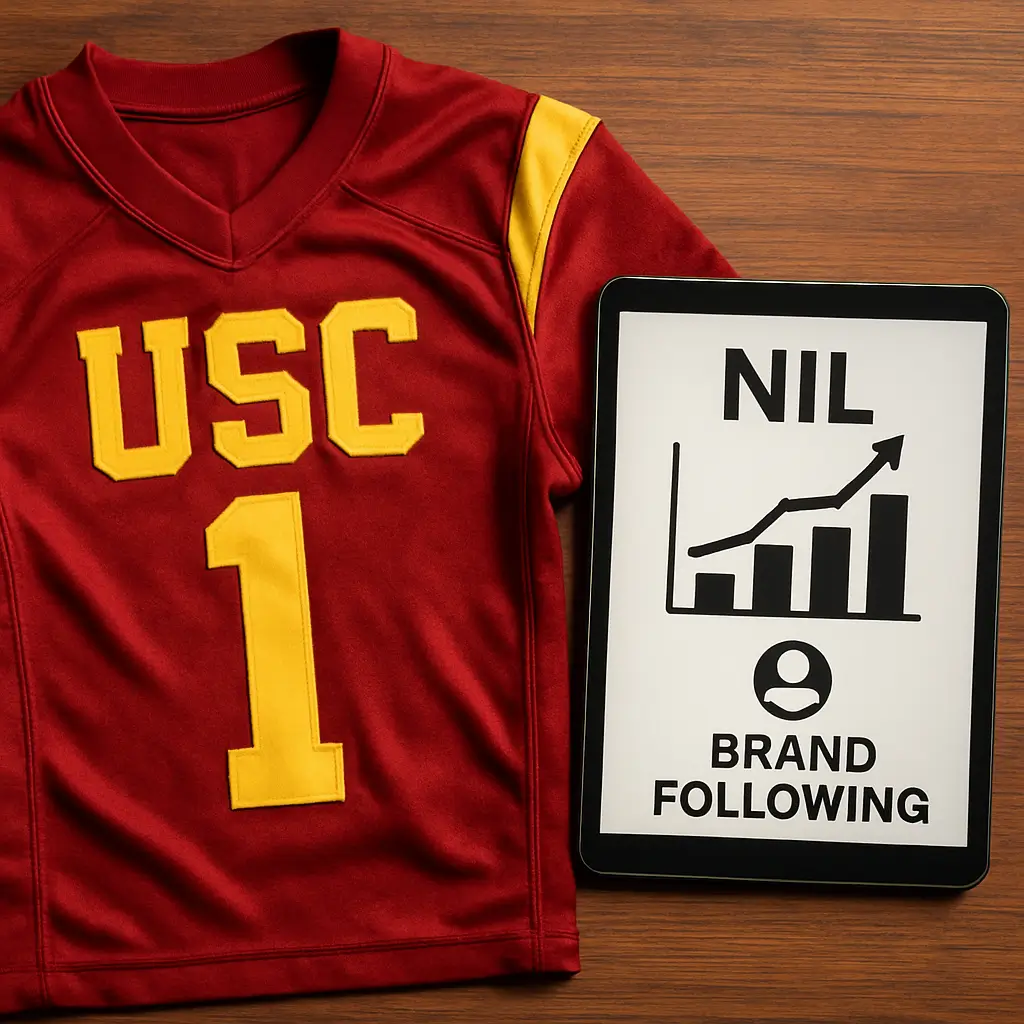
While the collective provides a financial baseline, the real ceiling for earnings is determined by individual hustle in the entertainment capital of the world. Southern California offers a unique ecosystem where building a personal brand in the LA market is just as important as performance on the field. This opportunity isn’t limited to football; stars like women’s basketball sensation JuJu Watkins prove that charismatic athletes in any sport can command massive attention and value by operating like professional influencers.
Local businesses, from car dealerships to tech startups, view these students as powerful partners who can drive sales through authentic connections. The formula for a successful endorsement is straightforward: a recognizable athlete partners with a brand to perform a specific action—usually a social media post or an in-store appearance—in exchange for a fee. This transaction often relies on specialized marketing agency roles in the Southern California NIL landscape, which help connect the right student with the right product to maximize reach.
For a student-athlete looking to capitalize on this gold rush, the process typically follows three distinct phases:
- Profile Optimization: Cleaning up social media accounts to showcase personality and audience engagement metrics.
- Local Outreach: Networking within the alumni business community to discover how to secure endorsements as a USC athlete.
- Contract Review: Running potential deals through the university’s disclosure system to ensure validity.
Success in this arena requires more than just a large follower count; it demands professional vigilance. Securing a lucrative contract is a major victory, but it immediately introduces a complex web of regulations that can threaten both a player’s roster spot and their bank account if managed poorly.
Staying in the Game: Navigating NCAA Compliance, California Laws, and Tax Obligations
Earning six figures is thrilling, but it ultimately means nothing if a player gets benched for breaking the rules. To remain eligible, athletes must transparently disclose every deal to the university administration to prove the work is genuine. Successfully navigating NCAA compliance for Trojan sponsorships ensures that a paid social media post is a legitimate marketing exchange, not a disguised bribe for playing well or a prohibited “pay-for-play” performance bonus.
Geography plays a crucial role in these protections, as Los Angeles athletes benefit from some of the nation’s most progressive legislation. The Golden State pioneered the movement to stop schools from punishing players who monetize their fame. California state laws for student athlete compensation explicitly forbid the university from interfering with these business rights, allowing students to operate freely as independent contractors rather than restricted amateurs.
This independence brings a serious financial wake-up call, as the IRS views these endorsements as self-employment earnings rather than gifts. Since companies rarely withhold money from these payments, understanding tax obligations for USC student athlete income is critical to avoid a massive bill in April. Handling this business maturity is the final step before leveraging success into the transfer portal and beyond.
The Future of the Trojan Empire: Leveraging the Transfer Portal and the Global Brand
Watching the Trojans now means witnessing a business revolution. By mastering strict University of Southern California student athlete compliance requirements, the school protects players while maximizing their market value. This stability is crucial, as the impact of the transfer portal on USC endorsement deals turns recruiting into a search for long-term brand partners rather than just temporary talent.
As you follow the next season, look beyond the scoreboard. The real story is how the “LA Advantage” empowers young stars to build futures that last long after the final whistle. In the heart of Hollywood, every athlete has the potential to be a headliner.
Learn More About the NIL Landscape
Name, Image, and Likeness plays an increasing role in college sports, and understanding how it works often requires more than individual articles or news updates.
RallyFuel is a platform focused on NIL-related topics across college athletics. It brings together information about athletes, NIL activity, and the broader structure behind modern college sports, helping readers explore the topic in more depth.
Q&A
Question: What are USC NIL deals, and how are they different from a salary? Short answer: NIL deals are work-for-pay sponsorships where athletes get compensated for specific services—like social media posts, autograph signings, or in-store appearances—because of their name, image, and likeness. They’re closer to influencer partnerships than a guaranteed salary, and they must not be “pay-for-play” or performance bonuses.
Question: Why does being in Los Angeles give USC athletes a unique NIL advantage? Short answer: USC athletes operate in the nation’s second-largest media market with direct access to decision-makers across entertainment, tech, and major brands. The LA edge comes from media proximity, a high concentration of Fortune 500 companies, and sports–entertainment synergy—amplified by USC’s national visibility—so each post or appearance can command higher value than in smaller college towns.
Question: What is the House of Victory collective, and how does it help athletes? Short answer: House of Victory is USC’s nonprofit NIL collective that pools donor funds and turns them into compliant, transparent contracts for real services (e.g., charity events, autographs). It professionalizes the process through donor pooling, compliant contract facilitation, content support, and brand matching—creating a stable financial baseline and membership benefits for fans while protecting athlete eligibility.
Question: How can a USC athlete start landing local endorsements in Southern California? Short answer: Treat NIL like a professional influencer business. The typical path is: 1) Profile optimization—clean up social accounts and highlight personality and engagement; 2) Local outreach—network with alumni-owned businesses and LA brands, often with help from specialized marketing agencies; 3) Contract review—run every offer through USC’s disclosure system to ensure it’s valid, compliant, and deliverable.
Question: What rules and financial responsibilities should athletes keep in mind to stay eligible? Short answer: Every deal must be transparently disclosed to USC and tied to real work to avoid prohibited “pay-for-play.” California law protects athletes’ right to monetize their NIL, but they operate as independent contractors, so payments are typically made without withholding and are taxed as self-employment income. Managing compliance and taxes safeguards eligibility and sets athletes up to leverage their success—at USC, in the transfer portal, and beyond.