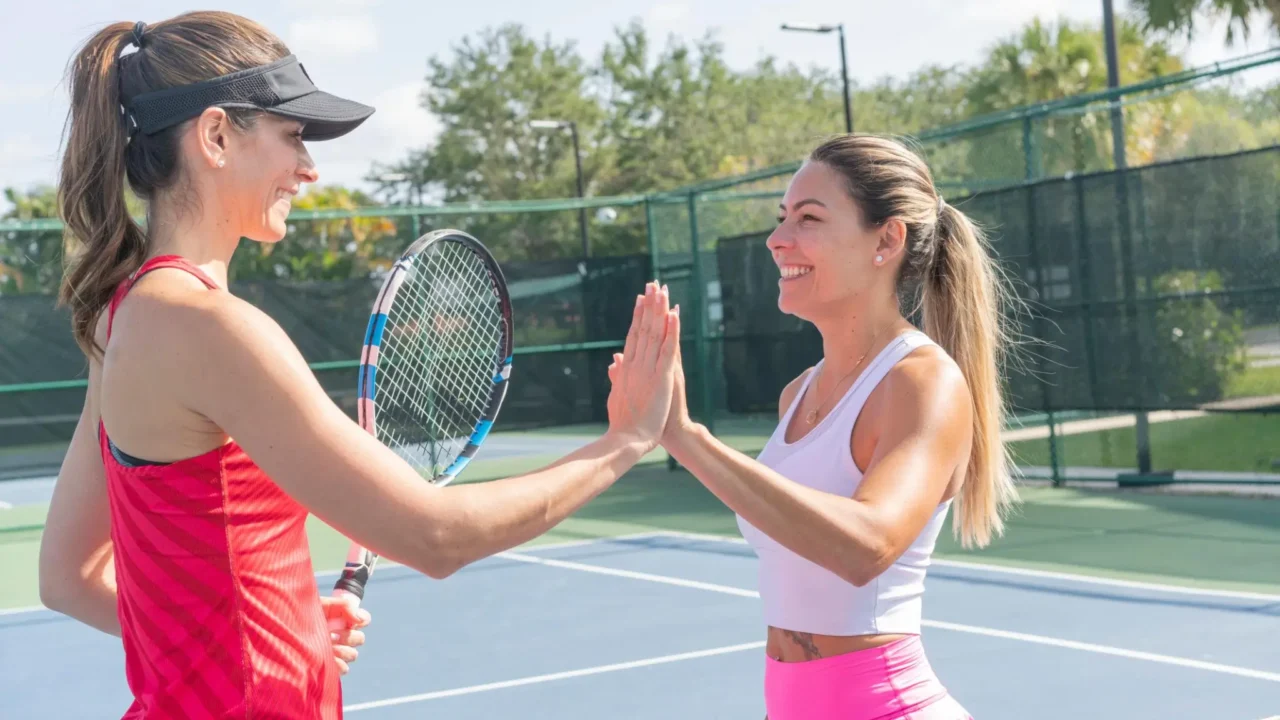
When Daria Smetannikov stepped onto Court 6 at the Dan Magill Tennis Complex in Athens, Georgia on Sunday night, she was carrying more than just her own match. The Texas A&M women’s tennis team needed one more point to win the 2026 NCAA Championship. The Aggies were up 3-1 against No. 2 Auburn. Smetannikov had been down. The score had reached deuce.
“I was just trying my best to just stay in the moment,” the senior told KBTX after the match. “And then I won the point and I just, I blacked out.”
When she came to, she was the national champion.
The No. 4 Aggies defeated No. 2 Auburn 4-1 on May 17, 2026 to claim Texas A&M’s second NCAA women’s tennis championship in three seasons — and a redemption arc that had been building since the 2025 final, when the Aggies fell 4-0 to Georgia in the title match. This time, A&M ran through Georgia 4-3 in the semifinals before clinching against Auburn in the final.
It’s a championship moment that captures everything the 2026 college athletics landscape has become: elite competition, dramatic finishes, transfer-portal pressure, and a sophisticated NIL ecosystem that operates underneath every program at this level. Here’s how Texas A&M built that ecosystem — and what it means for Aggie athletes across all 20-plus varsity sports.
The Championship Run
The Aggies’ path to the title was a gauntlet of top-tier programs:
- First Round: Texas A&M 4, Quinnipiac 0
- Second Round: Texas A&M 4, Baylor 1
- Super Regionals: Texas A&M 5, No. 13 USC 1
- Quarterfinals: Texas A&M 4, No. 5 North Carolina 3
- Semifinals: Texas A&M 4, No. 1 Georgia 3
- Championship: Texas A&M 4, No. 2 Auburn 1
Three of those six wins came against top-five seeds, and the semifinal victory over top-seeded Georgia carried particular weight given the 2025 final loss. Mark Weaver — now in his 11th season as head coach and a 26-year veteran of Aggie tennis — said the title run was fueled by what came before it.
“That one hurt,” Weaver told FOX 44, referring to the 2025 final. “I think that motivates you to come back and try even harder. After losing last year, it definitely feels a lot better to win.”
Weaver, an Aggie alum (Class of ’94) who played for the men’s tennis program before coaching, is a three-time SEC Coach of the Year (2022, 2023, 2025). He’s coached the program through 24 consecutive NCAA Tournament appearances, with associate head coach James Wilson — hired May 31, 2024 — joining him for the 2024 championship and now this 2026 run.
The 2024 title was the program’s first; 2026 is its second. The Aggies are now one of just five NCAA-sanctioned Texas A&M programs to claim multiple national championships — joining a rarefied club that includes Aggie equestrian, women’s basketball, men’s golf, and women’s track and field.
What Mark Weaver’s Transfer Portal Comments Reveal About 2026 College Athletics
In the same KBTX interview where he celebrated the title, Weaver said something that perfectly captures where college sports actually sits in May 2026:
“The transfer portal [opened] May 5th. We’ve been almost too occupied with that more than our team. It’s a rat race going out there. We’re trying to really fill our last three spots to help us get in this situation again. So fingers crossed, we got a pretty big call coming up here in just a few minutes. The job never ends.”
That’s a national-championship-winning coach saying he’s spending more time on the portal than on celebrating the title. It’s an unfiltered look at modern coaching — and it’s the exact reason fan-powered NIL platforms like RallyFuel exist. When portal decisions are happening in real time and rosters can shift dramatically within weeks, fans who want to back their favorite athletes need protection against transfers and program changes. RallyFuel’s Conditional NIL Engagement Right model addresses exactly that: if an athlete transfers before conditions are met, fans are automatically refunded to their original payment method.
For Weaver’s Aggies, that’s not theoretical. The transfer portal opens at the end of every season. National champions get poached. Roster construction is a year-round battle. The infrastructure that supports athletes — institutional, collective, and platform-based — has to operate accordingly. Fans can browse Aggie women’s tennis athletes on RallyFuel to back specific Aggies through this transition cycle.
The Texas NIL Framework
Texas operates one of the country’s most comprehensive state-level NIL frameworks, built through three statutes: SB 1385 (2021) established NIL rights and required financial literacy education; HB 2804 (2023) lets Texas schools assist athletes with deals and provides a safe harbor from NCAA sanctions; and HB 126 (2025) authorized direct institutional payments up to roughly $20.5 million per school annually. Together, these three bills give Texas A&M athletes one of the strongest NIL legal environments in the country. For a deeper breakdown, see RallyFuel’s full guide to Texas NIL laws.
The International Student-Athlete Question in Women’s Tennis
Women’s college tennis has a higher concentration of international student-athletes than almost any other Division I sport. This creates a meaningful NIL wrinkle that doesn’t apply to football or basketball at the same scale.
Earning NIL income on certain U.S. visa categories — particularly F-1 student visas — can create complications. International student-athletes have to navigate visa restrictions on income that domestic athletes don’t face. Some categories of NIL deals may be permissible; others may not. The U.S. State Department and individual visa terms govern this, and athletes are responsible for compliance.
For Texas A&M’s tennis program, where international athletes have been part of multiple title runs, this means compliance support is meaningful infrastructure — not paperwork. The university’s Office of International Programs works with the athletics compliance office to advise international athletes on what they can and can’t accept.
For fans who want to support international Aggie athletes, the RallyFuel CNER (Conditional NIL Engagement Right) framework operates the same way regardless of athlete nationality. Fans purchase the conditional right; if conditions are met and the athlete is eligible to accept the NIL Agreement, the agreement is offered. If the athlete isn’t able to participate for any reason — including visa-related constraints — fans are automatically refunded to their original payment method.
The 2026 National Regulatory Layer
A lot of older NIL coverage is out of date. Here’s what’s actually current.
The House v. NCAA settlement took effect July 1, 2025. It allows schools to share revenue directly with athletes — up to roughly $20.5 million per school in 2025-26, rising annually through 2035. Texas A&M, as referenced above, has committed to funding the full amount.
The College Sports Commission now oversees compliance. Third-party NIL deals above $600 must be reported through NIL Go, a clearinghouse that checks whether deals reflect fair market value rather than disguised pay-for-play.
April 2026 executive order: “Urgent National Action to Save College Sports” tied federal funding eligibility to NIL compliance, raising the stakes further. Deals that don’t pass fair-market-value review are at risk of being voided.
Trev Alberts served on the implementation committee for the College Sports Commission, giving Texas A&M direct visibility into how the new enforcement framework is being designed.
What Texas A&M’s Official NIL Policy Requires
Texas A&M’s published NIL Policy (last updated February 5, 2024) lays out specific operational requirements that every Aggie athlete must follow. The policy carries the weight of Texas state law plus institutional enforcement, and it’s worth understanding for athletes, fans, and businesses alike.
Prohibited endorsement categories. Per Texas A&M policy, athletes cannot engage in NIL activity that promotes or endorses: alcohol, tobacco products (including e-cigarettes and any other nicotine delivery device), anabolic steroids, sports betting, casino gambling, illegal firearms, and sexually oriented businesses. These are statutory prohibitions, not gray areas. If a proposed NIL agreement conflicts with these prohibitions, the student-athlete has 10 days from the date of disclosure to resolve the conflict.
Recruiting inducements are explicitly illegal under Texas law. The policy is clear: Texas law prohibits entering into any NIL arrangement with a prospective student-athlete prior to enrollment, and prohibits using future NIL compensation as a recruiting inducement. Communication between an NIL collective or other boosters and a prospective student-athlete (or their family/associates) before enrollment is prohibited. This is why fan-powered NIL platforms — including RallyFuel — operate on a model that supports currently enrolled student-athletes only, with conditional protection that refunds fans if conditions aren’t met.
Institutional property requires separate licensing. If an athlete wants to use Texas A&M facilities, uniforms, the 12th Man trademark, Kyle Field imagery, or any other institutional IP in an NIL deal, that’s a separate licensing transaction with the Office of Brand Development. The university must be compensated at market rates. A business that wants Aggie IP in the ad needs that licensing handled separately from the athlete contract — a co-branding arrangement.
No pay-for-play, performance, or enrollment. NIL compensation cannot be in exchange for athletic performance, achievement, roster membership, or attending Texas A&M. The policy explicitly states a football player cannot be paid to promote the bowl game in which he’ll participate. This is also why RallyFuel structures its model around Conditional NIL Engagement Rights rather than performance-tied compensation.
Disclosure before any contract is signed. Athletes must disclose NIL activities — including verbal agreements — to the Athletics Compliance Office before entering the contract, using CompassNIL or the AMPLIFY Local Exchange.
International student-athletes face explicit warnings. The policy specifically cautions that F-1 visa holders engaging in NIL work in the USA may jeopardize their visa status. Pre-deal consultation with International Student Services and an immigration attorney is recommended.
NCAA Bylaw 19.7.3 presumption. Notably, the policy reminds athletes and boosters that “the infractions process (including interpretive requests) shall presume a violation occurred if circumstantial information suggests that one or more parties engaged in impermissible conduct.” This is a much higher enforcement bar than older NIL guidance — proving compliance falls on the involved parties.
AI software endorsements are explicitly permitted. In a notable modernization, the policy specifies that NIL deals involving AI tools (ChatGPT, Caktus AI, QuillBot, etc.) are permissible under both Texas law and NCAA rules.
The compliance infrastructure is administered by Jamie Wood, Texas A&M’s Assistant Athletics Director for NIL, in partnership with the Athletics Compliance Office.
What Champions Earn: A Realistic Look at Tennis NIL
Women’s tennis NIL doesn’t operate at the football or basketball tier. According to industry NIL transaction data, 68% of all college NIL deals are worth under $1,000, and most deal value concentrates at the top tier — typically football and basketball stars at Power Conference programs.
But that doesn’t mean tennis NIL is small. National champions like Daria Smetannikov, and her teammates who clinched key points throughout the tournament run, have several factors working in their favor:
Strong content opportunities. Tennis is visually engaging, technically skilled, and produces strong social media content. A senior on a national-championship team has a built-in narrative arc that brands respond to.
Olympic-pathway visibility. With LA28 approaching, brands are beginning to invest in athletes who could be on Team USA or international rosters in 2028. Multiple Aggie tennis alumni have gone professional after college, and that pathway gives current athletes additional brand-development runway. For context on how Texas schools are positioning their Olympic-sport athletes — across tennis, golf, swimming, track and field, and beyond — see RallyFuel’s analysis of Texas Olympic sports NIL opportunities.
Regional and local brand demand. The Bryan-College Station market plus the broader Houston metropolitan area gives Aggie athletes a large pool of potential local sponsors. Houston-based businesses with state-wide reach often want regional college athlete partnerships, and Texas A&M’s reach into Houston is substantial.
The 12th Man network. Texas A&M has one of the largest and most engaged alumni networks in college sports — the Aggie network is often cited as a competitive advantage in NIL specifically because the donor base is unusually loyal and engaged.
For Fans: Multiple Ways to Support Aggie Athletes
Modern NIL operates across multiple channels. Aggie fans have several options:
Connect with the Aggie collective. Texas A&M’s official NIL collective coordinates broader funding programs for student-athletes across multiple sports.
Work with athletes directly through institutional NIL channels. Texas A&M operates institutional NIL programs that connect local businesses and individuals with specific student-athletes for sponsorship and partnership opportunities.
Fuel athletes directly through RallyFuel. For fans who want to back specific athletes by name — a tennis player, a softball pitcher, a track athlete, a beach volleyball duo — the RallyFuel platform’s Texas A&M women’s tennis page lets you do it with conditional protection built in. When you purchase Fan Fuel, you’re purchasing a Conditional NIL Engagement Right. If conditions are met, an NIL Agreement is offered to the athlete. If conditions aren’t met (the athlete transfers, becomes ineligible, or the conditions otherwise fail), you receive an automatic refund to your original payment method.
A note on what fueling is and isn’t: Fan support through RallyFuel is voluntary and conditional. Fuel purchases are not charitable donations. Purchasing Fan Fuel does not guarantee athletic performance, playing time, or any specific outcome, and RallyFuel is not a guarantor that any athlete will accept an NIL Agreement.
For Athletes: What Aggie Champions Need to Know
The Aggie NIL infrastructure is built to make compliance easier, but the fundamentals still apply to every athlete:
Disclose every deal — through CompassNIL or AMPLIFY. Texas A&M’s official NIL policy requires student-athletes to disclose any NIL activity to the Athletics Compliance Office before entering into the contract (written or verbal). Disclosures are submitted through CompassNIL or the AMPLIFY Local Exchange. Disclosures must include the parties involved, compensation details, and a copy of any proposed agreement. The Assistant Athletics Director for NIL, Jamie Wood, oversees this process. Deals of $600 or more must also be reported through NIL Go within applicable timelines.
Plan for taxes from day one. Texas has no state income tax, but federal income tax and self-employment tax (Social Security and Medicare) still apply. You’ll receive 1099-NEC forms for payments of $600 or more. Set aside 25-30% of every check until you’ve spoken to a CPA.
Verify your agent. Texas law requires athlete agents to register with the Secretary of State under the Texas Athlete Agent Act. Contracts with unregistered agents may be unenforceable.
International athletes: check visa status before signing anything. Texas A&M’s official NIL policy explicitly warns that “an F1-visa holding student-athlete who engages in NIL work while in the USA may jeopardize his/her visa and, therefore, his/her ability to remain in the USA.” Before signing any NIL agreement, international student-athletes should consult both Athletics Compliance and Texas A&M International Student Services (iss.tamu.edu) — and the policy recommends consulting an immigration attorney as well.
Build authentic content. Engagement rate matters more than raw follower count. A national-championship moment is a built-in content asset; capitalize on it with thoughtful posting that brands and fans will both respond to.
Document deliverables. Every NIL contract should specify deliverables, platforms, timelines, compensation, and termination terms.
The Bottom Line
The 2026 NCAA Women’s Tennis Championship is more than a trophy. It’s a snapshot of where college sports has arrived: elite competition fueled by sophisticated institutional infrastructure, transfer portal pressure that doesn’t stop for celebrations, and an NIL ecosystem that operates across multiple channels simultaneously.
For Texas A&M, the championship validates the program Mark Weaver has built over 11 seasons as head coach and 26 seasons in Aggieland — and it puts the Aggies among the elite Olympic-sport programs in the country. For Daria Smetannikov and her teammates, it’s a career-defining moment that becomes the foundation of future brand-building opportunities.
For the broader Aggie athletic community — across 20-plus varsity sports — the championship is a reminder that NIL support extends well beyond football and basketball. Institutional NIL programs, collective funding, and fan-powered platforms like RallyFuel all exist to give Aggie athletes across every sport access to the NIL economy.
Mark Weaver said it himself: “The job never ends.” The same applies to the work of building NIL support for the athletes who make championships like this possible. Every transfer window, every roster reset, every offseason brings new athletes who need fan support, brand partnerships, and infrastructure to navigate their NIL journeys.
For fans who want to back the next Daria Smetannikov, the channels are open and the infrastructure is in place. Browse Aggie women’s tennis athletes on the RallyFuel Texas A&M women’s tennis page to fuel specific players with conditional protection. Follow RallyFuel TV on YouTube for athlete features and NIL coverage. Get the RallyFuel app to fuel athletes directly from your phone.
The 12th Man has always been Texas A&M’s defining identity. In the 2026 NIL landscape, that identity now extends into how fans support athletes year-round — across every season, every sport, and every championship moment yet to come.
Common Questions
Who won the 2026 NCAA Women’s Tennis Championship? Texas A&M defeated Auburn 4-1 on May 17, 2026 at the Dan Magill Tennis Complex in Athens, Georgia. It was the program’s second national title in three seasons (also winning in 2024).
Who clinched the championship point for Texas A&M? Senior Daria Smetannikov clinched the championship point at No. 6 singles in a tense three-set match.
Who is Texas A&M’s women’s tennis head coach? Mark Weaver, in his 11th season as head coach and 26th season at Texas A&M overall. He’s a three-time SEC Coach of the Year (2022, 2023, 2025).
Who is Texas A&M’s Athletic Director? Trev Alberts, hired March 13, 2024 from Nebraska. He’s a College Football Hall of Famer and serves on the implementation committee for the College Sports Commission.
How does RallyFuel work for Aggie fans? RallyFuel is a fan-powered NIL platform where fans back specific athletes through Conditional NIL Engagement Rights. When you purchase Fan Fuel, your payment is held by a licensed payment processor until conditions are met. If they are, an NIL Agreement may be offered to the athlete and approximately 90% of contributed dollars reach the athlete. If conditions aren’t met, you receive an automatic refund.
How do international student-athletes navigate NIL? International athletes on F-1 student visas face visa-related restrictions on certain NIL income. Texas A&M’s compliance office and Office of International Programs work together to advise international athletes on what’s permissible under their specific visa terms.