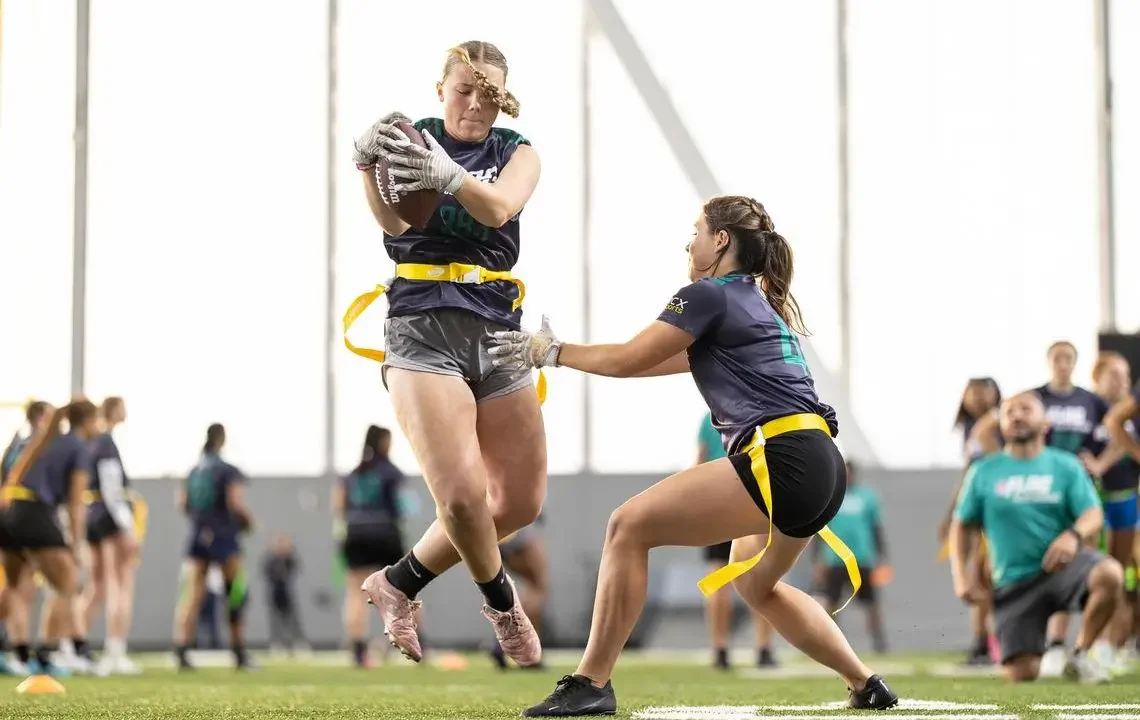
The future of college sports is losing the pads, but keeping the blazing speed. For decades, flag football was largely seen as a physical education staple or a casual weekend hobby. That narrative is rapidly changing. With the Big South Conference sponsoring women’s flag football starting in 2027-28, the sport is officially stepping under the stadium lights — taking a beloved recreational activity and elevating it to the highest level of collegiate competition.
Summary
The Big South Conference will sponsor women’s flag football beginning in 2027-28, elevating the fast-growing sport to varsity status with university backing, scholarships, and a path to a conference title. This move aligns with national and global momentum — including rapid high school adoption and flag football’s inclusion in the 2028 Los Angeles Olympics — while expanding opportunities under Title IX. A phased rollout brings coaches and scholarships in 2025, exhibitions in 2026, and the inaugural season in 2027-28.
Mark Your Calendars: The Official Countdown to the 2027-28 Kickoff
Building a college sports team from scratch requires more than simply buying flags and painting field lines. Varsity flag football program development is a massive undertaking that takes years of planning. Administrators must secure funding, arrange facilities, and build support systems for a completely new group of student-athletes.
The journey to the opening kickoff will unfold in distinct stages:
- 2025: Schools hire coaching staffs and offer the first official athletic scholarships
- 2026: Newly formed teams play exhibition games, testing playbooks and finalizing rosters
- 2027-28: The first official season launches, culminating in the first-ever conference championship
Current high school sophomores stand to benefit the most from this perfectly timed schedule.
Varsity vs. Club: Why Official Sponsorship Changes Everything
Earning varsity status through official conference sponsorship elevates a sport from a student-run hobby to a university-backed priority. These athletes are no longer running an extracurricular club — they are recognized as primary representatives of their universities, chasing official championships just like the basketball team.
The tangible benefits include:
- University-funded travel and high-end athletic equipment
- Dedicated locker rooms and facilities
- Access to strength coaches and full-time sports medicine staff
- Athletic scholarships letting athletes focus entirely on performance and academics
Which Schools are Leading the Charge?
The inaugural lineup of Big South Conference member schools for flag football features:
Since the sport is still emerging at the college level, the league is also welcoming affiliate members — colleges from outside the Big South that can officially join the conference just for flag football. Adding these guest programs ensures a full, competitive schedule and gives female athletes from other geographic areas a chance to compete for a legitimate title.
👉 Follow Big South athletics on RallyFuel — rallyfuel.com/conference/big-south
From PE Class to the Olympics: Why Flag Football is Growing Fast
What used to be a casual gym class activity is now a highly competitive athletic pipeline. The growth of high school flag football has exploded across the country, driven by a low barrier to entry — players don’t need expensive helmets or heavy shoulder pads to compete.
Looking beyond local fields, the International Olympic Committee announced that women’s flag football will officially debut at the 2028 Olympic Games in Los Angeles. This global endorsement elevates the game from a regional pastime to an international pursuit, giving young players a legitimate path to gold medals.
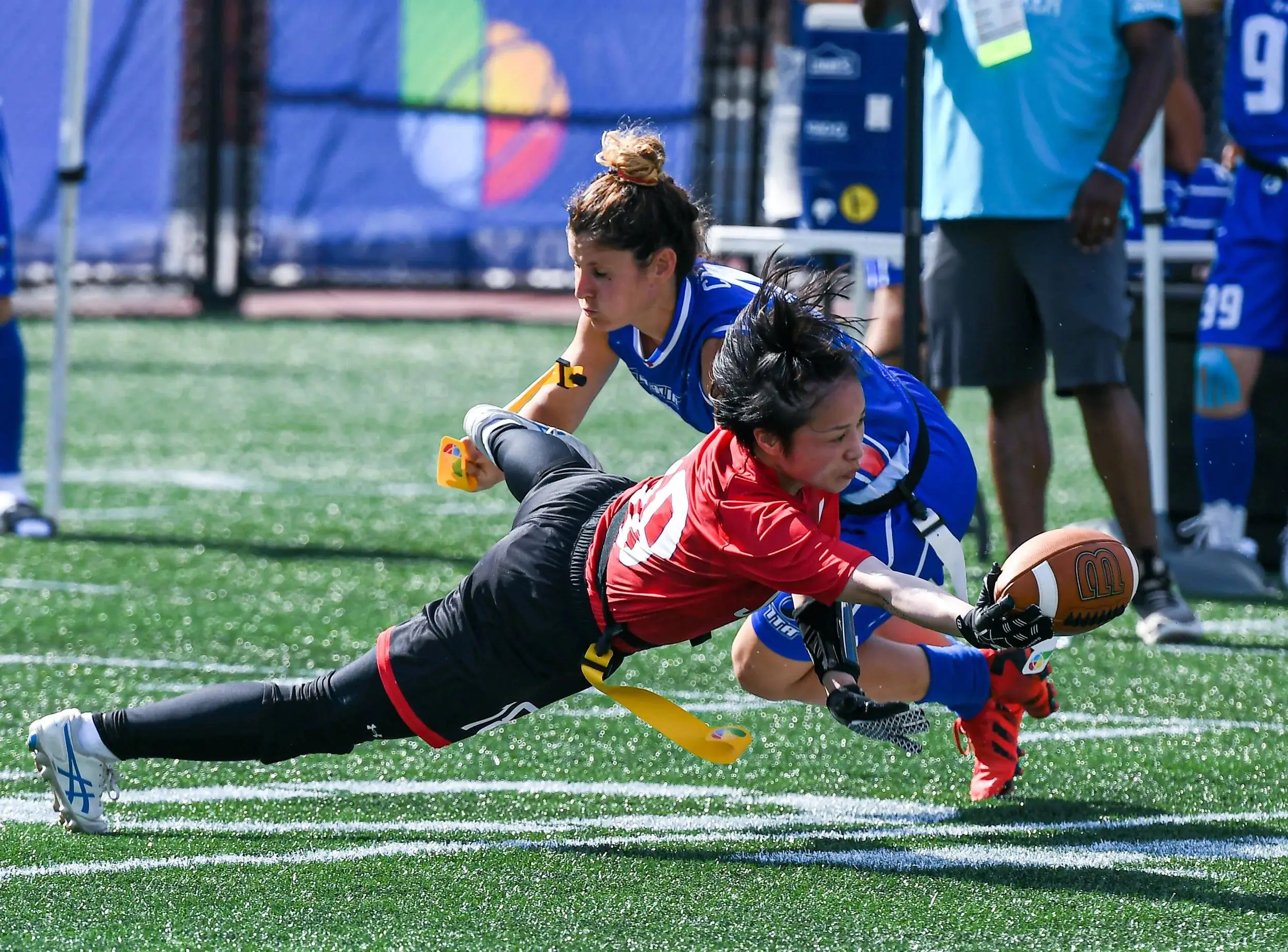
The Emerging Sport Ladder: How Flag Football is Climbing to NCAA Status
While smaller colleges have already paved the way through NAIA competition, the larger NCAA is building momentum through its emerging sports designation — a trial status that helps new sports prove they have enough national interest to thrive.
The ultimate goal is 40. For the NCAA to officially fund and host a fully sanctioned national championship, at least 40 member schools must sponsor the sport at the varsity level. Universities across the country are racing to hit that milestone, and when a Division I organization like the Big South steps in, it creates a major tipping point.
No Helmets, High Speed: 5 Key Rules That Make Flag Football Unique
Flag football feels like watching a track meet unfold on a gridiron. Teams compete on a condensed 80-by-40-yard surface that prioritizes agility over brute force. The fast-paced 7-on-7 format removes heavy linemen, giving receivers massive open space.
Five major differences from tackle football:
- Zero Padding: Athletes wear standard athletic uniforms and flag belts — no intentional collisions
- No-Run Zones: Five yards before end zones and first-down markers, offenses cannot run the ball
- No Blocking: Players rely on pure speed and route-running to advance downfield
- Simplified First Downs: Teams earn new downs by crossing fixed 20-yard line markers
- The Tackle: Plays end the moment a defender pulls the ball carrier’s flag
Scoring delivers the familiar thrill of six points for a touchdown, with post-score conversions from the five-yard line (one point) or ten-yard line (two points). Games typically wrap up in about an hour.
How to Earn Your Jersey: The Recruiting Path for High School Girls
For high school athletes eyeing the Fall 2027 kickoff, recruiting starts now. Big South coaches will begin scouting over the next year, looking for pioneers to build inaugural programs.
Scouts are heavily targeting multi-sport athletes. Lateral quickness from basketball, field vision from soccer, and explosive speed from track all translate directly to the 7-on-7 format. To get on a coach’s radar, prospects should:
- Build a highlight reel featuring sharp route-running, defensive flag-pulls, and verified sprint times
- Join local high school teams or community leagues to gather game film
- Maintain a competitive GPA to meet university admission and eligibility requirements
Each varsity program can offer up to 25 scholarship opportunities, using equivalency to divide funds across a larger group of players.
The Title IX Impact: More Jerseys, More Opportunities
Under Title IX, universities must constantly balance athletic offerings for male and female students. Since men’s tackle football rosters easily carry over 100 players, athletic departments need to create equal roster spots for women. Flag football is emerging as the perfect solution to achieve this balance.
When schools achieve Title IX compliance through new sports like flag football, they automatically stabilize the funding and status of all existing varsity programs — a win-win for entire athletic departments.
The NFL Connection: Professional Support Fueling Growth
The NFL is actively driving the sport’s national expansion through promotional backing and dedicated grant programs that help Big South schools cover startup costs for equipment, travel, and coaching staff. Beyond the turf, this partnership opens professional doors — players and student-managers gain access to internships, sports management networking events, and front-office career pipelines tied directly to the professional league.
What to Expect at the Stadium: A Fan’s Guide to 2027
When the inaugural season kicks off, local families will experience an entirely new community tradition. Big South schools are designing these events with approachability in mind:
- Vibrant tailgating zones for families
- Local food trucks and interactive youth clinics
- Intimate venues where every sprint and touchdown pass feels immediate
- Games wrapping up in about an hour with a running clock
The Road Beyond Graduation: Professional Opportunities for Flag Football Stars
Emerging professional leagues are rapidly organizing to capture the sport’s momentum, offering paid contracts and turning a former recreational hobby into a legitimate career. For elite competitors, the Big South will serve as a direct path to competitive leagues on the international stage — and with flag football joining the Olympic lineup in 2028, these pioneers will have a real opportunity to chase gold medals.
Even when playing days conclude, this first generation of varsity athletes will find open doors in coaching, as high schools are launching teams at record speeds and desperately need experienced leaders.
Starting Today: A 3-Year Roadmap for Future Big South Players
Current middle and high school athletes have a unique window to prepare. Over the next three years:
- Build a Stats Profile: Join local teams or community leagues to gather game film and record verifiable statistics
- Embrace Cross-Training: Compete in complementary sports to hone agility, conditioning, and competitive instincts
- Prioritize Academics: Maintain a competitive GPA to meet university admission and eligibility requirements
Learn More About the NIL Landscape
Name, Image, and Likeness plays an increasing role in college sports, and understanding how it works often requires more than individual articles or news updates.
RallyFuel is a platform focused on NIL-related topics across college athletics. It brings together information about athletes, NIL activity, and the broader structure behind modern college sports, helping readers explore the topic in more depth.
Q&A
When does Big South women’s flag football officially start? The launch unfolds in three stages: 2025 brings hired coaching staffs and the first athletic scholarships; 2026 features exhibition games; and 2027-28 marks the inaugural fully sanctioned season culminating in the first conference championship.
What does varsity status change compared to a student-run club? Varsity status brings institutional funding for travel, equipment, and facilities, plus access to strength coaches and sports medicine staff. Athletes can receive athletic scholarships and compete on standardized schedules for official championships.
Which schools are in the inaugural Big South lineup? Charleston Southern University, High Point University, Presbyterian College, and Winthrop University form the initial core. Affiliate members from outside the conference will also join specifically for flag football.
How is flag football different from tackle football? Games are 7-on-7 on an 80-by-40-yard field with no padding, no blocking, no-run zones near end zones, and first downs earned by crossing fixed 20-yard lines. A play ends when a defender pulls the ball carrier’s flag. Games typically wrap up in about an hour.
How can high school athletes get recruited? Coaches are prioritizing multi-sport athletes with speed, agility, and field vision. Build a digital profile with highlight reels and verified sprint times. Each varsity program can offer up to 25 scholarships using equivalency funding.
Browse flag football athletes and fuel them directly on RallyFuel — rallyfuel.com/athletes/sport/flag-football
Explore flag football schools on RallyFuel — rallyfuel.com/schools/sport/flag-football
Follow Big South athletics on RallyFuel — rallyfuel.com/conference/big-south