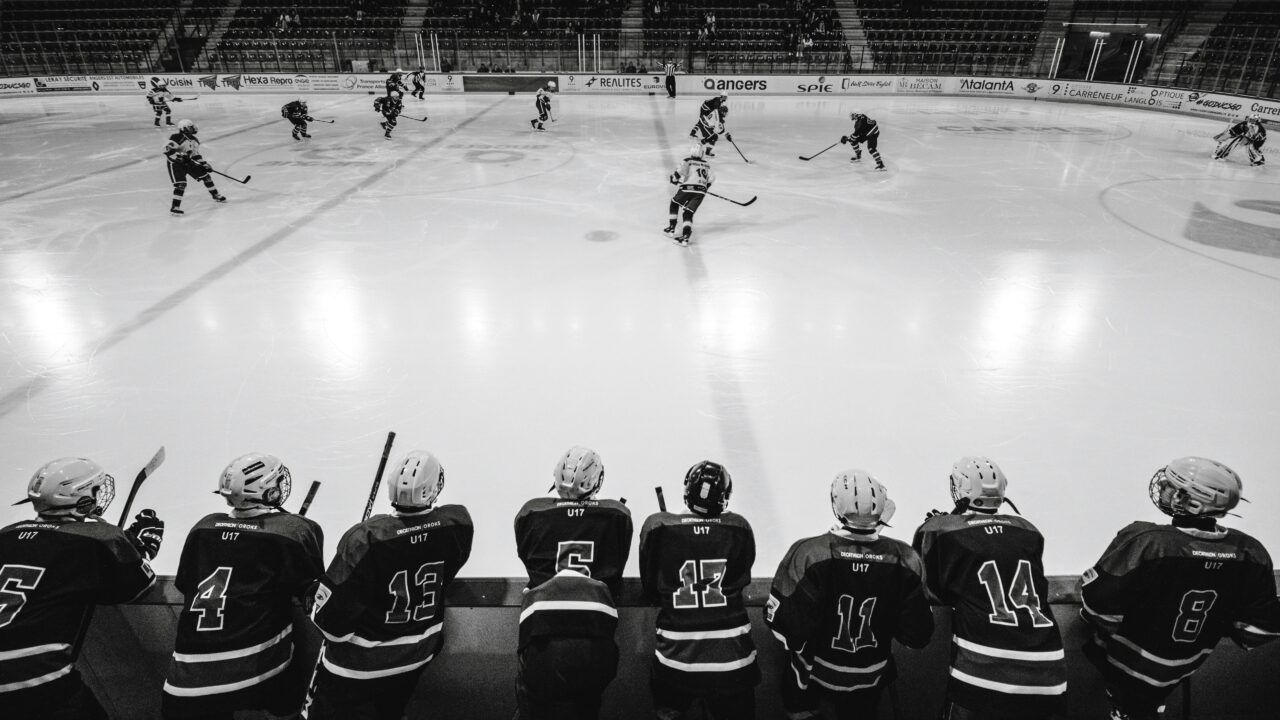
For years, the story of name, image, and likeness in college sports was written almost entirely in the language of football and basketball. The headline deals, the collectives, the seven-figure numbers — all of it flowed toward the two sports that fill the biggest stadiums and command the richest television contracts. Hockey watched from the boards.
That’s changing, and the way it’s changing makes college hockey one of the most interesting corners of the entire NIL landscape.
A sport that finally found its financial footing
The catalyst was structural. In November 2024, a rule change cleared the way for Canadian Hockey League players to keep NCAA eligibility, erasing a wall that had stood for decades. Suddenly some of the best young players in the world could choose college hockey without giving anything up — and money became part of the pitch. The reverberations were immediate. When a presumptive top NHL prospect chose a Big Ten program over major junior in the summer of 2025, it wasn’t just a recruiting win; it was a signal that college hockey had entered the NIL era in earnest.
But the money in hockey doesn’t look like the money in football, and that difference is the whole point. Established men’s programs like Penn State and Wisconsin have become part of that shift, competing for top talent in a landscape that barely existed a few years ago.
Why hockey NIL is built differently
College football NIL runs on scale: enormous collectives, national brands, and a handful of superstars capturing most of the value. Hockey runs on something else — community. The sport thrives in tightly knit markets where the college team is the heartbeat of the town, from the North Country to the upper Midwest to New England. Deals have historically been local and personal: gear collaborations, youth clinics, appearances at the sports bar that’s been packing in fans for thirty years.
That grassroots character isn’t a limitation. It’s a natural fit for a model where fans, not just corporations, drive support toward the athletes they care about.
The overlooked middle class
Here’s the dynamic that makes hockey unique. Under the revenue-sharing framework that took effect in 2025, the biggest athletic departments tend to be capped out — with the bulk of their shareable revenue committed to football and basketball, leaving hockey to compete for what’s left.
But many of the most successful hockey programs in the country don’t have football at all. Schools with deep hockey traditions and no gridiron to fund have structural room and passionate, hockey-first fan bases. Their challenge has never been institutional priority — hockey is the priority. Their challenge is connecting that fan passion to their athletes in a way that’s organized, transparent, and compliant.
That’s precisely the gap where fan-driven support can matter most.
The women’s game belongs in this conversation
If the underserved-middle argument is true for men’s hockey, it’s even truer for the women’s game. Women’s college hockey has real institutional heft — programs like Wisconsin, Ohio State, and Penn State compete for national titles in front of devoted fan bases — and it now feeds a growing professional pipeline through the PWHL, which drew heavily from NCAA rosters in its most recent draft. Visibility is rising.
Yet women’s programs sit furthest from the revenue-sharing money, which flows first toward football and men’s basketball. The result is a set of elite, nationally competitive teams with passionate followings and comparatively little institutional NIL infrastructure behind them. That’s not a weakness in the sport — it’s an opening. Fan-driven support is a natural fit for programs whose communities already show up, travel, and care, but whose athletes have been last in line for the compensation conversation.
Backing the women’s game isn’t a footnote to hockey NIL. It may be one of its clearest opportunities.
College hockey is the Olympic pipeline
Here’s what’s easy to miss from outside the sport: when the United States and Canada take the ice at the Winter Olympics, they’re largely fielding college hockey players. The 2026 U.S. men’s team that won gold drew 19 of its 25 players from NCAA programs. On the women’s side, current NCAA student-athletes made up roughly a third of the women’s ice hockey Olympians with NCAA experience — dozens of active players who paused their college seasons to represent their countries before returning to campus for the national tournament.
That’s the part of the story that gives NIL in hockey real stakes. When people worry that financial pressure on non-revenue college sports could erode America’s Olympic pipeline, college hockey is precisely the pipeline they mean. These programs don’t just develop pros — they develop Olympians. Helping fans support the athletes and teams that feed the national program is one concrete, positive way to keep that development engine healthy as the economics of college sports shift.
Doing it the right way
None of this works if it isn’t done carefully. The College Sports Commission now reviews third-party NIL deals through the NIL Go clearinghouse, evaluating whether each deal reflects a legitimate commercial purpose and a reasonable range of compensation. Deals get reported to universities. Athletes take on real responsibilities — including tax obligations that a 19-year-old may be encountering for the first time.
A platform that takes college hockey seriously has to take all of that seriously too: verified athletes, clear deliverables, honest valuations, and reporting workflows built to support an athlete’s eligibility. The goal is simple — support that helps athletes without creating hidden costs for them.
Where this goes next
College hockey is a smaller stage than football, and it always will be. But smaller has never meant less passionate — and in the NIL era, passion that’s organized and channeled responsibly is exactly what moves the needle. As more elite prospects choose the NCAA, as more programs invest, and as more fans look for a real way to back the players they love, hockey has a chance to build its own version of the NIL story.
Not a copy of football’s. Something that actually fits the sport: community-powered, athlete-first, and built to last.
Interested in supporting college athletes the right way? Explore college hockey athletes on RallyFuel and learn how we connect fans and athletes through verified, transparent NIL deals.