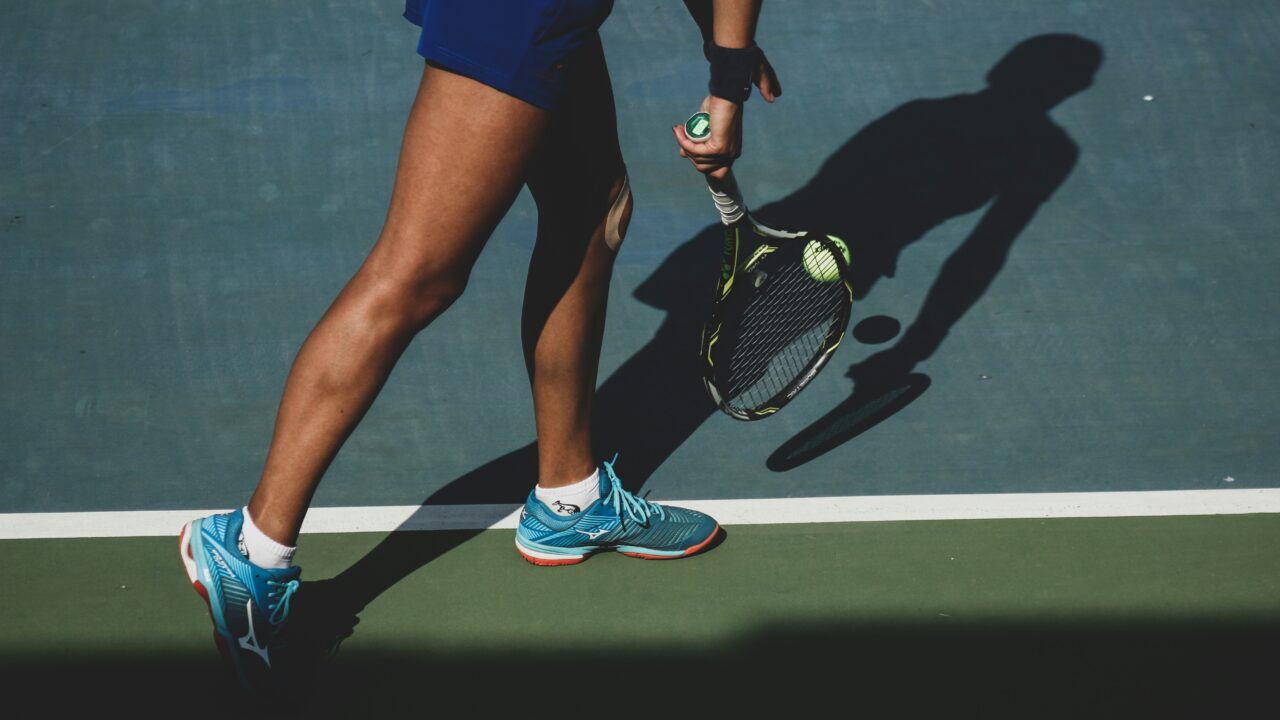
Friday night lights at Jones AT&T Stadium usually dominate conversations about Texas Tech sports. A short walk away, the McLeod Tennis Center hosts some of the most consistent college tennis in Texas — including a women’s program that has now reached the NCAA Tournament 14 years in a row.
The 2026 season: 14th-straight NCAA appearance
The Lady Raiders finished 2026 at 19-11 and earned their 14th consecutive bid to the NCAA Division I Women’s Tennis Championship. Ranked No. 28 nationally, they advanced past the first round before losing 4-2 to No. 9 Texas at the Texas Tennis Center in Austin on May 3 — their fifth NCAA Second Round appearance in six years.
The match itself produced one of the program’s signature wins. Senior Yekaterina Dmitrichenko (Kokshetau, Kazakhstan) defeated No. 6-ranked Anastasia Abbagnato of Texas in a three-set comeback — 6-7 (3-7), 6-3, 6-1 — losing the first set in a tiebreak before dominating the third by dropping just one game. Texas Tech called it the best singles win of her career. Dmitrichenko finished the season on a seven-match singles winning streak.
Texas Tech also won the doubles point against Texas, with the No. 1 pair of Hailey Murphy and Dmitrichenko taking down the No. 71-ranked duo of Abbagnato and Elizabeth Ionescu 6-4.
Four All-Big 12 selections
Women’s head coach Adam Herendeen had four players earn All-Big 12 honors in 2026:
- Hailey Murphy (Sr., Calgary, Canada) — All-Big 12 First Team Singles. Played primarily at No. 1 and went 15-7 in singles, leading the team in dual singles wins
- Murphy and Dmitrichenko — All-Big 12 First Team Doubles
- Dmitrichenko — All-Big 12 Second Team Singles
- Mariia Hlahola (Sr., Kyiv, Ukraine) and Elena Daskalova (So., Olathe, Kansas) — All-Big 12 Second Team Doubles
On the men’s side, head coach Michael Breler had two first-time All-Big 12 selections. Niksa Arsic (Jr., Požega, Serbia) earned All-Big 12 First Team Singles after going 13-4 in dual singles at the top of the lineup, with key wins over Ofek Shimanov (Arizona State) and No. 79-ranked Lucca Liu (UCSB). Arsic and Thiago Guglieri (So., Porto Alegre, Brazil) made the All-Big 12 First Team Doubles list with a 20-11 record as a pair.
How a college tennis dual match works
Most fans picture tennis as a solitary sport, but Texas Tech competes in a team format called a dual match. Two universities go head-to-head, and the winner is the first to four of seven possible points:
- Doubles point (1 total). Three doubles matches play first. Whichever school wins two of them claims one team point.
- Singles points (6 total). Six individual singles matches follow, each worth one point.
Every player fills a specific role assigned from No. 1 singles — often featuring stars with top ITA rankings — down to No. 6. A win at the sixth spot counts the same as an upset at the top.
Why the McLeod Tennis Center matters
The Don and Ethel McLeod Tennis Center opened in time for the 2000 spring season after an $800,000 gift from the McLeods funded its construction. The 12-court facility was resurfaced in 2010 with DecoTurf — the same hardcourt surface used at the US Open.
The elevated stadium seating puts fans close to the action. That proximity creates a loud, intimidating environment for visiting Big 12 teams. Combined with West Texas wind, the conditions reward aggressive, high-bouncing play and demand mental toughness from visitors.
A truly international roster
The 2025-26 women’s roster reflected tennis’s globalized recruiting pipeline: players from Kazakhstan, Ukraine, Russia, Canada, Romania, plus three Americans (Texas, Kansas, New York). The men’s roster reads similarly — Serbia, Brazil, Argentina, Italy, France, Sweden, and two Americans (Texas, Arkansas).
This isn’t unusual. Over 60% of NCAA Division I tennis players are international athletes, the highest share of any NCAA sport. Coaches use ITA rankings and Universal Tennis Rating (UTR) scores to evaluate prospects worldwide.
Recruiting and scholarships
Tennis is an NCAA equivalency sport, meaning programs divide limited aid across the entire roster. The traditional caps are 4.5 scholarships for men’s teams and 8 for women’s teams, awarded as partial scholarships to multiple players. Programs that opted into the 2025 NCAA settlement have additional flexibility, but the equivalency model still defines how most programs build rosters — often by combining partial athletic awards with academic aid.
Inside the training regimen
Within the NCAA’s 20-hour weekly cap on countable athletically related activities, a typical training week includes:
- Strength work for explosive serves and lateral quickness
- On-court practice with the coaching staff
- Film study and match prep
- Recovery and physical therapy
The emphasis is on agility and endurance — players sprint side-to-side, stop on a dime, and need stamina for three-hour matches.
Academic support
Heavy spring travel means missing class. The Marsha Sharp Center for Student-Athletes provides personalized tutoring and flexible advising to bridge away matches and final exams. NCAA Division I eligibility standards are strict, and teams are continuously evaluated through the Academic Progress Rate (APR), which measures how successfully programs keep athletes enrolled and eligible.
Competing in the Big 12
The Big 12 is one of college tennis’s strongest conferences. The Red Raiders compete against perennial powers like TCU and Baylor, as well as recent conference additions UCF, Arizona, and Arizona State. The Big 12 had three Co-Players of the Year in men’s tennis in 2026 — Jay Friend (Arizona), Devin Badenhorst (Baylor), and Duncan Chan (TCU) — and David Roditi (TCU) won Coach of the Year. Texas Tech’s Arsic took Friend to three sets and pushed Badenhorst to a 5-2 second set before that match went unfinished.
Regular-season conference results determine tournament seeding, which directly shapes the path to the NCAA Tournament.
Going to a match at McLeod
Regular-season home matches are usually free, making it easy to walk up and watch Division I tennis at close range. A few essentials:
- Parking — adjacent commuter lots are typically open to the public on weekends
- When to be silent — during the serve and while the ball is in play
- When to cheer — immediately after Texas Tech wins a point; a loud “Guns Up” goes a long way
- Schedule and broadcasts — Big 12 tennis matches stream on ESPN+; check texastech.com for match-day details
From youth camps to the pro tour
Texas Tech hosts summer youth tennis camps at the McLeod facility, giving local kids the chance to learn from Division I athletes. For the players themselves, competing in the Big 12 serves as a launching pad toward professional careers on the ATP and WTA tours.
Three ways to support the program
- Check the current season schedule and attend a home match at the McLeod Tennis Center.
- Follow Texas Tech tennis on social media.
- Support Lady Raiders tennis directly through RallyFuel’s Texas Tech women’s tennis page — verified, compliant NIL deals that put fan backing straight into players’ hands.
Q&A
How did Texas Tech tennis do in 2026? The women’s team went 19-11, earned their 14th-straight NCAA Tournament bid, and reached the second round before losing 4-2 to No. 9 Texas. Senior Yekaterina Dmitrichenko upset No. 6 Anastasia Abbagnato in three sets — the best singles win of her career.
Who are the Texas Tech tennis head coaches? Adam Herendeen leads the women’s program; Michael Breler is the men’s head coach. Both coach out of the McLeod Tennis Center in Lubbock.
How does a college tennis dual match work? Teams play for four total points to clinch the match. Three doubles matches go first; winning two earns one team point. Six singles matches follow, each worth one point. The first school to four wins.
Where does Texas Tech play home matches? The Don and Ethel McLeod Tennis Center on the Texas Tech campus in Lubbock. The 12-court facility uses DecoTurf hardcourt surface — the same as the US Open.
Why is the roster so international? Tennis has the highest share of international athletes of any NCAA sport — over 60% at the D-I level. The 2025-26 Texas Tech rosters included players from Kazakhstan, Ukraine, Russia, Canada, Romania, Serbia, Brazil, Argentina, Italy, France, and Sweden, plus several American athletes.
How do scholarships work for tennis? Tennis is an equivalency sport with traditional caps of 4.5 men’s and 8 women’s scholarships, divided across the roster as partial awards and often combined with academic aid.
What’s the easiest way fans can support Texas Tech tennis? Show up — home matches are usually free. Stay silent during play, then cheer after every point. You can also support Red Raiders men’s tennis athletes through RallyFuel with verified NIL deals. Guns Up!