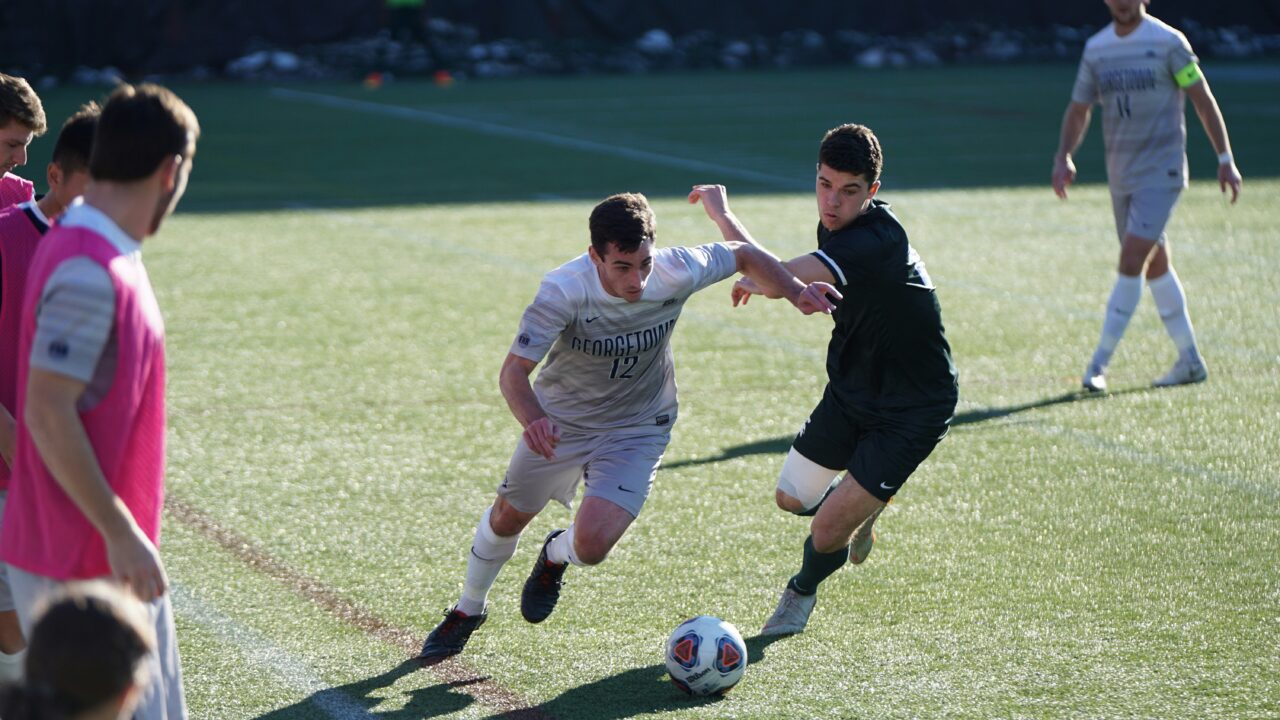
The 2026 FIFA World Cup kicks off June 11 in Mexico City and runs through July 19 in East Rutherford, New Jersey. It’s the first time the tournament has returned to North America since 1994, the first time three countries have co-hosted, and the first time 48 teams will compete. For American soccer, it’s the biggest visibility event in a generation.
For college soccer NIL, it’s something else: a stress test.
The tournament will make stars overnight. It will draw billions of viewers to a sport whose American college infrastructure has spent four years figuring out how to translate athletic talent into commercial value. Whether college soccer NIL is ready to capture that visibility — and whether it can do so equitably across the men’s and women’s games — is the real story this summer.
This article looks at where college soccer fits in the World Cup pipeline today, how the post-2021 NIL era has changed the calculation for current players, and what brands, fans, and athletes should actually watch for as the tournament unfolds.
Table of Contents
- Summary
- Both Pipelines Matter More Than the Conventional Story Suggests
- The Stanford Effect: How One Program Built a USWNT Generation
- The Men’s Roster: Nine College Products and a Pipeline That Quietly Still Works
- What 2026 Means for Current College Players
- How NIL Has Rewritten the College-vs-Pro Decision
- Where Brands and Fans Should Look
- Q&A
- Tournament and Player Q&A
Summary
The 2026 World Cup arrives at a moment when college soccer NIL has matured rapidly but unevenly. On the women’s side, the USWNT continues to draw heavily from US college programs, with Stanford alone producing four players (Sophia Wilson, Tierna Davidson, Naomi Girma, Jane Campbell) on Emma Hayes’s spring 2026 roster. On the men’s side, the picture is significantly more nuanced than the conventional narrative suggests: nine of the 26 players in the current USMNT World Cup pool came through US college programs — across every position group, not just goalkeepers. Captain Tim Ream (Saint Louis) and the entire goalkeeper rotation are college products. So are starting midfielders Sebastian Berhalter (North Carolina), Aidan Morris (Indiana), and Cristian Roldan (Washington), defender Miles Robinson (Syracuse), and Gold Cup standout winger Max Arfsten (UC Davis). The post-tournament window is when the biggest commercial decisions for current college players will get made.
Both Pipelines Matter More Than the Conventional Story Suggests
The conventional story about American men’s soccer development is that college doesn’t matter anymore. Top US male players go to European academies (Christian Pulisic to Borussia Dortmund, Gio Reyna to Dortmund, Weston McKennie to Schalke, Tim Weah moved to the PSG academy at age 14, Folarin Balogun developed at Arsenal), and college is for the players who don’t make it.
The current USMNT roster doesn’t actually support that story.
Counting carefully across the senior player pool head coach Mauricio Pochettino has been building toward the 2026 World Cup, nine players came through US college programs — across every position group on the field. That’s not a footnote on the roster. That’s roughly a third of it.
Start with the goalkeeper room. Matt Turner, the team’s veteran starter, played college soccer at Fairfield University from 2012 to 2015, went undrafted in the 2016 MLS SuperDraft, signed with New England Revolution after a preseason trial, won MLS Goalkeeper of the Year in 2021, and was the starter at the 2022 World Cup in Qatar. Matt Freese, who has emerged as a primary option in the Pochettino era, played at Harvard before leaving early to sign with Philadelphia Union. Patrick Schulte, the third goalkeeper, played at Saint Louis University from 2019 to 2021, winning Atlantic 10 Defensive Player of the Year before going 12th overall in the 2022 MLS SuperDraft to Columbus Crew. Three of the four goalkeepers in the senior pool came through US college.
Defense. The captain of the USMNT, Tim Ream, played at Saint Louis University from 2006 to 2009, made 82 appearances as a Billiken, and was drafted 18th overall in 2010. Now 38, he wears the armband and has over 80 caps. Miles Robinson — center back, currently with Atlanta United — played at Syracuse. Aaron Long, recently in the pool, played at UC Riverside. Saint Louis University alone has two current senior team players on the World Cup roster (Ream and Schulte).
Midfield. This is where the corrected picture is most striking, because it’s where the conventional narrative is most wrong. Sebastian Berhalter, the Vancouver Whitecaps midfielder who scored his first USMNT goal against Uruguay in November 2025 and was named to the 2025 MLS Best XI, played college soccer at North Carolina in 2019 before signing as a Columbus Crew homegrown player. Aidan Morris, now with EFL Championship side Middlesbrough, played one season at Indiana University in 2019, winning Big Ten Freshman of the Year and TopDrawerSoccer’s National Freshman of the Year before signing with Columbus and becoming the youngest player ever to start an MLS Cup final at age 19. Cristian Roldan, the longtime Seattle Sounders captain with 45 USMNT caps, played at Washington from 2013 to 2014, where he was Pac-12 Freshman of the Year, before going 16th overall in the 2015 MLS SuperDraft.
Attack. Even the attacking lines aren’t a clean European-academy story. Max Arfsten, the Columbus Crew winger who broke into the senior team in 2025, scored his first international goal against Panama in the 2025 Gold Cup semifinal, and was named to the 2025 MLS All-Star Game, played college soccer at UC Davis from 2019 to 2021, where he was Big West Offensive Player of the Year as a junior before leaving early to sign with San Jose Earthquakes II. He’s an outfield attacker — a winger and attacking wing-back — who came up entirely through the US college system.
That’s nine current senior team players from college: Ream, Turner, Freese, Schulte, M. Robinson, Berhalter, Morris, Roldan, Arfsten. Different positions, different schools, different paths. But the same thread: US college soccer continues to produce starters and senior team contributors for the men’s national team going into a home World Cup.
The cleaner framing is this: elite attacking talent at the absolute top of the curve — Pulisic, McKennie, Balogun, Weah — went to European or MLS academies before college because those academies pay early and have the infrastructure to develop attackers. MLS homegrown academies have also produced senior team starters who skipped college (Alex Freeman at Orlando City, Auston Trusty at Philadelphia Union, Joe Scally at NYCFC, Tanner Tessmann at FC Dallas). But the conventional “Europe or bust” narrative misses something important: a striking number of current and recent USMNT players who didn’t ultimately play college had committed to play US college soccer before turning pro. Weston McKennie signed a National Letter of Intent with Virginia in February 2016 before declining the scholarship to join Schalke. Auston Trusty’s Bethlehem Steel contract was structured to preserve his North Carolina eligibility before he signed homegrown with Philadelphia. Tanner Tessmann was committed to play both soccer and football as a kicker at Clemson before signing with FC Dallas. Brenden Aaronson was committed to Indiana before signing with Bethlehem Steel and Philadelphia Union. The college pipeline is recruiting at a level competitive with MLS academy and European pathways even when those athletes ultimately choose another route. And the rest of the senior team roster — the entire goalkeeper room, the captain, multiple starting midfielders, and a Gold Cup–scoring winger — actually came through college. For NIL purposes, that matters. The men’s college soccer pipeline isn’t producing depth players. It’s producing senior team starters.
The women’s side reaches the same destination through different geography. Across positions, the USWNT still draws heavily from US college programs. The 2026 USWNT roster Emma Hayes named for the spring matches against Japan included Sophia Wilson, Tierna Davidson, Naomi Girma, and Jane Campbell — all from Stanford. Trinity Rodman (Washington State, briefly), Reilyn Turner (UCLA, first USWNT call-up January 2026), and Maddie Dahlien (now Seattle Reign, formerly UNC) all came through the college system. Florida State’s 2025 NCAA championship roster is already feeding USWNT youth camps through Wrianna Hudson and Nyanya Touray.
Both pipelines produce US national team players. Both pipelines deserve a college NIL infrastructure that takes them seriously.
The Stanford Effect: How One Program Built a USWNT Generation
The Stanford pipeline is worth pausing on, because it illustrates something specific about how college NIL value compounds.
Four Stanford alumnae on a single USWNT roster in 2026 isn’t a coincidence. It’s the result of fifteen years of recruiting, coaching, and program-building that turned one college program into a primary pipeline for the senior national team. Sophia Wilson (then Sophia Smith) was the No. 1 overall NWSL draft pick in 2020 out of Stanford. Naomi Girma went No. 1 overall in 2022, also from Stanford. Tierna Davidson went No. 1 in 2019, from Stanford. Mia Bhuta — the Adidas NIL signing we profiled in our women’s soccer NIL deep dive — is the program’s current first-year student.
For NIL, this matters because brand value at top women’s college soccer programs now compounds across years. Stanford women’s soccer has become a recognizable national team feeder, and that visibility creates a brand-friendly environment for the next class of recruits. The same dynamic exists at North Carolina (Ally Sentnor, Savy King), UCLA (Reilyn Turner, Ally Lemos), and Florida State (the 2025 national champions, now seeing their roster move into USWNT camps).
Brands that want to associate with future US women’s national team talent know where to look. That’s the actual NIL value proposition for top women’s college programs in a World Cup year — not the game on the pitch this Sunday, but the recognizable, repeating pipeline that produces senior team players every cycle.
The Men’s Roster: Nine College Products and a Pipeline That Quietly Still Works
The Saint Louis Billikens, Fairfield Stags, Harvard Crimson, UC Davis Aggies, North Carolina Tar Heels, Indiana Hoosiers, Washington Huskies, Syracuse Orange — these aren’t programs that get the national NIL spotlight Power 4 football programs get. But collectively, they’re producing players who now wear the US crest at the World Cup.
That has implications for NIL strategy at men’s college programs that may not be obvious from the headline numbers.
First, men’s college soccer’s contribution to the national team is much broader by position than the headline narrative captures. The two midfielders sitting next to each other in many of Pochettino’s recent matchday squads — Sebastian Berhalter and Cristian Roldan — both came through college. So did Aidan Morris, now an EFL Championship regular. Programs that develop midfielders, defenders, goalkeepers, and even attacking wing-backs are credibly producing senior team players. The NIL story at these programs isn’t a niche position-based pitch. It’s the full pipeline.
Second, the Generation Adidas program continues to function as a bridge — but on increasingly tight margins. Schulte was a Generation Adidas signing out of Saint Louis after his junior year. So was Cristian Roldan, who left Washington after his sophomore year. Generation Adidas deals come with college tuition guarantees, which historically meant athletes could leave college early without giving up their education. But the pathway isn’t automatic anymore. Tanner Tessmann was committed to play both college soccer AND college football (as a kicker) at Clemson before opting to sign with FC Dallas as a homegrown player instead. The college-vs-pro decision now has real money on both sides for top-tier athletes, and Generation Adidas is competing with MLS academy homegrown contracts, European clubs, and NIL revenue.
Third, the Saint Louis cluster is striking. Two current senior USMNT players from one mid-major program (Tim Ream and Patrick Schulte). That’s the kind of structural pipeline brands can plan around if they’re paying attention to where senior team players actually come from rather than where the marketing dollars currently flow.
Fourth, college soccer NIL at the men’s side has a story it hasn’t been telling. Programs producing senior team starters have been treating themselves as if they’re development depots competing with European academies, when in fact they’re senior-team feeders with a track record. The marketing posture should match the reality.
What 2026 Means for Current College Players
For a current college soccer player — not a future World Cup roster member, just an actual undergraduate playing now — the 2026 World Cup creates three specific NIL effects worth tracking.
National attention to the sport. The 2026 World Cup will be the most-watched sporting event in American history. Soccer’s profile across the country rises every World Cup cycle, and 2026 is the steepest curve since 1994. Brands that previously dismissed soccer as a US market will reassess. Categories that haven’t paid much attention to college soccer NIL — automotive, financial services, consumer tech — start to. This effect lasts well past the final whistle.
Direct visibility for college-affiliated players on national teams. Beyond the senior USWNT and USMNT, the youth pipeline matters. The 2026 FIFA U-20 Women’s World Cup roster will draw heavily from US college soccer programs. The U-17 and U-20 Youth World Cups consistently produce breakout NIL moments for college-bound and college-current athletes, and 2026 is no exception.
A reset on the college-vs-pro decision. This is the biggest one, and it’s the focus of the next section.
The World Cup itself is shorter than people remember — 39 days from opening match to final. The commercial window that opens around it is longer. Brands plan campaigns for the World Cup year, not the World Cup month. Athletes who position themselves well in spring 2026 — before the tournament — will be in a meaningfully better place by August than athletes who wait for tournament results to define their value.
How NIL Has Rewritten the College-vs-Pro Decision
Before 2021, the calculation for a top US college soccer player was simple. Stay in college through eligibility, then enter the MLS Draft or NWSL Draft. The only way to earn money from your athletic brand was to turn professional.
NIL has changed this math, but not in the direction casual observers often assume.
The standard assumption is that NIL keeps top talent in college longer because they can earn money without losing eligibility. The reality is more complicated. Among the most highly-recruited US women’s soccer players in recent years, multiple have chosen to skip college entirely. Alyssa Thompson signed with Angel City FC directly out of high school. Olivia Moultrie went pro at 13. Croix Bethune turned pro out of Georgia. The pattern is that elite talent now treats the college-vs-pro question as a strategic decision based on individual circumstances rather than a default assumption.
On the men’s side, the calculation has shifted differently. The Generation Adidas pathway continues to pull elite college talent into MLS early with tuition guarantees attached — Schulte and Roldan are the cleanest current-roster examples. MLS homegrown academies and European clubs extract some talent before college, but multiple current and recent USMNT players had named college commitments they declined: McKennie (Virginia → Schalke), Trusty (UNC → Philadelphia Union homegrown), Tessmann (Clemson → FC Dallas homegrown), and Aaronson (Indiana → Philadelphia Union homegrown). The college pipeline was recruiting at a level competitive with the pro options even before NIL. The European route still pulls the absolute top attacking tier (Pulisic, Reyna). NIL hasn’t fundamentally changed any of these pathways, but it has created a third option: stay in college, build a real NIL portfolio, and turn pro on your own timing rather than the timing of an academy or draft.
NIL has changed the calculation in three specific ways across both men’s and women’s college soccer:
- The financial gap has narrowed at the top. A Reilyn Turner–type elite recruit with a Nike NIL deal entering UCLA could plausibly earn more in college NIL than as a first-year NWSL rookie. That wasn’t true in 2020.
- The window has compressed. The June 2025 House antitrust settlement allows schools to directly pay athletes through revenue sharing in addition to external NIL. Programs that allocate revenue sharing meaningfully to soccer create financial packages that compete more directly with pro contracts.
- The optionality has grown. Athletes can now take the deal that fits — staying in college if NIL works, turning pro if the offer is better, transferring through the portal if a different program offers more — without losing the commercial side of their career.
For current college players watching the World Cup unfold this summer: the post-tournament window is when these decisions tend to get made. NWSL clubs sign players around the tournament. MLS clubs evaluate Generation Adidas candidates. NIL collectives reassess valuations. Agencies re-pitch their rosters. The August-to-October window after the final whistle is the most consequential commercial period in a college soccer player’s calendar this year.
Where Brands and Fans Should Look
For brands evaluating college soccer NIL during World Cup year, the highest-value targets fall into three buckets.
The first is the established national-team pipeline programs: Stanford, UNC, UCLA, Florida State, Penn State, Virginia on the women’s side; Saint Louis, UC Davis, Washington, Indiana, North Carolina, Syracuse, Harvard, Fairfield, Wake Forest, Georgetown, and Maryland on the men’s side. These are the programs where the visibility surge from the tournament reliably compounds existing brand association.
The second is the breakout-performer category. Tournaments produce breakout names. A US college player who has a strong fall 2026 season after the World Cup amplifies soccer’s national profile can convert that into individual brand deals that wouldn’t have existed before the tournament.
The third is structural team and group deals. The Florida five (Josie Curtis, Lauren Donovan, Lauren McCloskey, Ashley Tutas, Madison Young) and the Michigan State team deal through This is Sparta! show what’s possible when athletes pool their commercial reach. Group deals scale well in a year when general soccer interest is high.
For fans watching the tournament who want to support college players — including future World Cup talent currently working through the NCAA system — fan-powered NIL platforms are one mechanism. RallyFuel’s college soccer NIL guide covers how this works in practice for soccer specifically, and our women’s soccer NIL deep dive breaks down the landscape with named deals, real numbers, and the post–House settlement context.
The 2026 World Cup will produce stars. It will also produce the next wave of commercial infrastructure around the American game. For college soccer NIL, the work happens in the months around the tournament — not the 39 days it’s actually being played.
Q&A
Question: Are college soccer players on the 2026 USMNT World Cup roster? Short answer: Yes — more than the conventional narrative suggests. Roughly nine players in the current senior team pool came through US college programs, across every position group: captain Tim Ream (Saint Louis), goalkeepers Matt Turner (Fairfield), Matt Freese (Harvard), and Patrick Schulte (Saint Louis); defender Miles Robinson (Syracuse); midfielders Sebastian Berhalter (North Carolina), Aidan Morris (Indiana), and Cristian Roldan (Washington); and winger Max Arfsten (UC Davis). The pattern isn’t just goalkeepers — it’s a full-pipeline contribution across the field.
Question: Which college programs feed the most USWNT players? Short answer: Stanford has produced an extraordinary cluster — Sophia Wilson, Tierna Davidson, Naomi Girma, and Jane Campbell were all on Emma Hayes’s spring 2026 USWNT roster. North Carolina, UCLA, and Florida State (the 2025 NCAA champions) are also primary pipelines. Trinity Rodman (Washington State, briefly), Reilyn Turner (UCLA), and Maddie Dahlien (UNC, now Seattle Reign) represent the current generation of college-to-USWNT talent.
Question: Which men’s college programs produce USMNT players? Short answer: Saint Louis University currently has two players on the senior World Cup roster (Tim Ream and Patrick Schulte). The active 26-man pool also draws from Fairfield (Turner), Harvard (Freese), Syracuse (M. Robinson), North Carolina (Berhalter), Indiana (Morris), Washington (Roldan), and UC Davis (Arfsten). Historically, Maryland, Akron, Virginia, UCLA, and Wake Forest have also had strong USMNT track records.
Question: Does the World Cup change NIL opportunities for current college soccer players? Short answer: Yes, especially in the post-tournament window. The tournament amplifies general American soccer interest, attracts new brand categories (automotive, financial services, consumer tech) to the sport, and creates a roughly August-to-October period when NWSL signings, MLS Generation Adidas decisions, NIL collective valuations, and agency re-pitches concentrate. Athletes who are positioned before the tournament tend to capture more of this value than those who wait for tournament results.
Question: Should top US soccer players stay in college or turn pro? Short answer: It depends on the athlete and the position. Alyssa Thompson, Olivia Moultrie, and Croix Bethune all skipped or shortened college careers to turn pro early. Others — Reilyn Turner, Sophia Wilson, Naomi Girma — followed the full college path. On the men’s side, Generation Adidas continues to pull college players into MLS early with tuition guarantees (Schulte, Roldan). Several current and recent USMNT players had named college commitments they ultimately declined: McKennie (Virginia → Schalke), Trusty (UNC → Philadelphia), Tessmann (Clemson → FC Dallas), Aaronson (Indiana → Philadelphia Union). NIL has narrowed the financial gap at the top of the market, so the calculation is now individual rather than default.
Question: How can fans support college soccer players during the World Cup? Short answer: Through fan-powered NIL platforms like RallyFuel, fans purchase Conditional NIL Engagement Rights (“Fuel”) for athletes and programs they want to back. If an athlete voluntarily joins a designated program, RallyFuel can offer an NIL Agreement funded by the accumulated Fuel (net of platform fees). If the athlete picks a different school, the period expires, the athlete becomes ineligible, or deliverables aren’t met, fans receive automatic refunds. Fuel purchases are not charitable donations. See our college soccer NIL guide for the full breakdown.
Tournament and Player Q&A
Question: When and where is the 2026 FIFA World Cup? Short answer: The 2026 FIFA World Cup runs from June 11 to July 19, 2026, co-hosted by the United States, Mexico, and Canada. The opening match is in Mexico City and the final is at MetLife Stadium in East Rutherford, New Jersey. It’s the first 48-team World Cup and the first held in North America since 1994. Host cities in the US include Atlanta, Boston, Dallas, Houston, Kansas City, Los Angeles, Miami, New York/New Jersey, Philadelphia, San Francisco Bay Area, and Seattle.
Question: Where did Tim Ream go to college? Short answer: USMNT captain Tim Ream played college soccer at Saint Louis University from 2006 to 2009. He made 82 appearances for the Billikens, was a finalist for the MAC Hermann Trophy (college soccer’s Heisman equivalent), and was drafted 18th overall by the New York Red Bulls in the 2010 MLS SuperDraft.
Question: Where did Matt Turner go to college? Short answer: USMNT goalkeeper Matt Turner played college soccer at Fairfield University from 2012 to 2015. He went undrafted in the 2016 MLS SuperDraft, signed with New England Revolution after a preseason trial, became the starter, won MLS Goalkeeper of the Year in 2021, and started for the USMNT at the 2022 FIFA World Cup in Qatar. He’s one of the clearest examples of a college soccer player who reached the national team without a traditional academy pipeline.
Question: What is Generation Adidas? Short answer: Generation Adidas is a Major League Soccer program that allows top college soccer players to sign professional contracts before exhausting their NCAA eligibility, with their remaining college tuition covered by the league and adidas. Current USMNT players who signed Generation Adidas contracts include Patrick Schulte (out of Saint Louis after his junior year) and Cristian Roldan (out of Washington after his sophomore year). The program is now competing with MLS academy homegrown contracts, European clubs, and college NIL revenue for top talent.
Question: What is the House settlement and how does it affect college soccer NIL? Short answer: The House v. NCAA settlement, finalized in June 2025, ended the NCAA’s restrictions on schools paying athletes directly. Schools can now share revenue with athletes up to a cap (approximately $20.5 million in the first year), in addition to external NIL deals. For college soccer, this means programs that meaningfully allocate revenue sharing to soccer create financial packages that compete more directly with NWSL and MLS first-year contracts. The settlement is reshaping the calculus for top recruits deciding between college and pro.
Question: Which college soccer programs produce the most professional players? Short answer: On the men’s side, programs with multiple current USMNT players or recent senior pool members include Saint Louis (Tim Ream, Patrick Schulte), Fairfield (Matt Turner), Harvard (Matt Freese), Syracuse (Miles Robinson), UC Davis (Max Arfsten), North Carolina (Sebastian Berhalter), Indiana (Aidan Morris), and Washington (Cristian Roldan). On the women’s side, Stanford produced four current USWNT players (Sophia Wilson, Tierna Davidson, Naomi Girma, Jane Campbell). UNC, UCLA, and Florida State are also primary pipelines.
Question: Can college soccer players make money from NIL? Short answer: Yes. Since July 2021, NCAA athletes have been allowed to earn money from their name, image, and likeness. For college soccer, top recruits at programs like UCLA, Stanford, North Carolina, and Florida State have signed deals with Nike, Adidas, and other major brands. The 2025 House settlement added direct revenue sharing from schools as a second income stream. NIL deals for college soccer players typically take the form of brand sponsorships, social media partnerships, group/team deals, and fan-powered platforms like RallyFuel.