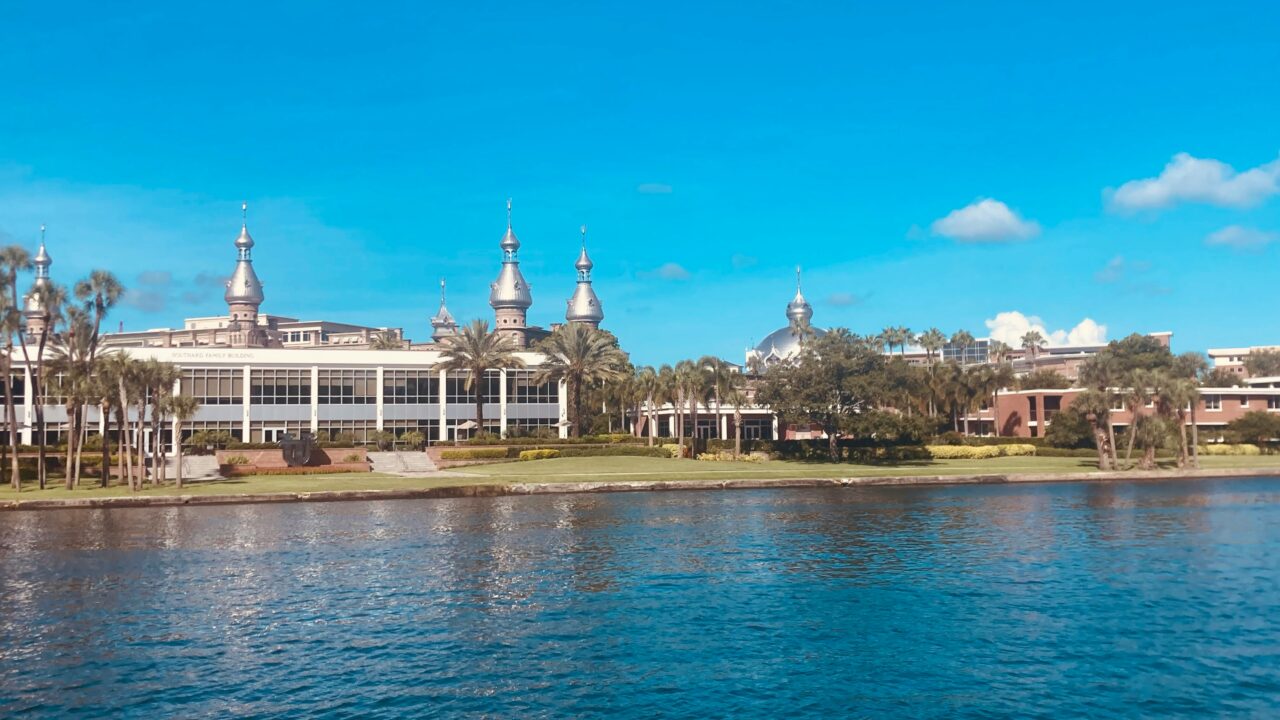
There is an old Florida adage that the further north you travel in the state, the further South you get. Drive I-4 east from Tampa toward Lakeland and you understand it immediately. The air shifts. The pace slows. The Cuban sandwich gives way to Southern barbecue. The port city gives way to citrus groves. Forty miles of interstate separate two institutions that have been fighting over the same strip of Florida for decades — and between them, they have won more Division II baseball national championships than anyone else in the country.
This is the Tampa–Florida Southern rivalry. It is not a rivalry that gets network television coverage or College Football Playoff implications. It is something rarer: a rivalry that is genuinely the best in the world at what it does.
The Numbers First
The University of Tampa Spartans and the Florida Southern College Moccasins have combined for 18 Division II baseball national championships since 1970. Tampa claimed its 9th in 2024, tying Florida Southern’s record and making them co-holders of the all-time mark. No other program in Division II baseball is close.
Tampa has reached the College World Series 22 times, appeared in the championship game 11 times, and spent 399 weeks ranked in the national top 25 — including 298 consecutive weeks from 2005 onward. The Spartans have won 23 Sunshine State Conference titles, 18 of them since 2000, and produced 101 MLB draft picks. Florida Southern’s nine titles were earned across five decades, making them the only program to win at least one in every decade since the sport’s Division II championship began. Together, they have turned the SSC South Region into the most competitive postseason bracket in the division — where winning the conference essentially requires defeating whoever is about to win the national championship.
Both programs also have alumni in the major leagues. Tino Martinez, the Yankees first baseman who hit 339 career home runs, wore a UT baseball shirt under his Mariners uniform when Tampa won its first title in 1992. Lou Piniella played for the Spartans before a 23-year MLB career. The dirt fields in Tampa and Lakeland are not stepping stones; they are legitimate launching pads.
How the Rivalry Actually Works
The two campuses are approximately 36 miles apart on I-4, close enough that recruiting overlaps constantly and far enough that the cultural distance feels larger than the geographic one. Tampa built itself as a port city — immigrant cigar workers filled Ybor City, the Latin Quarter of Tampa, in the late 19th century — and the university reflects that gritty, eclectic, coastal identity. Florida Southern sits in Lakeland, inland and agricultural, rooted in citrus and cattle and the slower rhythms of traditional Florida. The schools are not just athletic rivals; they represent genuinely different versions of the same state.
That gap shows up in recruiting. Both programs have spent decades convincing elite in-state high school players to choose Division II baseball over a Division I bench — the pitch being immediate playing time, competitive infrastructure, and a credible path to professional baseball. The argument works: both rosters are routinely full of players who turned down bigger schools. In the NIL era, Florida Southern now factors verified athlete deals into that conversation, giving Moccasins fans a direct way to back the players making those decisions.
The regular-season series between these programs carries postseason weight that most conference games never approach. Because the NCAA South Regional bracket has historically placed both teams in the same pool, defeating each other in April and May is not separate from the national championship race — it is the beginning of it. Tampa’s first national title in 1992 required beating Florida Southern in the regional finals in Lakeland. The Mocs were the ranked team and the home crowd. Tampa won anyway and went on to Montgomery. That dynamic — each program functioning as the other’s primary obstacle to a championship — has defined the series across six decades.
The Games and the Atmosphere
The facilities are intimate by any standard above Division II, which means the crowd is close enough to matter physically. Jenkins Field House in Lakeland and the Bob Martinez Athletics Center in Tampa both deliver exactly what small-venue rivalries are supposed to: noise that bounces off walls, fans who have been coming for generations, and an atmosphere where the visiting team knows they are genuinely not welcome.
In baseball, the intimacy translates differently. The diamond is where this rivalry breathes. MLB scouts have been a fixture at Spartans–Florida Southern Moccasins series for decades, radar guns pointed at pitchers who could be playing professional ball the following summer. The stakes are not abstract. A scout watching a UT arm in April is making an assessment that will affect that player’s life. Florida Southern’s dugout 60 feet away is aware of this. So is every fan in the bleachers.
The 1992 regional final in Lakeland — Tampa beating Florida Southern twice in two days to advance to the College World Series — remains the defining sequence in the series’ history. Tampa was the underdog on Florida Southern’s home field. Pitcher Gary Hudson went 12–3 that season and threw a complete game in the clincher. The Spartans went to Montgomery, swept the field, and came home national champions. Tino Martinez, by then in the major leagues, watched from the Seattle dugout.
What the Rivalry Represents
Florida has produced more than its share of manufactured identities — theme parks, resort towns, planned communities built for people from somewhere else. The Tampa–Florida Southern rivalry is the opposite: something that grew organically from geography, history, and competition, and has been running continuously for over half a century without needing anyone to brand it or explain it to outsiders.
The I-4 corridor is the most contested piece of political ground in the country every four years. It is also the most contested piece of baseball ground in Division II every spring. The corridor runs between two institutions that have collectively produced 18 national championships, dozens of major leaguers, and a rivalry that was good enough to be featured in its own LG/NCAA documentary series — “Melee in the Bay” — because the story told itself.
Both programs will be back on the same regional bracket this spring. Both fanbases already know what is at stake. That is what a real rivalry looks like.