When people talk about Nebraska college sports, they usually mean one thing: 90,000 fans in scarlet and cream on a Saturday in Lincoln. But for the vast majority of high school athletes in the state — and plenty from outside it — the realistic path to college athletics runs through Kearney, Wayne, and Chadron, not Memorial Stadium.
Nebraska’s three NCAA Division II schools offer real athletic scholarships, legitimate regional and national competition, and tuition low enough that a partial scholarship can stretch a long way. This guide covers what each school actually offers, sport by sport, and how the recruiting, scholarship, and NIL process works at the D2 level — including a few things that have changed significantly since 2025.
Nebraska’s Three NCAA Division II Schools
Nebraska has exactly three full NCAA Division II members. Each competes in a different conference, which means recruits are really choosing among three distinct athletic ecosystems.
University of Nebraska at Kearney (UNK). The Lopers play in the Mid-America Intercollegiate Athletics Association (MIAA), a conference stretching across Missouri, Kansas, and Oklahoma that consistently ranks among the toughest in Division II, particularly in football and basketball. UNK is part of the University of Nebraska system, and its Health and Sports Center draws some of the biggest crowds in D2 for volleyball and basketball. The Lopers have a long tradition of national relevance in wrestling, volleyball, and track and field.
Wayne State College (WSC). The Wildcats compete in the Northern Sun Intercollegiate Conference (NSIC), a northern league built around Minnesota and the Dakotas that is arguably the premier Division II volleyball conference in the country and known for physical football. Wayne State is strongest academically in education and business, and admissions generally look for a solid GPA (around 3.0 or better) alongside test scores. One warning for recruits: don’t confuse Wayne State College with Wayne State University, the green-and-gold Warriors in Detroit — both are NCAA D2, and athletes routinely research (or email) the wrong one. Nebraska’s Wildcats are at wscwildcats.com.
Chadron State College (CSC). Out in the Pine Ridge country of northwest Nebraska, the Eagles play in the Rocky Mountain Athletic Conference (RMAC), traveling into Colorado, Utah, New Mexico, and South Dakota — often at altitude, which is its own conditioning test. Chadron State’s football tradition is the stuff of local legend; its most famous product is NFL running back Danny Woodhead. For athletes who love the outdoors, the surrounding Pine Ridge landscape is a genuine selling point.
One clarification worth making, since it trips up a lot of guides: these three schools are not all part of the same system. UNK belongs to the University of Nebraska system, while Wayne State and Chadron State are members of the Nebraska State College System (along with Peru State, which competes in the NAIA rather than the NCAA).
Which Sports Does Each School Actually Sponsor?
This is where a lot of generic recruiting content gets it wrong, and where a wrong assumption can cost a family months of wasted outreach. Not every Nebraska D2 school fields every sport. Here’s how the three schools compare in the major team sports:
| Sport | Chadron State | Nebraska–Kearney | Wayne State |
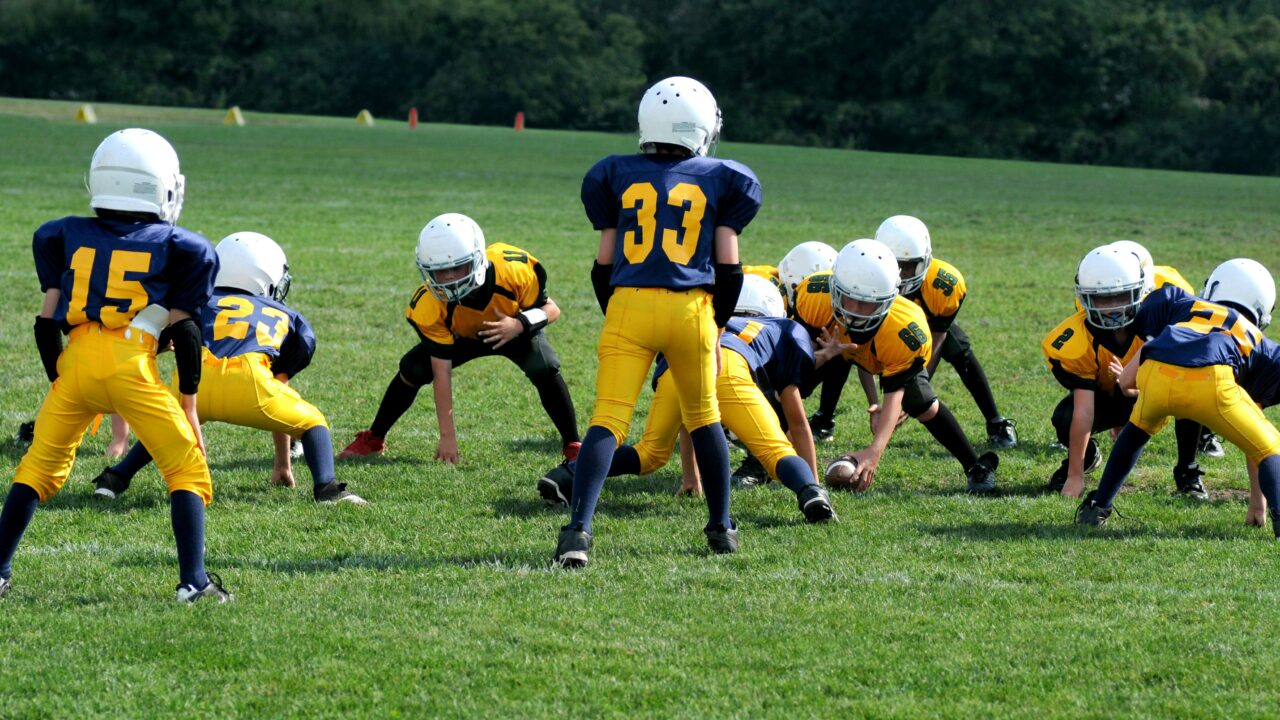
| Football | Yes | Yes | Yes |
| Men’s basketball | Yes | Yes | Yes |
| Women’s basketball | Yes | Yes | Yes |
| Baseball | No | No | Yes |
| Softball | Yes | Yes | Yes |
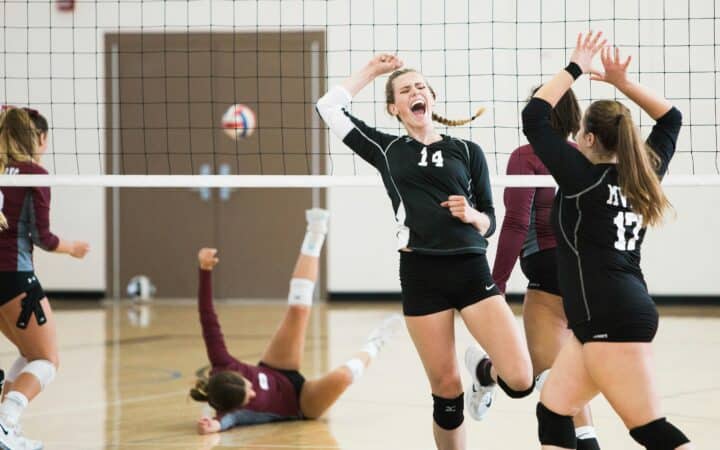
| Women’s volleyball | Yes | Yes | Yes |
| Women’s beach volleyball | No | No | Yes |
| Women’s soccer | No | Yes | Yes |
| Men’s soccer | No | No | No |
| Wrestling | Yes (men’s & women’s) | Yes (men’s) | No |
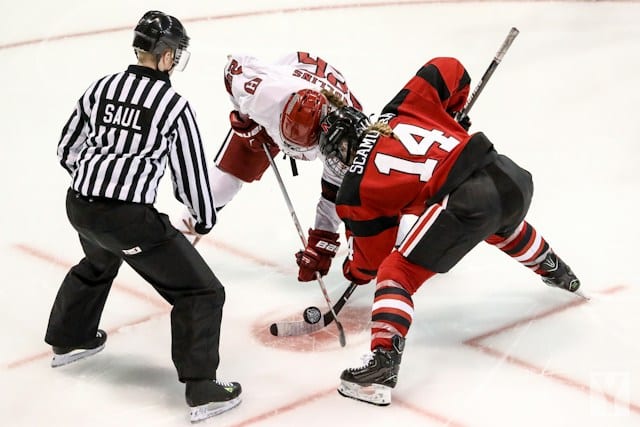
| Ice hockey | No | No | No |
The baseball row deserves emphasis: Wayne State is the only NCAA Division II baseball program in Nebraska. UNK cut its baseball program in 2018 for budget reasons, along with men’s golf and men’s tennis; tennis returned in 2023–24 after a private donor funded a $3.4 million endowment, but baseball requires a $10 million endowment to come back and remains dormant. (Don’t be fooled by leftover UNK baseball pages on recruiting databases — those profiles were never taken down after the cut.) A Nebraska high school player set on D2 baseball in-state has exactly one option — though the state’s NAIA schools (Concordia, Doane, Hastings, Midland, Bellevue, Peru State, and others) all field baseball and offer athletic scholarships of their own, so the in-state picture is broader than the NCAA label suggests.
Similarly, men’s soccer players won’t find a D2 home in Nebraska at all. On the women’s side, both UNK and Wayne State field competitive soccer programs that recruit heavily from the Omaha and Lincoln metros.
Beyond the table, all three schools sponsor women’s volleyball, track and field, cross country, and women’s golf. But the differences matter as much as the overlap. Wrestling is UNK and Chadron State only — Wayne State has no wrestling program — and Chadron State also fields women’s wrestling, one of the fastest-growing sports in college athletics. Wayne State counters with the state’s only D2 women’s beach volleyball program, a natural extension of its powerhouse indoor volleyball tradition. And Chadron State offers something no other Nebraska college does: varsity rodeo, for both men and women, a fitting sport for a campus in Pine Ridge ranch country. Wayne State’s men’s side is the leanest of the three — baseball, basketball, cross country, football, and track — so male athletes in sports like wrestling, tennis, golf, or swimming will need to look to Kearney, Chadron, or out of state. Sport sponsorship in this guide is verified against each school’s official athletics site as of mid-2026, but always re-check before reaching out, because it can change — UNK’s 2018 cuts are proof.
The Small-School Pipeline: From NSAA Class D2 to NCAA D2
Search for “Nebraska D2 schools” and you’ll find two different things, because the term means two different things in this state. The Nebraska School Activities Association (NSAA) classifies high schools by enrollment, from Class A down to Classes D1 and D2 — the smallest schools in the state, many of them playing 8-man (or 6-man) football in tiny rural communities.
There’s a real pipeline between those worlds. Coaches at UNK, Wayne State, and Chadron State actively scout small-school Nebraska, and for good reason: athletes at Class C and D schools usually play three or four sports out of necessity, which builds exactly the kind of all-around athleticism and coachability D2 coaches want. A dominant player from an 8-man program won’t have D1 recruiters calling, but the state’s D2 staffs know how to project that talent — Chadron State in particular has built rosters on it for decades.
If you’re a small-school athlete, don’t let the lack of exposure discourage you. It just means the outreach burden falls more heavily on you, which brings us to the recruiting process itself.
How D2 Recruiting Actually Works
Division II recruiting runs on a fundamentally different budget than Division I. Coaches at these schools can’t fly around the country watching prospects; they depend on athletes who identify themselves. Two structural facts work in your favor:
D2 contact rules are looser than D1. Division II coaches can contact recruits earlier and with fewer restrictions than their D1 counterparts, so a well-timed email as a sophomore or junior isn’t wasted — it goes into their database and starts a file on you.
You must register with the NCAA Eligibility Center. Every D2 recruit needs an Eligibility Center account (eligibilitycenter.org), where the NCAA certifies your academics and amateur status. Do this by junior year at the latest; coaches can’t process you without it.
From there, the playbook for getting on the radar at UNK, Wayne State, or Chadron State:
- Build a short highlight reel. Three to five minutes, best plays in the first 30 seconds, no music. Coaches decide in under a minute whether to keep watching.
- Fill out each program’s recruiting questionnaire. Every athletics site has one. It feeds directly into the coaching staff’s recruiting software and costs you nothing.
- Send a personalized email. Name the program specifically, reference something real (their season, their style of play, your intended major), and include your GPA, test scores, your high school coach’s contact, and the reel link. Mass emails get deleted.
- Attend the schools’ summer camps. All three programs run camps, and in-person evaluation is worth more than any video. For small-school athletes especially, camp is where projection questions get answered.
- Take an unofficial visit. Schedule a campus tour through admissions and ask to meet a member of the coaching staff while you’re there. These schools are accessible in a way big programs aren’t.
Scholarships: The Equivalency Math
Division II athletic scholarships work on an equivalency model, not the full-ride “headcount” model used in some D1 sports. A coach receives a pool of scholarship money and divides it across the roster however they choose. In football, for example, D2 programs work with a maximum of 36 scholarship equivalencies spread across rosters of 90–100 players — so most athletes receive partial awards covering some mix of tuition, fees, room, or board.
That sounds like a downgrade until you look at the full financial picture. Because base tuition at UNK, Wayne State, and Chadron State is low — these are among the most affordable four-year schools in the region — coaches routinely stack aid: a partial athletic scholarship combined with academic merit money, state grants, and federal Pell Grants can bring out-of-pocket costs near zero. This is why your GPA and test scores are recruiting assets, not just admissions requirements. An athlete who qualifies for significant academic aid costs the coach less athletic money, which makes you easier to recruit.
The practical takeaway for families: ask coaches directly how they stack aid, and get the total package — not just the athletic number — in writing before comparing offers.
NIL at the D2 Level: Simpler Than You’ve Heard
Name, image, and likeness money is real at Division II schools, but it looks nothing like the headlines — and since 2025, that difference has actually grown.
The House v. NCAA settlement, approved in June 2025, created direct revenue sharing between schools and athletes, a compensation cap starting around $20.5 million per school, and a clearinghouse (NIL Go) that reviews athletes’ third-party deals. All of that applies to Division I. D2 athletes aren’t part of the revenue-sharing system, and they aren’t subject to the D1 reporting and deal-review apparatus. NIL at this level remains what it was: straightforward third-party arrangements between athletes and businesses, governed by NCAA D2 rules and school policy. (One footnote for ambitious athletes: if you later transfer from D2 to a D1 program, you’ll be required to disclose your existing NIL deals worth $600 or more.)
In practice, NIL at Nebraska’s D2 schools is local. In towns the size of Kearney, Wayne, and Chadron, starting athletes are recognizable figures, and the deals reflect that: a volleyball player trading social posts for meals at a local restaurant, a linebacker making appearances for a regional ag equipment dealer, a track athlete running paid youth clinics. Nobody is retiring on D2 NIL, but it’s real supplemental income, it teaches athletes how to market themselves, and it deepens the town-and-team relationship that defines these programs.
The historical weakness of D2 NIL has been visibility: a standout Loper or Wildcat has fans, but no infrastructure connecting that fan support to actual deals. That’s starting to change as fan-powered NIL platforms extend beyond the D1 bubble. On RallyFuel, for example, fans can back verified athletes at any level — D1, D2, or D3 — with contributions that convert into NIL deals, and each Nebraska D2 school has its own hub: Nebraska–Kearney, Wayne State College, and Chadron State. A Wayne State pitcher or a Chadron State linebacker can turn hometown loyalty into support the same way a Power Four quarterback does, just at a community scale. For D2 athletes, claiming and building a profile costs nothing and puts them in front of supporters they’d otherwise never reach.
When you talk to coaches during recruiting, it’s fair to ask what NIL support their athletes typically have — local partnerships, social media guidance, and which platforms their current roster uses.
D2 vs. D3, and Why “Life in the Balance” Isn’t Just a Slogan
Families comparing levels should understand the core distinction: Division II schools offer athletic scholarships; Division III schools cannot. D3 athletes rely entirely on academic and need-based aid. D2 also generally means bigger athletic budgets, tougher competition, and more travel than D3 — but with practice-hour limits that D1 programs push much harder against.
The NCAA’s Division II motto is “Life in the Balance,” and at these three schools it’s operationalized rather than aspirational: mandatory study halls, dedicated academic advisors, priority registration, and eligibility rules that bench athletes who slip in the classroom. Student-athlete graduation rates at schools like these consistently run ahead of the general student body — partly selection, partly structure, but real either way.
Choosing Among the Three
If you’re deciding where to focus your outreach, the honest shorthand:
- UNK offers the biggest-school feel of the three, the toughest week-in, week-out conference schedule (MIAA), and standout tradition in wrestling, volleyball, and track.
- Wayne State is the pick for baseball (by default — it’s the only D2 program in the state), elite-conference volleyball, and strong education and business academics.
- Chadron State suits athletes drawn to a tight-knit, small-town program with deep football roots, RMAC travel through the Mountain West, and an outdoor lifestyle you can’t get anywhere else in the state.
All three share the trait that matters most at this level: in Kearney, Wayne, and Chadron, the college team is the town’s team. Playoff games fill the stands with locals, not just students. For a lot of athletes — especially those from small Nebraska communities — that environment is the whole point.
FAQ
How many NCAA Division II schools are in Nebraska? Three: the University of Nebraska at Kearney (Lopers, MIAA), Wayne State College (Wildcats, NSIC), and Chadron State College (Eagles, RMAC).
Which Nebraska D2 schools have baseball? Only Wayne State College sponsors NCAA D2 baseball in Nebraska. UNK cut its baseball program in 2018 and it remains dormant pending a $10 million endowment; Chadron State has never fielded one in the modern era. Nebraska’s NAIA schools — including Concordia, Doane, Hastings, and Midland — offer additional in-state college baseball options with athletic scholarships.
Do Nebraska D2 schools have women’s soccer? Yes — UNK and Wayne State both field women’s soccer programs. Chadron State does not, and no Nebraska D2 school sponsors men’s soccer.
Can D2 athletes get full-ride scholarships? It’s possible but uncommon. D2 uses an equivalency model in which coaches split a scholarship pool across the roster, so most athletes receive partial athletic aid stacked with academic and need-based aid. At Nebraska’s low-tuition D2 schools, a stacked package can cover most or all costs.
Do D2 athletes get NIL deals? Yes. D2 athletes can earn NIL income, typically through local business partnerships, social media promotion, and paid camps or clinics. The revenue-sharing system and NIL clearinghouse created by the 2025 House settlement apply to Division I, not Division II — so D2 NIL remains comparatively simple.
What does “Class D2” mean in Nebraska high school sports? It’s unrelated to NCAA Division II. The NSAA classifies Nebraska high schools by enrollment from Class A down to D1 and D2, with Class D2 being the smallest schools — many of which play 8-man football. These small schools are a significant recruiting pipeline for the state’s NCAA D2 colleges.