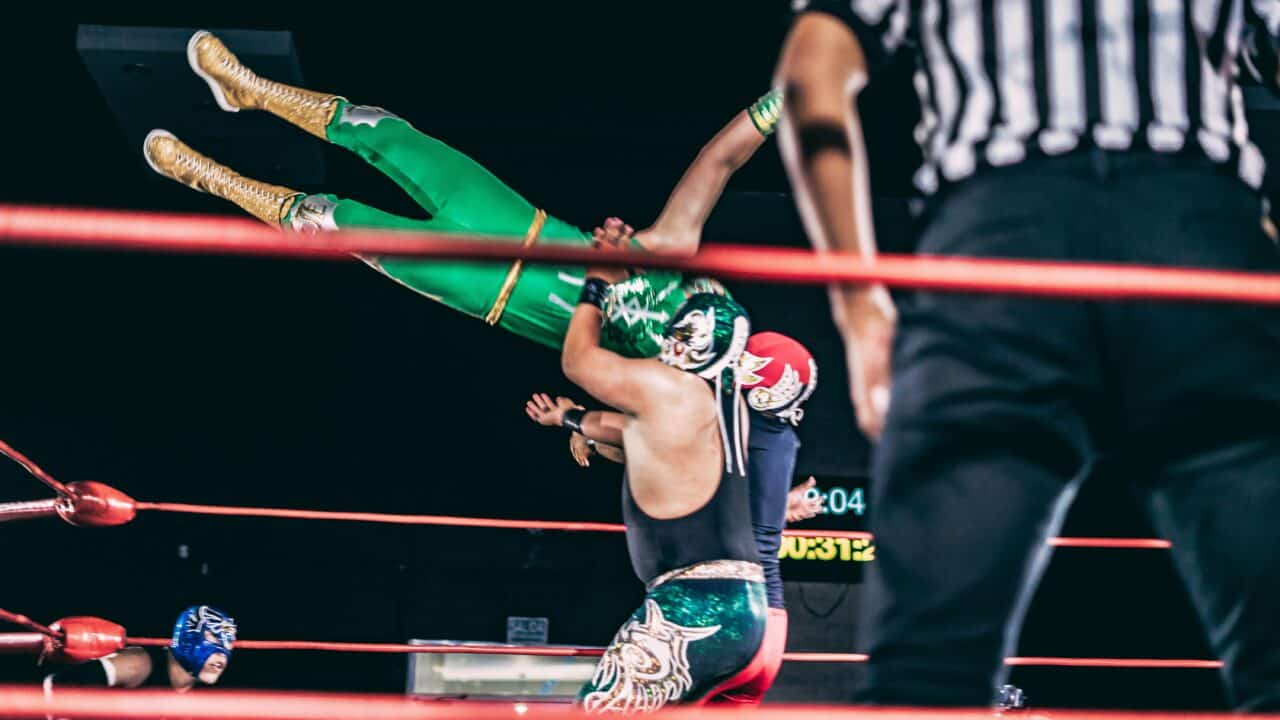
College wrestlers compete in one of the toughest sports there is. They cut weight, train twice a day, and push through a season that runs from October to March. But when companies decide which college athletes to pay for sponsorships, wrestlers almost never make the list. The money goes to football first, then basketball. Everyone else waits.
Quick refresher: NIL stands for “name, image, and likeness.” It’s the rule that lets college athletes get paid when a business uses their name or face to promote something, or when fans support them directly. Experts estimate that college athletes as a whole earned more than $1 billion through NIL by 2025. The problem? Almost all of that money went to football and basketball players. The whole system was built around the sports on TV, and wrestlers are stuck working inside a system that wasn’t made for them.
The good news: things are changing in 2026. Wrestlers, and the fans who support them, have more tools than ever. This article breaks down what deals actually exist, what wrestlers really earn, how to build a personal brand that attracts sponsors, and why platforms powered by fans like RallyFuel are starting to change the game for athletes in smaller sports.
Why Companies Keep Overlooking NIL Wrestling Athletes
The simplest reason is follower count. When companies pick athletes to sponsor, they start by looking at social media numbers. Most college wrestlers, even the very best ones, have far fewer followers than the football or basketball players at their own school. A starting quarterback might have ten times the following of a national champion wrestler down the hall. Fewer followers means fewer sponsorship offers. It’s that direct.
TV makes the problem worse. Most wrestling matches never air on national television. A wide receiver scores a touchdown on ESPN and picks up thousands of new followers overnight. A wrestler wins a conference title and gains a small fraction of that, mostly people who already follow the sport. Without a weekly broadcast, wrestlers have to build their audience the slow way.
There’s also a simple size gap. Football stadiums hold tens of thousands of fans. Most wrestling arenas hold a few thousand. Companies want to sponsor athletes that lots of people already see, because that feels like a safer bet. None of this has anything to do with how hard wrestlers work or how good they are. The system was just built this way before wrestlers ever got a shot.
But two things are shifting in 2026. First, wrestling content is finding real audiences on TikTok and Instagram. Wrestlers who post honest videos about their training are building fan bases that companies are starting to notice. Second, the rules have gotten clearer. Under the current college sports rules (which came out of a big legal settlement between athletes and the NCAA), schools are not allowed to block their athletes from signing legitimate outside deals. And there’s a new law being considered in Washington: the Protect College Sports Act of 2026 would make that protection permanent for athletes nationwide. It passed an important Senate committee vote in June with support from both parties, but it has not been signed into law yet.
What NIL Deals Can Wrestlers Actually Get Right Now?
WWE’s “Next In Line” program is the biggest and most visible opportunity in the sport. WWE has signed college wrestlers including Mason Parris (Michigan), Greg Kerkvliet (Penn State), and Cohlton Schultz (Arizona State), among others. The athletes get paid, but they also get training at the WWE Performance Center in Orlando, help building their personal brand, and a possible path to a WWE contract after college. WWE doesn’t share the exact dollar amounts, but the program is real and ongoing, and Olympic champion Gable Steveson’s WWE deal, signed while he was still wrestling at Minnesota, showed how big that path can get.
For most wrestlers, though, local businesses are the more realistic starting point. Purdue’s Joey Blaze has his own line of official team merchandise through sites like the Purdue NIL Store and Athlete’s Thread. Fans buy shirts and hoodies with his name on them, and he earns money from every sale. Oklahoma wrestler Donovan Grant got a sponsorship with Mason’s Famous Lobster Rolls, a restaurant chain. These aren’t million dollar deals, but they’re real, and they show bigger sponsors that an athlete knows how to work with a business.
Think about who’s nearby: wrestling gear companies, nutrition and supplement shops, local gyms, and restaurants in college towns. These businesses are a natural fit for a wrestler. People in town already know the athlete’s name, and small businesses want affordable ways to advertise. That’s a perfect match.
The biggest checks in college wrestling come from booster groups (organized fan donors, often called “collectives”) and from schools that now share some of their sports revenue directly with athletes. But here’s the catch: only a handful of programs have serious money set aside for wrestling. At those few schools, star wrestlers can reportedly earn six or even seven figures. At most Division I schools, and at basically every Division II and Division III school, that money simply doesn’t exist. Two equally talented wrestlers can have completely different earning opportunities just because of where they wrestle. That gap has nothing to do with talent, and it’s important to be honest about it.
What Do Wrestlers Really Earn in 2026?
The honest answer: it depends on who you are and where you compete. For most college wrestlers, NIL money is modest. Solid nationwide numbers are hard to come by, and the headlines from famous programs make things look better than they are. Most wrestlers, even good Division I ones, earn a few thousand dollars a year or nothing at all.
At the very top, though, the money is real. UFC commentator Daniel Cormier has estimated that the best college wrestlers earn between $100,000 and $400,000 a year. Former Penn State champion and Hodge Trophy winner Bo Nickal responded to that estimate by calling those numbers “pretty conservative,” saying he’d heard of deals worth over a million dollars. Careers that reach seven figures are extremely rare. That kind of money has only followed wrestlers who combined national titles with an Olympic level profile. It’s the ceiling, not the average.
Where you wrestle matters as much as how well you wrestle. Two wrestlers of equal skill can have radically different NIL opportunities based on where they compete. That’s worth saying plainly, because it’s part of the full picture for athletes and families, and it’s exactly why support from outside the traditional system matters so much for everyone else.
How Wrestlers Build a Brand That Attracts Sponsors
Wrestlers can’t wait for a TV network to make them famous. They have to create their own visibility. The wrestlers doing this well aren’t chasing viral moments. They post steadily about their real lives in the sport: training footage, weight cut updates, what they eat, how they get ready for a big match, and personal stories. It’s not flashy content, but it works, because it’s honest and it reaches fans who truly care about wrestling.
Consistency Beats Polish
Posting regularly matters way more than fancy production. A wrestler who posts three times a week for six months will build a bigger real audience than one who drops a single polished video and disappears. Social media rewards showing up, not big budgets. The wrestlers who keep posting are the ones building the audiences that sponsors notice.
The playbook that works in wrestling starts local. Find a business in your college town that fits who you are. Pitch them a simple partnership: you post about them, they pay you or give you product. Do a great job, keep track of the results, and then use that first deal as proof when you approach bigger regional and national sponsors. It takes patience instead of one big swing, but it’s a path anyone can follow.
Before reaching out to any sponsor, put together a simple “media kit.” That’s just a short document with your follower numbers, how much engagement your posts get, a quick bio with your wrestling accomplishments, and a list of what you’re offering (for example: two Instagram posts and one TikTok per month). Even a small local business wants to see that you’ve thought it through. Showing up prepared instantly separates you from the crowd.
The Rules Every Wrestler Needs to Know in 2026
The reporting rules in 2026 are strict, and the penalties for ignoring them are serious. Any outside deal worth $600 or more from a single sponsor must be reported through NIL Go, the official online reporting system, within five business days of agreeing to the deal. Important: the clock starts when you agree to the terms, not when the money arrives. Miss the deadline and you can be immediately ruled ineligible to practice or compete. The College Sports Commission, the group that enforces these rules, is not letting this slide.
There’s some good news in the rules too. As of July 1, 2026, most deals between $600 and $15,000 get approved without a deep review of whether the pay is “too high,” as long as an athlete’s total from connected sponsors stays under $50,000 for the school year. That’s a big expansion from the old rule, which only skipped review for deals up to $2,500. It gives most wrestlers plenty of room to operate. But every deal still has to pass one basic test: it must promote a real product or service that the public can actually buy. A deal can’t secretly be a payment for choosing a school or entering a competition.
What gets a deal flagged for review? Three main things: pay that’s way out of line with an athlete’s actual reach, promised future payments with no clear plan, and anything that looks like pay tied to winning or to picking a certain school. One more thing worth knowing: wrestlers are fully allowed to hire agents and NIL advisors. The rules ban “pay for play,” not professional help. (If the Protect College Sports Act becomes law, it would also add federal rules for agents, including a 5% cap on the fees agents can charge for endorsement deals.)
One practical tip: schools can’t block your legitimate deals, but they can control the use of their own logos and trademarks. You can sign a deal with a gear company on your own, but if the ad shows your school’s logo, you need to clear that with the school first. Have that conversation before the content goes live, not after.
The Olympic Angle: Why This Matters Beyond College
Here’s something casual sports fans forget: college wrestling is the pipeline to Team USA. Almost every American wrestler who steps onto an Olympic mat came up through an NCAA program. Gable Steveson won Olympic gold in Tokyo while he was still a college wrestler at Minnesota. Penn State’s David Taylor won gold at those same Games years after his college career ended. The road to the Olympics runs straight through college wrestling rooms.
That makes the money question bigger than one athlete’s bank account. With the 2028 Olympics coming to Los Angeles, the next generation of American medal hopefuls is training in college programs right now. Wrestling has no big professional league waiting after graduation, so NIL support during and after college is often what decides whether a talented wrestler can keep training toward the Olympics or has to walk away from the sport to pay the bills. When fans support a college wrestler, they aren’t just helping someone through school. They may be funding a future Olympian.
How Funding From Fans Fills the Gap
Everything in this article points to one honest conclusion: most college wrestlers will never land a traditional company sponsorship. Small followings, little TV time, and no big booster money at most schools mean the math just doesn’t work. That’s not pessimism. It’s reality. Companies follow reach, and most wrestlers don’t have the reach that a national brand is looking for.
But company deals aren’t the only way to earn. For wrestlers at Division II, Division III, and smaller Division I programs, a different model is taking hold: NIL crowdfunding powered by fans. Instead of waiting for a corporation to notice, a wrestler’s existing community. The people who already show up, follow every match, and knew the athlete’s name long before any brand did can put real money behind the athletes they support.
RallyFuel was built specifically for this. Fans contribute directly to verified NIL deals for college athletes in every NCAA division, including smaller sports like wrestling, with contributions starting at $25. The majority of every dollar goes straight to the athlete, and verified athlete profiles cover Division I, II, and III schools. That means a fan of a Division III wrestler at a tiny program has the same ability to support their athlete as fans of the biggest schools in the country.
RallyFuel also includes refund protection: if an athlete leaves their school and the deal’s conditions aren’t met, contributors can get their money back. For fans who have watched their favorite wrestlers get overlooked for years, it’s a safe and direct way to help, with no waiting for a corporate sponsor to finally pay attention. The full details are in how it works and our current terms.
The Bottom Line on Wrestling NIL in 2026
The NIL world for wrestlers is uneven, and that’s by design. A small group of stars at famous programs earn serious money. Wealthy schools fill in some gaps for their own athletes. Most wrestlers everywhere else see very little. That’s the true picture, and pretending otherwise doesn’t help anyone.
The path forward is clear and doable for any wrestler at any level: post content consistently, start with local sponsors, pitch with a simple media kit, report every deal through NIL Go on time, and stay far away from anything that smells like pay for play.
And for NIL wrestling athletes, the most overlooked opportunity right now is fan support. The people who fill the stands at dual meets, track every bracket, and know these athletes by name have real financial power. It just was never organized before. Platforms like RallyFuel exist because that loyalty is worth something. For the wrestlers who’ve put in the work without the spotlight, that support finally has a way to reach them.